

Most parents think of the bedtime story as a wind-down ritual. A warm lamp, a favorite book, a sleepy child. What they often don’t realize is that those fifteen or twenty minutes do something far more durable than help a child drift off to sleep. Night after night, story by story, they are building one of the most important intellectual tools a child will ever have: a rich, working vocabulary.
The science behind this is both compelling and surprisingly concrete. Words absorbed in early childhood don’t just stick around – they shape how children think, read, and ultimately learn. The habit is quiet, it’s ordinary, and it works.
The Word Gap That Sets the Stage

The foundation for understanding why bedtime reading matters so much begins with a striking research finding. In a landmark study, Hart and Risley estimated that by age three, children from higher socioeconomic backgrounds had heard thirty million more words than children from lower socioeconomic backgrounds. That enormous difference doesn’t arrive all at once – it accumulates gradually through daily interactions, including shared reading at home.
Hart and Risley’s study demonstrated a significant correlation between the number of words a child is exposed to between ages zero and three and their ultimate IQ and academic success. The implications are hard to ignore. Their follow-up with these children at nine to ten years of age confirmed that school interventions came too late to alter these trajectories.
Observers found that between eighty-six and ninety-eight percent of the words used by each child by the age of three were derived from their parents’ vocabularies. This means what a child hears at home – including what they hear read aloud at night – is the dominant source of their early word knowledge.
Books Carry Words That Everyday Talk Doesn’t
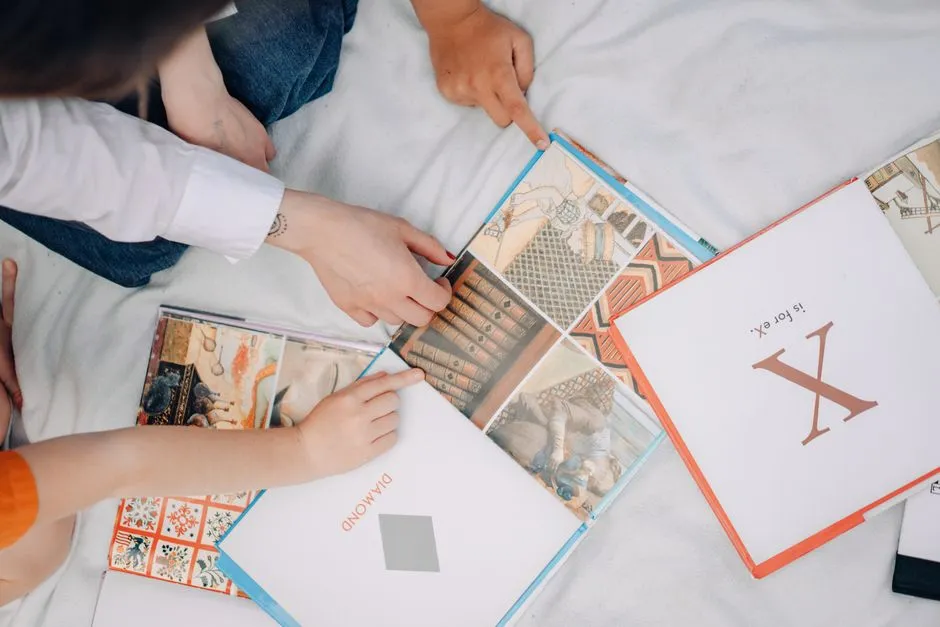
One thing that makes story time genuinely different from ordinary conversation is the language itself. Children’s picture books and storybooks consistently contain more uncommon, sophisticated vocabulary than typical adult conversation does. A parent chatting through dinner might use a few hundred familiar words, while a picture book about a lost bear or an adventurous mouse introduces terms that rarely come up in casual talk.
Storybook reading is a very good way to build vocabulary, and research continues to examine how factors like reading frequency and reading quality affect this growth. The variety of words a child encounters in books gives them access to language they would simply never stumble across in everyday household conversation.
At one book per day, cumulative word exposure adds up to roughly 296,000 words by kindergarten. At five books per day, it reaches nearly 1.5 million. Those estimates count only the words on the page – not the conversations that happen around the story.
Cumulative Exposure Is the Real Mechanism
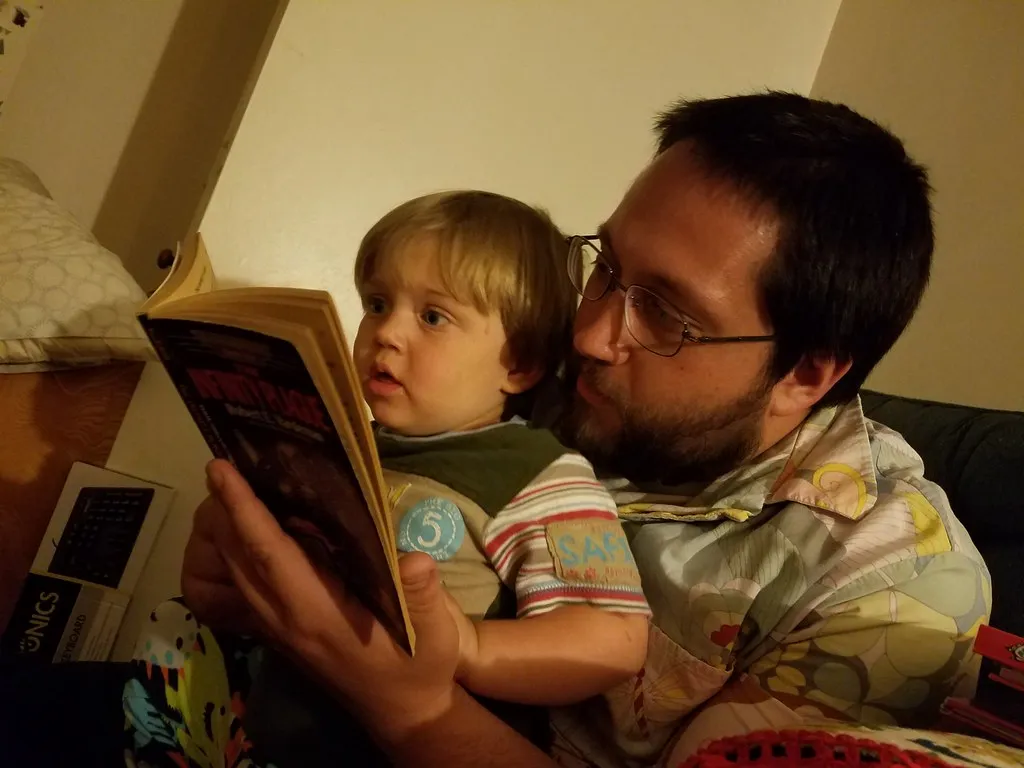
It isn’t any single story that builds vocabulary. It’s the steady, repeated accumulation. A child who hears one book a night, every night, from infancy through age five, encounters a remarkable volume of language before they ever walk into a classroom. These are conservative estimates – they count only the words printed on the page and don’t include the conversations that happen around the story.
Repetition across different stories and different nights helps a child encounter the same word in multiple contexts, which is exactly how deep word knowledge forms. Hearing the word “reluctant” once in a story is a small thing. Hearing a version of it across several books over months is how it becomes truly owned.
Research found that children’s early language abilities predicted better language skills in elementary school, and a later analysis showed that children exposed to more words early in life were more likely to have stronger language comprehension skills in kindergarten and greater vocabulary growth through elementary school. The bedtime book habit quietly plants those seeds.
What Happens in the Brain During Story Time

The development of narrative abilities during early childhood forms the foundation for more complex language expression and comprehension later in life. Story time isn’t passive input – a child’s brain is actively working to track characters, follow plot, predict outcomes, and make sense of unfamiliar words from context. That process is cognitively demanding in a productive way.
Children’s language learning is characterized by comprehension preceding expression. Narrative ability serves as a bridge between content comprehension and language expression. So when a child follows a story arc night after night, they are quietly practicing the mental architecture that supports later reading and writing.
Preschool is the best time of life to learn vocabulary and different linguistic skills. The brain’s plasticity during these early years means that language absorbed through story has an easier time taking root than it would at any later stage of development.
Dialogic Reading: When Questions Change Everything

Reading to a child is valuable. Reading with a child – pausing, pointing, asking, wondering aloud – is considerably more powerful. Researchers call this approach dialogic reading, and the evidence behind it is consistent. Unlike conventional approaches where the adult primarily reads and the child listens passively, dialogic reading positions the adult as a facilitator who encourages discussions about the book through open-ended questions, prompts for the child’s opinions, and connections between the story and the child’s experiences.
This interactive process fosters responsive conversations that enrich vocabulary, enabling children to acquire new words and deepen their understanding of their meanings through contextualized discussions. The key word there is “contextualized” – when a child learns what “enormous” means during a scene where an elephant is causing chaos, the word arrives with meaning attached.
Children in dialogic reading groups demonstrated vocabulary growth that was significantly ahead of their chronological age, and dialogic reading is defined as an interactive approach to sharing books where the adult and child engage in meaningful conversations about the story, pictures, and ideas in the book. A simple “What do you think will happen next?” can move a story session from passive listening into active language learning.
The Role of Repetition and Favorite Books
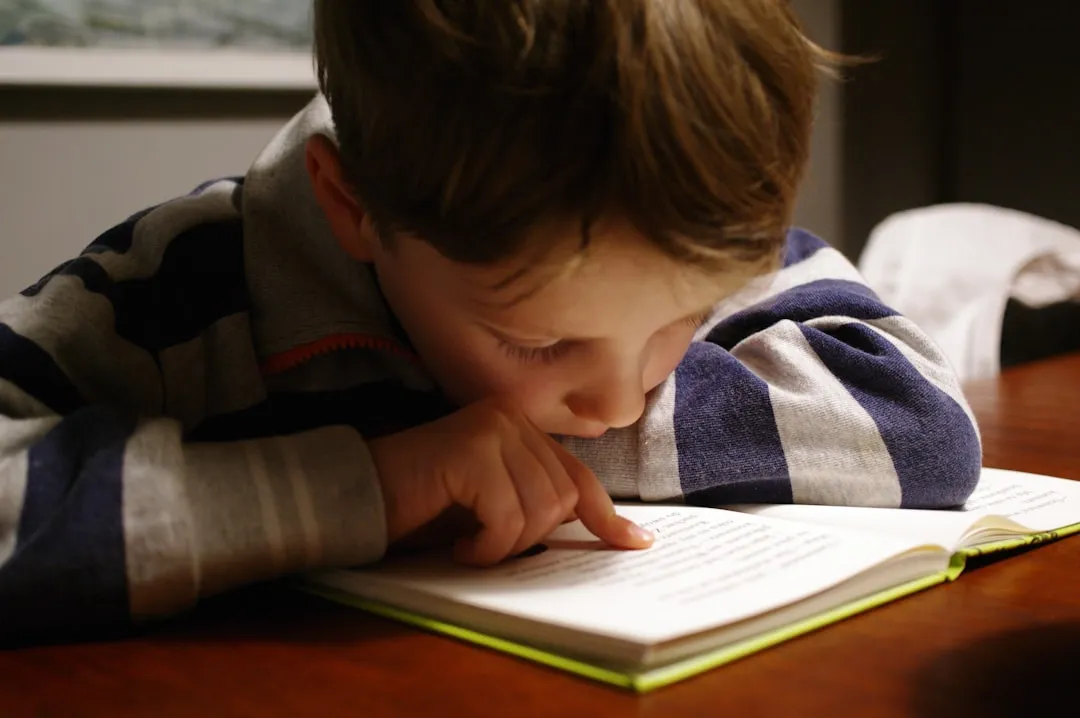
Any parent who has read the same book seventeen nights in a row knows the mild despair of that experience. The child, however, is getting something real from it. Repetition with a familiar text lets a child anticipate language, rehearse vocabulary, and process words they may have only half understood the first time. It’s a form of natural spaced practice.
Effective shared reading includes encouraging child-led book selection, using expressive voice and gestures, incorporating storytelling into daily routines such as bedtime, and engaging in shared reflections during or after reading. When a child chooses the book, they tend to be more engaged – and higher engagement means better retention.
Research highlights the importance of selecting books that are not only understandable and engaging but also sufficiently rich to support language development without causing frustration or disengagement. The sweet spot is a book that introduces new words while still being fully followable – just slightly beyond the child’s current vocabulary level.
Consistency Matters More Than Duration

Parents often worry about whether they’re doing enough, or reading for long enough. The research suggests that frequency and consistency outweigh session length. A ten-minute story every single night does more for vocabulary development than an occasional forty-five-minute session.
Reading frequency, reading quality, and population-based factors all affect vocabulary growth from storybook reading. Frequency tops that list in practical terms. A child who hears stories regularly is building habits of attention and language processing that a sporadic reader misses.
Parents who pause during reading to invite comments, relate the story to the child’s own experiences, and support vocabulary development by explaining unfamiliar words are doing something that formal schooling rarely replicates at that personal level. The consistency of the bedtime ritual is part of what makes it work – it creates a reliable language-rich environment every day.
The Vocabulary Gap and School Readiness
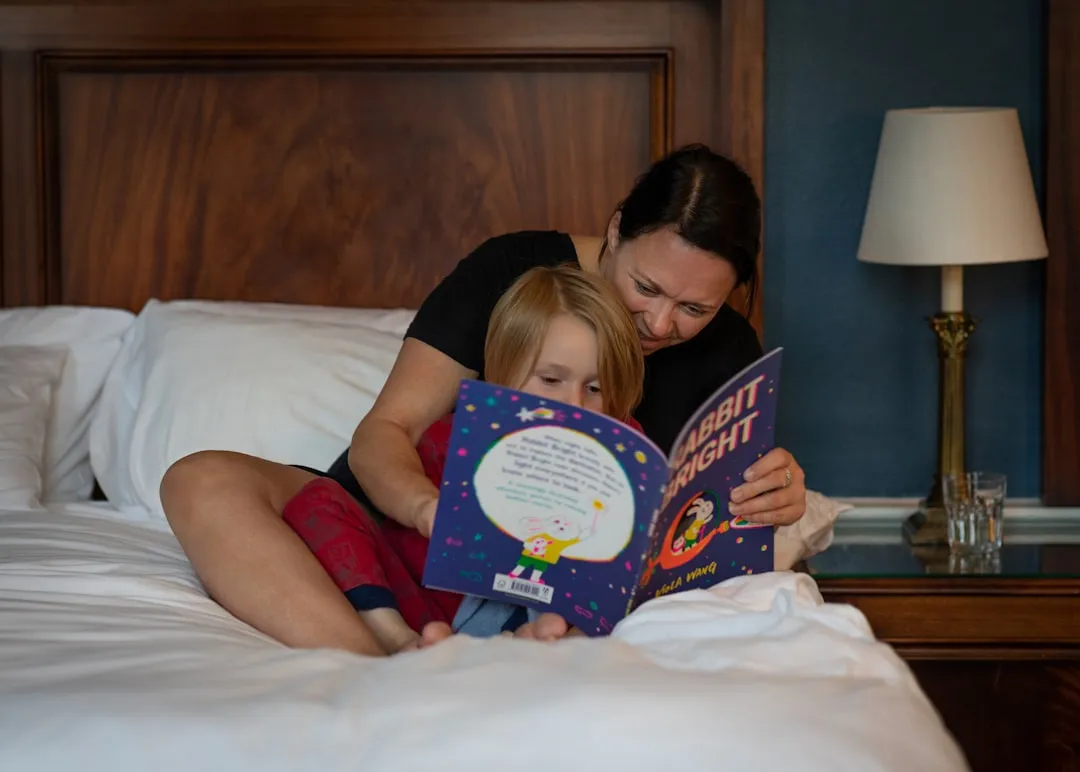
Vocabulary doesn’t just matter for reading. It shapes a child’s ability to follow classroom instruction, understand math word problems, engage with science concepts, and participate confidently in discussions. A child who arrives at kindergarten with a strong vocabulary has a meaningful head start, not just in language arts but across the curriculum.
Researchers found that children from higher-income families heard significantly more words in their formative years, and the variability in exposure accounted for significant differences in children’s language skills when they entered kindergarten, with a direct impact on how students fared early on in school. That gap doesn’t close easily once a child is in school.
The challenges some children face are not a result of genetics or lack of potential, and they are not unalterable. The inequity can be mitigated with high-quality early childhood educational interventions. The bedtime story, practiced consistently, is one of the most accessible of those interventions – it costs nothing but time.
How Parents Can Strengthen the Habit

The practical steps are not complicated. Choose books with rich and varied language. Read with expression, not just accuracy. Pause at unfamiliar words and talk about them briefly – not as a quiz, but as a natural conversation. Parents and teachers can further expand the benefits of story time by getting children involved in what’s known as dialogic reading, which means using questions to get children talking about the book. This talk can deepen children’s knowledge and understanding and help them learn about language.
Dialogic reading methods include asking open-ended questions, prompting children to predict or recall story elements, using expressive voice and gestures, and engaging in shared reflections during or after reading. None of this requires a teaching degree. It requires only attention and a few minutes of genuine engagement.
Reading aloud has benefits for reading enjoyment, reading motivation, parent-child attachment, and parental confidence. Those benefits extend well beyond the vocabulary gains – though the vocabulary gains are themselves reason enough to keep showing up at bedtime with a book in hand.
When the Habit Extends Beyond Bedtime
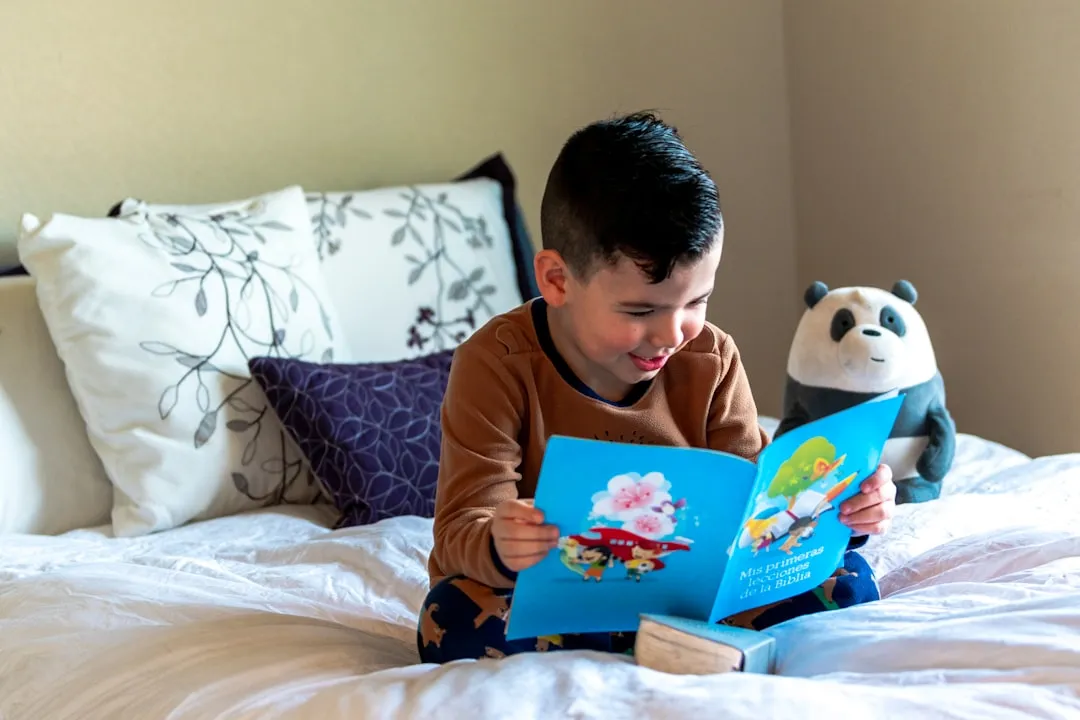
The bedtime story can also open doors to language use throughout the rest of the day. A child who heard the word “investigate” in last night’s story might use it the next morning, or notice it on a cereal box. Vocabulary learned in stories tends to travel into daily life when children have the space to use it.
The practice of dialogic reading is a valuable way to develop young children’s oracy – the ability to articulate ideas when speaking, listen carefully and communicate effectively. Those skills don’t stay inside the bedtime ritual. They begin to shape how a child participates in conversations, asks questions, and engages with the world around them.
Parents frequently modify their language during reading activities to address gaps in their children’s vocabulary and linguistic knowledge. That natural parental instinct – to explain, rephrase, and expand – is itself a powerful teaching tool that costs nothing and requires no preparation.
The Takeaway
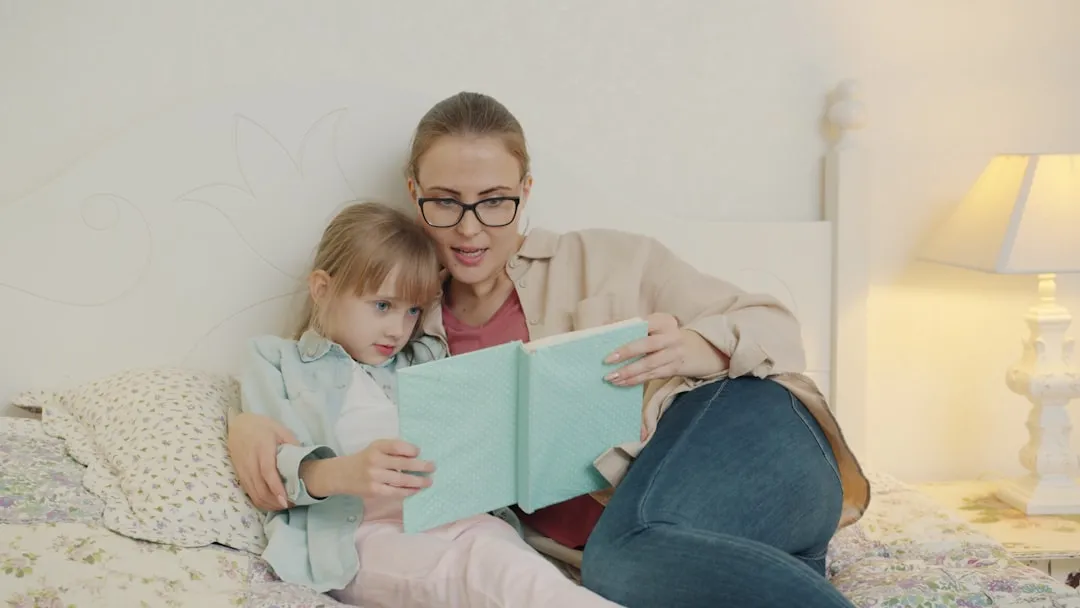
What’s remarkable about the bedtime story habit is how ordinary it looks from the outside. A parent, a child, a book, a lamp dimmed low. Nothing dramatic happens in any single session. Yet across months and years, something genuinely significant accumulates: a child who knows more words, understands language more deeply, and arrives at school with a richer internal dictionary than they’d have had otherwise.
The research is consistent enough, and the practice simple enough, that the main obstacle is just inertia. Does hearing more words really make a difference? The short answer is yes, and the evidence has been building for decades. That evidence now spans Hart and Risley’s foundational word-gap studies, dialogic reading trials, and recent longitudinal work published through 2025 and 2026.
The bedtime story isn’t a magic solution, and it doesn’t erase every inequality in a child’s language environment. Still, it is one of the most reliably beneficial things a family can do – night after quiet night, one word at a time.
AI Disclaimer: This article was created with the assistance of AI tools and reviewed by a human editor.