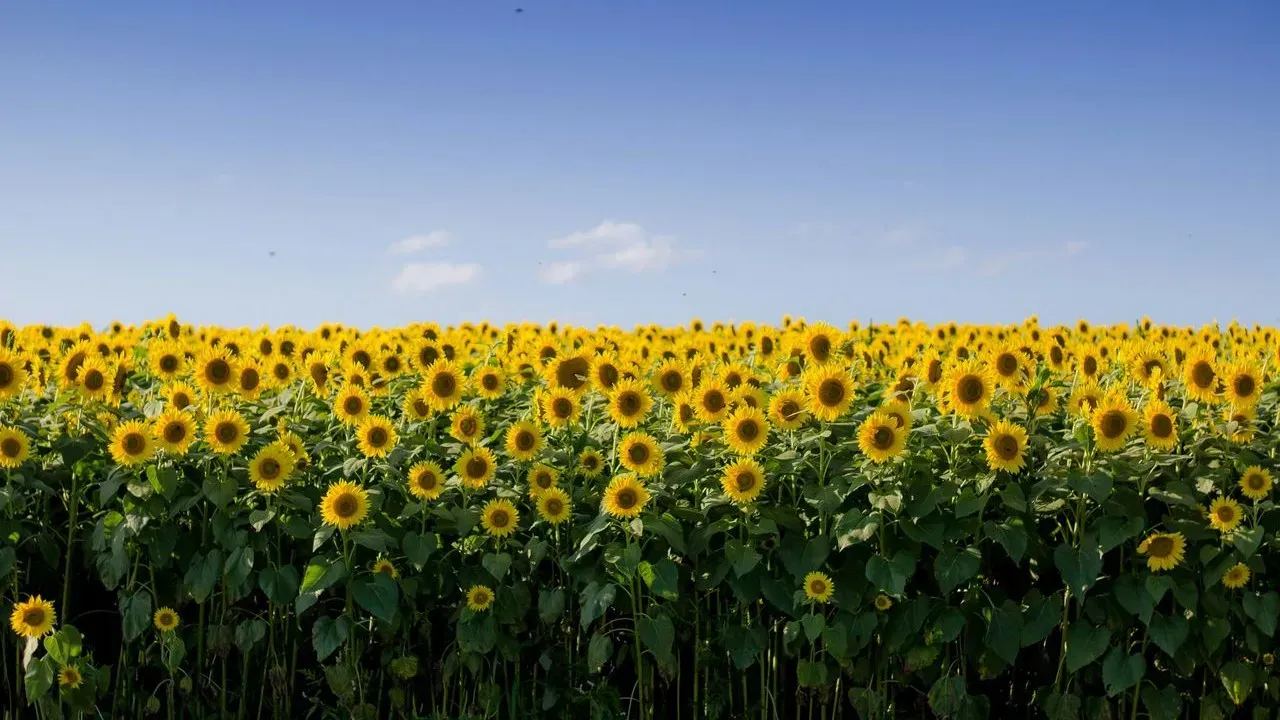

Helianthus annuus, the common sunflower, stretches across a vast native range from Mexico northward into Canada. Gardeners and farmers alike have shaped countless cultivated forms from this single annual species. Yet the plant’s original character and surprising behaviors often get lost amid the familiar yellow giants grown for oil or children’s projects.
Native Range and Rapid Life Cycle
The species thrives in open habitats across much of North America. Its ability to complete germination, growth, flowering, and seed set within a single season sets it apart from longer-lived perennials. Flower heads can exceed the size of a human face while stems reach well above adult height in favorable conditions.
Commercial breeding has emphasized seed yield for oil production. Garden selections, by contrast, now include shorter stems suited to borders, paler lemon tones, and even fluffy or reddish forms. These developments reflect demand from florists who have embraced sunflowers as cut flowers over the past two decades.
Traits That Extend Beyond Appearance
Sunflowers perform several practical roles that receive less attention. They extract certain heavy metals and radioactive materials from soil and water. Their seeds feed both people and wildlife, while the oil serves cooking, food manufacturing, and soap production. The composite flower heads, each a cluster of tiny florets ringed by petals, attract diverse pollinating insects.
Observations of plants grown in close proximity reveal another layer. Neighboring stems often angle their heads to share sunlight more evenly rather than competing directly. Roots appear to avoid overlapping zones with nearby plants, suggesting a pattern of spatial cooperation instead of strict dominance.
Shifting Perceptions of Plant Behavior
Claims of rudimentary intelligence in plants remain debated among scientists. Still, the documented patterns in sunflowers challenge the long-standing view that plant life amounts solely to a Darwinian struggle. Cooperative positioning of flowers and roots points instead to strategies that benefit groups as well as individuals.
These findings invite gardeners to reconsider the plant’s value. Sunflowers offer more than seasonal color or an easy introduction to horticulture for young people. Their capacity to improve contaminated ground and support pollinators adds measurable garden benefits.
Restoring Sunflowers to Adult Landscapes
Many gardeners continue to treat sunflowers as temporary fillers or novelties. The breadth of available forms now supports more permanent roles in mixed borders, wildlife plantings, and even small urban plots. Shorter cultivars handle wind exposure while taller selections create dramatic vertical accents.
Placing sunflowers among other perennials highlights their cheerful presence without reducing them to children’s projects. The plants bring reliable summer impact and ecological contributions that align with current interest in resilient, multifunctional gardens.
Ultimately, sunflowers reward attention with more than spectacle. Their native heritage, practical services, and emerging evidence of social behavior make them worthy of deliberate inclusion rather than afterthought status. Growing them with intention restores a fuller sense of their place in the landscape.
AI Disclaimer: This article was created with the assistance of AI tools and reviewed by a human editor.