

Most people think wire fraud happens to someone else. It’s the kind of thing you read about in a news brief, shake your head at, and move on. The problem is that the numbers tell a very different story, and they’ve been getting worse every year.
Before you send that transfer, there’s one question that can save you from a loss that’s nearly impossible to undo: “Have I independently verified who I’m actually sending this money to?” Everything below unpacks why that question matters so much, and how to actually answer it properly.
Wire Fraud Is No Longer a Fringe Problem

Total losses reported to the FBI’s Internet Crime Complaint Center (IC3) in 2024 reached $16.6 billion across 859,532 complaints, which was a 33 percent increase in losses from 2023. That is not a rounding error. That is a genuine surge in financial harm hitting individuals and businesses across the country.
Scams involving bank transfer and cryptocurrency payments caused greater financial losses than all other transaction types combined in 2024. Wire transfers are specifically attractive to fraudsters because they move fast, they cross borders easily, and they are extraordinarily hard to reverse once processed.
Why Wire Transfers Are the Thief’s Preferred Tool
Sending money by wire is like sending cash in that, once sent, the wire transfer typically cannot be reversed. Wired funds are considered the property of the recipient, even if sent as part of a scam, and may be final. For this reason, wire transfers can be a preferred payment method for fraudsters.
Wire transfers are generally faster than ACH withdrawals and can facilitate larger money amounts. That speed is a feature for legitimate business, but it’s also precisely what makes fraud so devastating. By the time anyone realizes something is wrong, the money is already gone.
Business Email Compromise: The Engine Behind Most Wire Fraud

The attacker compromises or mimics a legitimate business email account, posing as a known partner or executive, and convinces an employee to wire funds to a fraudulent account. A hacker might hack a CEO’s email or use a lookalike address to send urgent payment instructions to the finance department. Because the request appears to come from the CEO or a trusted supplier, employees often comply without verifying.
In 2024 alone, Business Email Compromise losses totaled $2.77 billion across 21,442 reported incidents. The consistency of BEC highlights just how effective these socially-engineered attacks are. Threat actors don’t need malware or exploits; they rely on impersonation, urgency, and trust to trick employees into wiring money or disclosing sensitive information.
The Scale of Losses Is Staggering Over Time
Since its initial inclusion in the 2015 IC3 report, losses due to BEC have skyrocketed by more than 1,025 percent, totaling $17.1 billion over the last decade. That trajectory doesn’t suggest a problem that’s being solved. It suggests one that’s accelerating.
From October 2013 through December 2023, U.S. BEC victims reported over $20 billion in exposed losses. Globally during that same period, BEC exposed losses totaled more than $55 billion across 305,033 incidents. The numbers speak to an organized, global criminal enterprise that has refined its methods over years.
AI Is Making Fraudulent Requests Much Harder to Spot
Generative AI is making BEC lures more convincing and easier to create. By mid-2024, an estimated 40 percent of BEC phishing emails were AI-generated. This matters because the classic advice of “look for bad grammar or awkward phrasing” no longer reliably protects you. The emails arriving in inboxes today can be polished, contextually accurate, and nearly indistinguishable from legitimate messages.
AI bots can mimic the tone and style of a company or individual, creating tailored phishing campaigns that are more likely to succeed. The average person reading a well-crafted AI-generated wire instruction email has very little to go on other than the content itself. That’s exactly why verification through a separate channel is the only reliable safeguard.
The Callback Rule: The Single Most Protective Step You Can Take
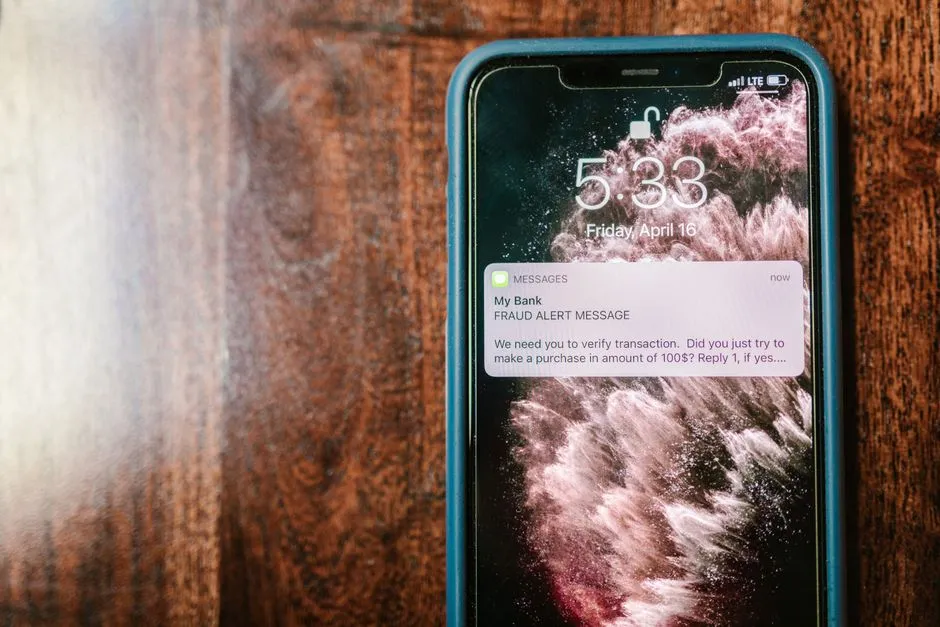
Before you send a wire transfer, verify the instructions through a simple callback, which can protect you from fraud that’s nearly impossible to undo. Verifying wire instructions before sending money is one of the most important steps you can take to protect against fraud and misrouted funds.
Before wiring money, confirm the instructions with your mortgage consultant, title company, or business partner by calling their official, published phone number. Do not call a new number or respond to an unexpected email that contains new wire instructions. That last point is critical. The verification call must go to a number you already had on file, not one that arrived in the same suspicious email chain.
If you receive updated wire instructions, always contact a trusted individual at the receiving organization directly to confirm the changes prior to sending the funds. Last-minute changes to payment details are one of the most common warning signs of fraud in progress.
What Happens When You Try to Get the Money Back

Wire transfers are generally considered final and irrevocable once the receiving bank accepts the funds. In most cases, a fraudulent wire cannot be reversed, only recalled, and only within a narrow window of hours. Once funds are moved or withdrawn, recovery depends on law enforcement, not your bank.
Success rates drop dramatically after the first few hours as fraudsters quickly move money or convert it to cryptocurrency. The FBI’s Recovery Asset Team does its best within that window. The overall success rate for 2024 was 66 percent when the RAT became involved. Still, that means roughly one third of cases where the RAT was activated ended with permanent losses. And that’s only for the fraction of cases that reached federal intervention at all.
Of those who transferred money in reported fraud cases, only 26 percent recovered their funds entirely. These figures demonstrate that the chances of wire transfer fraud recovery are low.
Real Estate Transactions Are Particularly Vulnerable
The real estate sector’s vulnerability stems from its inherent nature: high-value transactions and a complex web of communication among multiple parties. Real estate transactions and processes have also moved increasingly online. While efficient, this opens up avenues for fraudsters to intercept and manipulate communications, leading to unauthorized wire transfers.
Nearly a quarter of consumers received suspicious or potentially fraudulent communications during their closing. Of those targeted and pursued, 1 in 20 consumers became a victim. With the amounts involved in home purchases, a single misdirected wire can cost a buyer their entire down payment, sometimes representing decades of savings.
Small Businesses Are Not Too Small to Be Targeted

The FBI IC3 received 21,442 BEC complaints in 2024, with average losses of $129,000 per incident. Small businesses are increasingly targeted because they often lack the technical controls and verification procedures of larger organizations.
Business email compromise is shouldered by organizations of all sizes, from massive corporations to mom-and-pop businesses, government departments, non-profits, academic institutions, and title companies. There is no profile that grants immunity. A single compromised transaction at a small company can be genuinely existential.
What a Proper Verification Process Actually Looks Like

The verification process involves confirming every detail through independent channels, not just reading the numbers off a document someone emailed you. A standard domestic wire transfer requires four core pieces of information: the recipient’s full legal name, which must match the name on file at the receiving bank exactly. Routing numbers and account numbers also need independent confirmation, not just a copy-paste from the received email.
Be aware that sophisticated criminals frequently use voice phishing schemes to impersonate individuals in accounting or finance on the phone to verify fraudulent wire transfers. Consider requesting a video conference call to confirm instructions, especially if anything suspicious is detected. If verifying by phone, ensure you are calling a verified phone number associated with the company you’re calling.
Implementing dual-authorization requirements for transfers above a set threshold is also a widely recommended control, particularly for businesses. One person making the call is good. Two people independently approving a large transfer is better.
The Takeaway

The question you should always ask before wiring money isn’t complicated, but it requires discipline, especially when a transaction feels routine or someone is pushing you to act fast. Urgency is often a manipulation tactic, not a genuine business need.
Every safeguard discussed here traces back to one core action: independently verify before you send. Not through the same email thread. Not by calling back the number in the message. Through a trusted contact, a published number, or an in-person confirmation. That one friction point is what stands between a completed transaction and a potentially unrecoverable loss.
The money moves in seconds. The fraud investigation can take months. The math strongly favors taking 10 extra minutes before you hit send.
AI Disclaimer: This article was created with the assistance of AI tools and reviewed by a human editor.