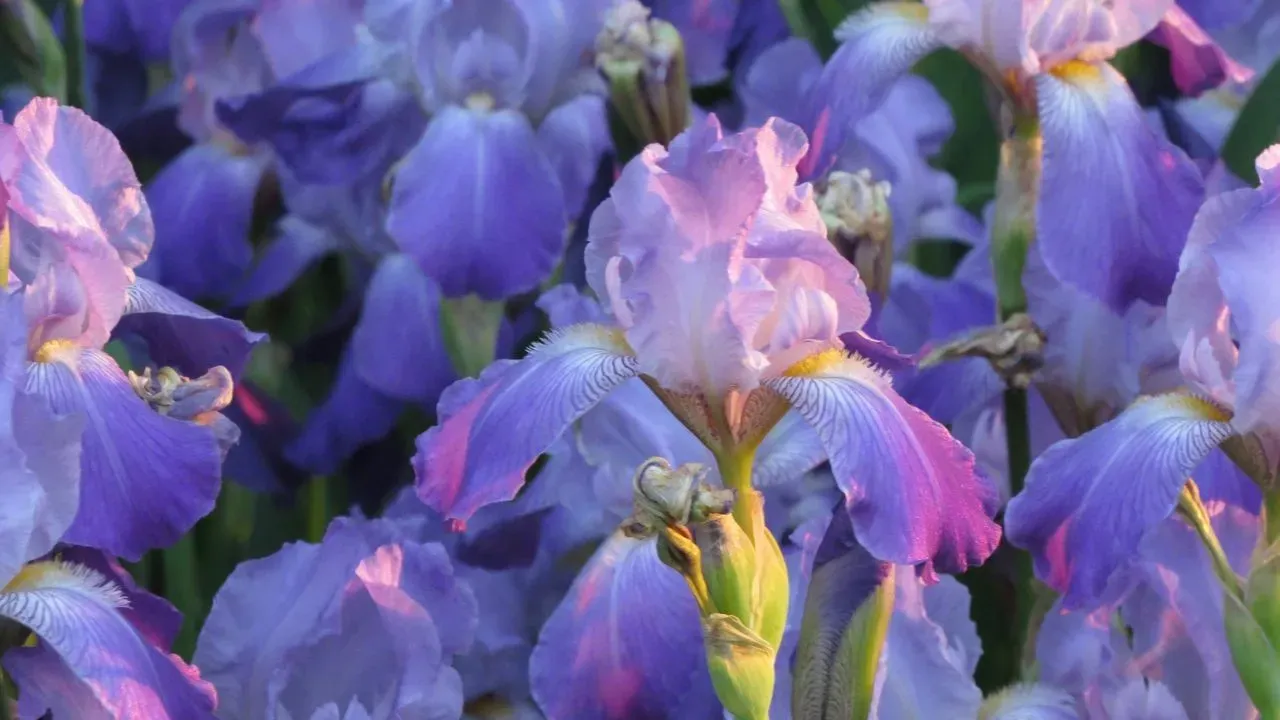

Japanese irises stand out for their ability to produce large, ruffled flowers in shades of purple, blue, pink, and white while succeeding in the wettest, lowest parts of a garden. Most perennials rot or decline in such conditions, yet these plants turn soggy, low-lying areas into focal points of color and texture. Their tolerance for poor drainage gives gardeners a practical option for spots that often remain empty or underused.
Striking Flowers That Command Attention
The blooms of Japanese iris reach impressive size and feature layers of ruffled petals that create a bold visual impact. Colors range across deep purples, soft blues, vibrant pinks, and crisp whites, allowing them to complement or contrast with surrounding plantings. These flowers appear in early to midsummer and hold their form well, making them reliable performers in the landscape.
Gardeners often place them where they can be viewed from a distance or up close, since the ruffled texture and saturated hues draw the eye even in mixed borders. The plants maintain an upright habit that keeps the flowers elevated above foliage, preserving the dramatic effect throughout the blooming period.
A Solution for Challenging Wet Areas
Japanese irises naturally prefer consistently moist to wet soil, which sets them apart from many other perennials that require well-drained conditions. They perform reliably in low-lying spots that collect water after rain or remain damp for extended periods. This adaptation allows them to occupy spaces where drainage issues typically limit planting choices.
Because they tolerate saturated soil without suffering root problems, they reduce the need for extensive soil amendment or raised beds in problem areas. Their presence can also help stabilize soil in those locations while adding seasonal interest that lasts beyond the bloom time.
Versatile Roles in Garden Design
These irises work effectively as standalone specimens that highlight a particular wet zone or as a tall backdrop for shorter plants that share similar moisture needs. Their height and bold flowers create structure without overwhelming smaller companions. In group plantings they form dense clumps that fill space and suppress weeds over time.
Designers value their ability to bridge the gap between water features and drier garden sections, softening transitions while maintaining visual interest. The range of available colors supports both monochromatic schemes and more varied palettes that echo other seasonal blooms.
Practical Advantages Over Standard Perennials
Unlike many popular garden plants that decline quickly in wet conditions, Japanese irises convert a common liability into an asset. Their preference for moisture means fewer losses from rot or fungal issues that plague less tolerant species. This reliability can simplify maintenance in areas that otherwise demand frequent replanting or special irrigation adjustments.
Over successive seasons the plants establish strong root systems suited to their environment, leading to larger, more floriferous clumps with minimal intervention. Their long-term performance in challenging spots makes them a strategic choice for gardeners seeking both beauty and resilience.
By matching the right plant to the right conditions, Japanese irises demonstrate how thoughtful selection can transform difficult garden areas into reliable displays of color and form. Their combination of striking blooms and moisture tolerance offers a straightforward way to expand planting possibilities without extensive site modification.
AI Disclaimer: This article was created with the assistance of AI tools and reviewed by a human editor.