
There was a time when writing a thank-you note felt as natural as the conversation it followed. You received a gift, attended a dinner, got help from someone at work, and within a day or two you sat down and put your appreciation into words on paper. That habit has quietly, almost invisibly, faded from everyday life.
Today, we live in a world where a heart emoji or a quick “thanks!” text passes for genuine gratitude. It’s worth asking whether that’s actually fine, or whether something meaningful has slipped away without many of us noticing.
The Digital Age Killed the Ritual, Quietly
In an age dominated by instant messaging, emails, and social media, the art of letter writing is quietly fading into obscurity. For a long time, putting appreciation into writing was the standard way people maintained relationships across distance and time. The shift didn’t happen overnight, but its effects are now deeply embedded in how we communicate.
Digital communication allows for the effortless transmission of messages across vast distances, storing and retrieving vast amounts of data and seamlessly integrating multimedia content. This efficiency has become paramount in our fast-paced, interconnected world, leaving little room for the time-consuming practice of handwriting. Speed came to feel like enough. Gratitude got compressed into a moment rather than a gesture.
Gen Z Is Growing Up Without the Habit

A study from the University of Stavanger highlights a troubling statistic: roughly four in ten Gen Z individuals are losing their ability to communicate effectively through handwriting. If you never develop fluency with a pen, the idea of writing a personal note can feel awkward before you’ve even started.
The emphasis on digital literacy and keyboarding skills in education has decreased the teaching and practical use of handwriting skills. This shift means that younger generations will grow up with limited exposure to handwriting. Thank-you notes were never explicitly taught in most schools, but they were absorbed through family culture and social expectation. When both of those weaken, the habit disappears with them.
We Genuinely Underestimate How Much a Note Means
Thanking someone really does make a difference: new research shows that people significantly underestimate the positive impact a letter of gratitude has on its recipient. This finding is not just anecdotal. It has been replicated across multiple controlled studies.
Expressing gratitude improves well-being for both expressers and recipients, but researchers suggest that an egocentric bias may lead expressers to systematically undervalue its positive impact on recipients. Participants in three experiments wrote gratitude letters and then predicted how surprised, happy, and awkward recipients would feel. Recipients then reported how receiving an expression of gratitude actually made them feel. Expressers significantly underestimated how surprised recipients would be, overestimated how awkward recipients would feel, and underestimated how positive recipients would feel. In short, we talk ourselves out of writing notes because we assume they matter less than they actually do.
The USPS Numbers Tell Their Own Story
The USPS has suffered billions in losses due to a decline in mail sent. The roughly fifty percent decline of first-class mail, which includes letters and postcards, over the last decade is expected to fall even further. First-class mail was always the category that carried personal correspondence, birthday cards, and thank-you notes. Its decline is a direct measure of how much handwritten communication has shrunk.
In the wake of the digital age, we seem to opt for communicating with each other in the fastest and easiest ways possible. Given this, it’s not surprising that we have become so unaccustomed to the simple act of sending a handwritten letter or card to someone. Most people don’t take the time or invest in the resources needed to send physical messages to a friend or family member. Convenience reshaped behavior faster than anyone anticipated.
In Hiring, the Thank-You Note Gap Is Striking
A 2024 TopInterview survey found that roughly two thirds of hiring managers say a thank-you email influences their final decision, while fewer than one in four candidates actually sends one. That is a wide, consequential gap. The thank-you note remains professionally meaningful even as it becomes practically rare.
According to data from CareerBuilder, the majority of job seekers fail to send thank-you notes after an interview. This statistic highlights a missed opportunity for candidates to express gratitude for the opportunity and reiterate their interest in the position. What’s curious is that most people know they should send one and still don’t. The friction of actually doing it seems to outweigh the intention.
Gratitude Itself Is Good for You, Science Confirms
A 2024 Harvard study of 49,275 women found that those with the highest gratitude scores had a nine percent lower risk of dying over the following four years. That’s not a small or symbolic finding. Gratitude, practiced regularly and expressed deliberately, has measurable effects on physical health.
A 2025 PNAS meta-analysis across 145 studies and 24,804 participants from 28 countries confirmed that gratitude interventions reliably increase well-being worldwide. Writing a thank-you note is, in effect, a form of intentional gratitude practice. The act of composing it benefits the writer as much as the reader.
Social Media Gave Us a Counterfeit Version
While social media posts and emails can be archived, they often lack the intimacy and authenticity of handwritten words. Moreover, the rapid pace of digital interaction means much of today’s communication is easily deleted or forgotten. A public post thanking someone is partly for the audience, not just the recipient. That changes its nature entirely.
Instead, we send half-hearted “Happy Birthday” messages with a post on our Snapchat stories or through a simple, and sometimes unthoughtful, text. There’s a version of gratitude that’s performed for social visibility rather than offered as a genuine personal act. Thank-you notes, by contrast, existed in a private space between two people.
The Physical Experience of a Note Is Irreplaceable
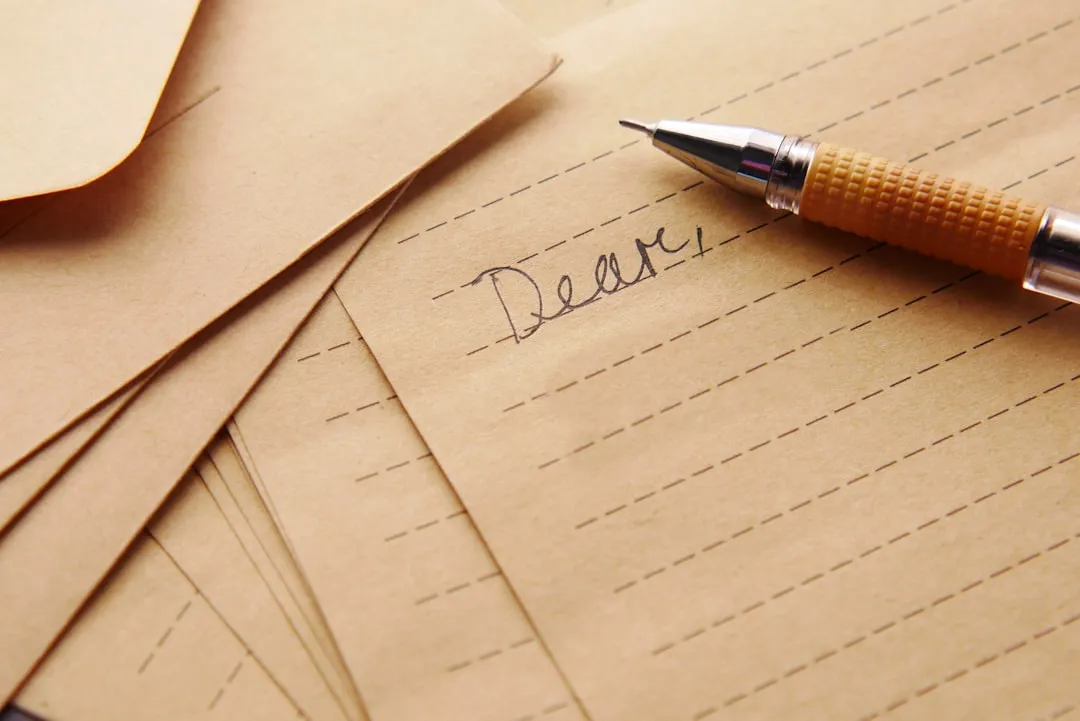
The sound of slicing open an envelope, the texture of the paper on your fingertips, and even the smell of fresh paper and envelope glue all help make receiving a handwritten note a memorable experience. Handwritten notes add an extra touch of sincerity that you just can’t replicate with a digital message. There’s a tactile reality to paper correspondence that a screen simply cannot deliver.
A handwritten letter conveys effort, thoughtfulness, and personal investment in a way that an email or text cannot replicate. The act of writing by hand has long been a medium for deep, personal expression. For centuries, people have used handwriting to communicate love, grief, joy, and other emotions, something that feels more intimate than a text message. That intimacy is not trivial. It’s precisely what relationships are sustained by.
The Fear of Awkwardness Is Holding Us Back
Participants in scientific studies indicate that they wish they expressed gratitude more often, and the research provides an explanation for why they sometimes may not. Misguided predictions can lead individuals to hold back, making them less likely to engage in kind acts. People don’t skip thank-you notes because they’re ungrateful. They skip them because they worry about seeming odd or sentimental.
University of Chicago researchers suggested that an egocentric bias tends to limit others’ expression of gratitude. Those expressing gratitude underestimated how surprised and positive recipients would feel and overestimated their own feelings of awkwardness. The fear is real, but it’s also consistently wrong. Recipients almost never find genuine thanks uncomfortable.
The Habit Can Still Be Recovered

Handwriting and digital communication can coexist, serving different purposes. For personal connections, handwritten thank-you notes, “just because” letters, and personalized greeting cards can add a touch of warmth and sincerity to our interactions. In professional settings, follow-up notes after meetings or interviews and notes of appreciation for colleagues can make a lasting impression. Recovery isn’t about rejecting technology. It’s about recognizing that some moments deserve more than a screen can offer.
While the digital revolution is irreversible, it’s crucial to preserve traditional skills like handwriting. Experts suggest that a balance between digital and traditional communication methods could mitigate the decline in handwriting proficiency. That balance is genuinely achievable. It just requires a small, deliberate choice to slow down and put something into words, on paper, for someone else.
The Quiet Case for Bringing It Back
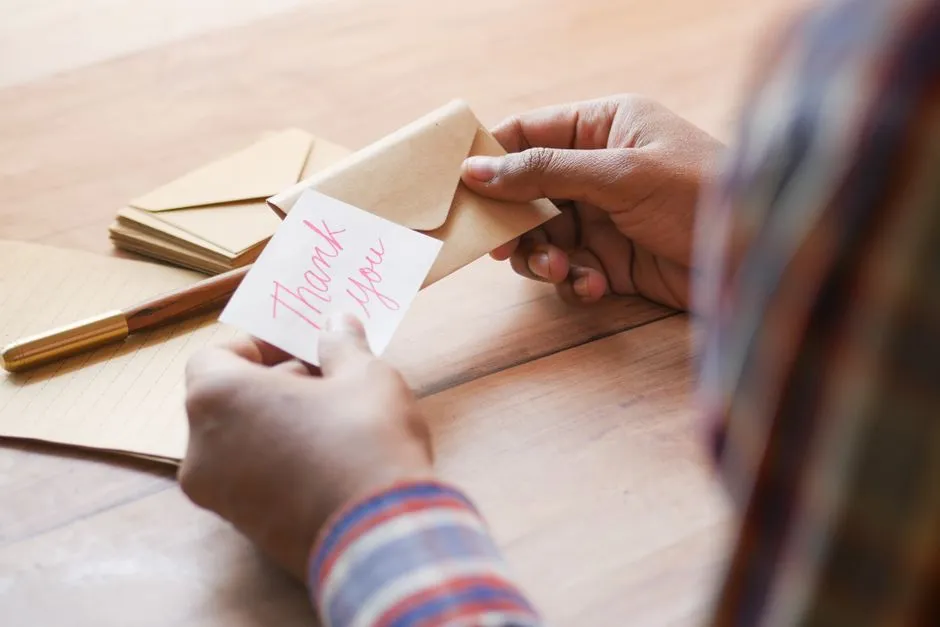
The evidence is unusually consistent here. Sending a thank-you note benefits the recipient more than the writer expects, improves the writer’s own well-being, and strengthens the relationship between both people. A 2025 study using data from the Global Flourishing Study analyzed nationally representative samples from over 200,000 participants across 22 countries, and found that mean gratitude scores varied widely across cultures, suggesting gratitude expression is shaped partly by social habit, and habits can be rebuilt.
The thank-you note hasn’t disappeared because people stopped feeling grateful. It disappeared because the path of least resistance became a text, a reaction, a fleeting comment. None of those are wrong exactly, but they’re not the same thing. Somewhere between the envelope and the emoji, something worth keeping got quietly left behind.
AI Disclaimer: This article was created with the assistance of AI tools and reviewed by a human editor.