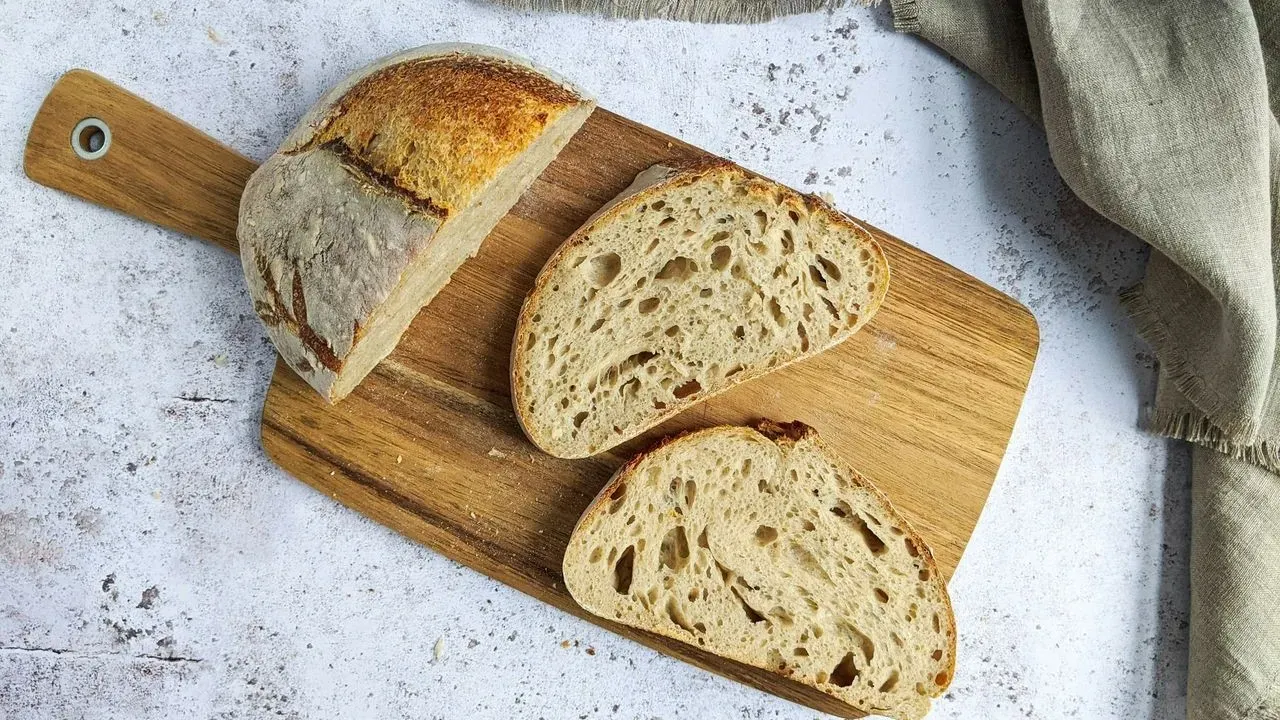

A home baker who regularly picks up loaves from a neighborhood farm stand and a warehouse club noticed a consistent pattern. Both breads developed mold on the counter within roughly a week, yet attempts to extend their life through refrigeration produced a dense, dry crumb that lost appeal quickly. Switching to freezing only the unused portion and thawing small batches as needed preserved the original chew and crust far more effectively. This everyday trial highlights a broader kitchen reality: sourdough behaves differently from standard bread because of the way it is made. The live starter and extended fermentation create natural compounds that slow mold growth, giving the loaf a modest advantage over preservative-free yeasted varieties. Still, time, humidity, and storage choices eventually take their toll.
The Natural Edge That Slows Spoilage
Sourdough fermentation relies on wild yeast and lactic acid bacteria rather than commercial yeast alone. As the bacteria work, they generate lactic and acetic acids that lower the dough’s pH and discourage many common bread molds. Research from university labs has confirmed measurable antifungal effects tied to these organic acids, though results vary with fermentation length and the specific culture used. Not every loaf sold as sourdough reaches the same acidity level, so a grocery-store version may not match a long-fermented bakery or homemade one. The same acidity does not prevent staling. Starch molecules begin to recrystallize soon after baking, firming the crumb well before any mold appears. Refrigeration actually accelerates this process, which explains why a chilled loaf can feel dry and dense even when it remains mold-free.
Clear Signs That the Loaf Has Turned
Visible mold remains the most obvious indicator. Fuzzy patches in white, green, black, or blue-gray tones signal that the bread should be discarded entirely. A dusty flour residue from baking can look similar at first glance, so any questionable spot deserves close inspection for texture and color depth. Staling produces a firm or dry crumb without safety concerns. The bread stays edible and often works better for croutons, bread pudding, or stuffing once it reaches this stage. Off odors that shift from the normal tang to something sharply sour, yeasty, or alcohol-like, especially when paired with sliminess, point to bacterial spoilage and mean the loaf belongs in the trash.
Comparing Storage Options
Different locations in the kitchen affect mold risk and texture in distinct ways. A short comparison shows the trade-offs clearly.
| Storage Method | Typical Mold-Free Window | Texture Impact |
|---|---|---|
| Room temperature, paper bag or cut side down | 3–7 days | Crust stays crisp longer |
| Sealed plastic bag at room temperature | 2–4 days | Crust softens quickly |
| Refrigerator, wrapped | 1–2 weeks | Crumb firms noticeably faster |
| Freezer, sliced in airtight bag | Indefinite safety; best quality within 3 months | Texture preserved when toasted from frozen |
The freezer stands out because it halts both mold growth and starch changes at once. Slicing before freezing allows cooks to remove only what they need and toast slices directly, avoiding the texture loss that comes with full thawing on the counter.
Putting the Guidance Into Practice
For crusty artisan loaves, a paper bag or bread box at room temperature works well for the first few days. In hot or humid kitchens, the refrigerator can reduce mold risk, though the trade-off in texture is noticeable. Once the loaf passes the initial window, moving sliced portions to the freezer prevents waste. Stale sourdough need not be discarded. It forms the base for bread pudding, croutons, or a sturdy bread bowl for soup. These uses turn an inevitable texture change into an advantage rather than a loss. Home cooks who track their own loaves quickly learn that the combination of room-temperature storage for a few days followed by freezing delivers the best balance of convenience and quality. The approach reduces the frequency of mold surprises and keeps more of each purchase usable, a small but steady improvement in everyday kitchen routines.
AI Disclaimer: This article was created with the assistance of AI tools and reviewed by a human editor.