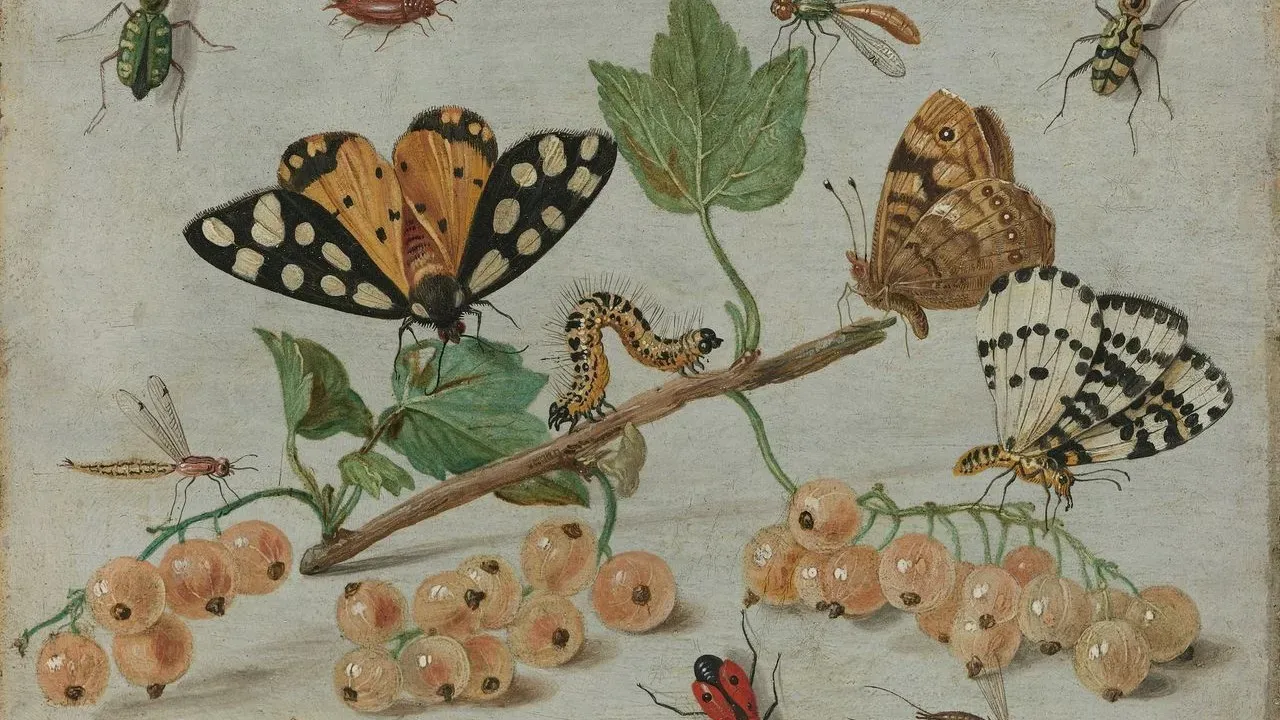

A gardener leans over a squash plant on a warm afternoon and spots a cluster of small, dark insects moving across the leaves. The instinct to reach for a spray bottle is strong, yet pausing to watch reveals something unexpected. Many insects that appear threatening at first glance turn out to be either neutral or actively helpful in the garden ecosystem.
Ladybugs That Hide in Plain Sight
Native ladybugs, such as the red-spotted Hippodamia convergens, are familiar to most gardeners. Yet certain species within the Scymnus group present a different challenge. These tiny beetles measure roughly the size of a pinky nail and carry dark coloring that can lead to confusion with flea beetles at first glance.
The distinction lies in body shape rather than color. Flea beetles show an elongated form with enlarged hind legs suited for jumping, while Scymnus ladybugs maintain the classic domed, oval profile. In their larval stage the resemblance shifts again. Scymnus larvae develop a white wax coating that echoes mealybugs, yet they move quickly and feed on aphids rather than plant tissue.
True Bugs and Their Close Relatives
The suborder known as true bugs includes a wide range of garden visitors whose nymph stages often look nearly identical when newly hatched. Squash bugs, leaf-footed bugs, and milkweed bugs share compact bodies and similar markings early on, making visual identification alone unreliable. Behavior and host plant become essential clues.
Bordered plant bugs of the Largus group frequently appear alongside squash bugs on the same crops. Adults can be mistaken for one another, though the bordered plant bug is generally considered neutral rather than a major pest. Their nymphs, however, diverge sharply in appearance, reducing confusion at that stage. Observing whether an insect is actively damaging fruit or simply present helps separate the truly problematic from those that cause little lasting harm.
Assassin Bugs Stand Apart
Within the true bug group, assassin bugs develop a noticeably different profile even as nymphs. Their bodies remain slender and somewhat delicate from the moment they emerge, with a longer overall shape and a head that extends distinctly from the thorax. Other true bug nymphs tend toward broader, more compact forms without that separation.
Adult assassin bugs further reveal themselves through head shape and a prominent neck region behind the eyes. These features set them apart from squash bugs and similar species. Because assassin bugs prey on a variety of garden insects, recognizing them early supports natural pest control rather than unnecessary removal.
Hoverflies and Their Double Lives
Adult hoverflies practice Batesian mimicry, adopting the appearance of bees or wasps to deter predators. Their eyes nearly touch in the center of the head, unlike the smaller, oval eyes positioned on the sides of a bee’s head. Both groups serve as pollinators, so the resemblance rarely causes practical problems for gardeners.
The larval stage creates the greater risk of mistaken identity. Hoverfly larvae display coloring and patterning that can suggest a caterpillar, yet they lack legs and taper toward the head. Most importantly, they remain among aphid colonies and consume those soft-bodied insects rather than plant material. A quick check of activity and body shape quickly separates the two.
Building Better Observation Habits
Effective identification begins with deliberate looking rather than immediate action. Gardeners benefit from examining an insect from multiple angles, noting its movement, and recording the plant species involved. Checking for damage and watching interactions with other insects provides additional context that photos alone cannot supply.
Many insects remain neutral or beneficial unless populations reach damaging levels. A few leaf-footed bug adults rarely justify intervention, while a sudden aphid explosion may require support from existing predators. The key lies in understanding numbers and timing rather than assuming every unfamiliar form requires removal.
Key reminders for the garden:
- Size, shape, and movement often distinguish lookalikes more reliably than color.
- Host plant and feeding behavior provide critical context.
- Most insects fall into neutral or beneficial categories when populations stay balanced.
Over time, these small pauses build a more resilient garden where natural allies remain in place. The result is fewer unnecessary interventions and a richer understanding of the living system already at work among the plants.
AI Disclaimer: This article was created with the assistance of AI tools and reviewed by a human editor.