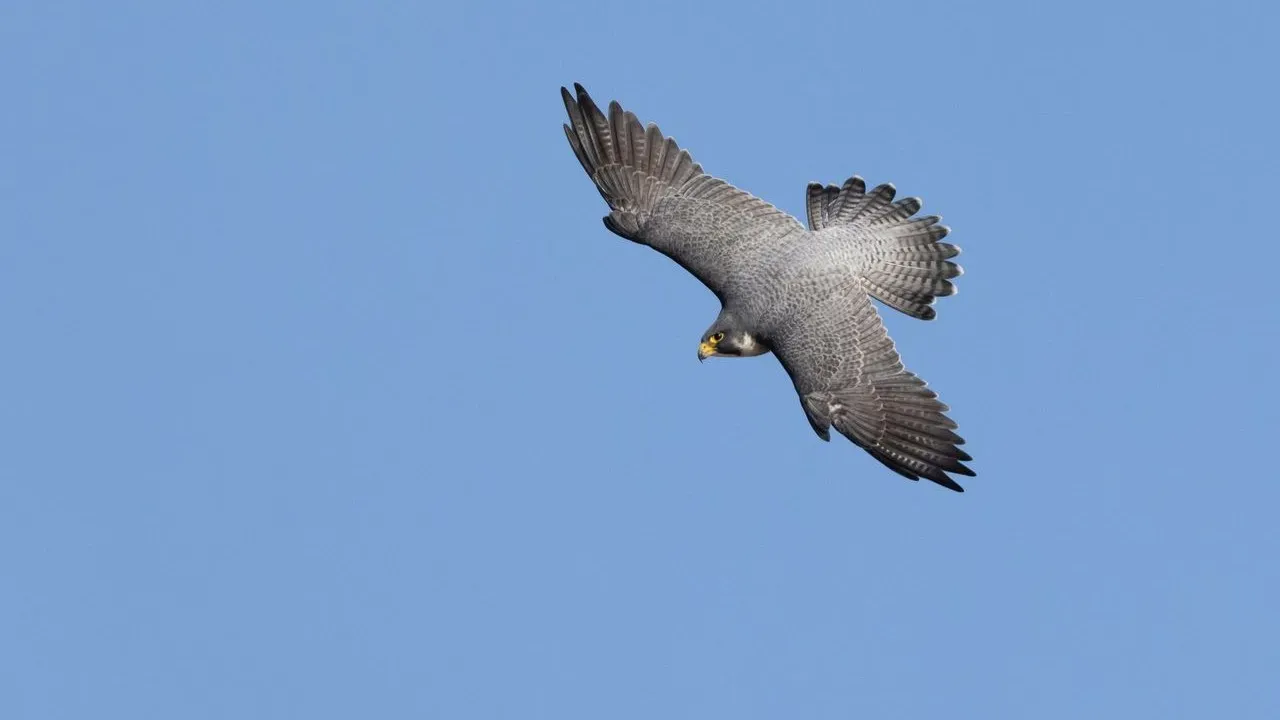

Louisville – An abandoned 13-story cold storage building has become an unlikely stronghold for urban wildlife. A cottonwood tree clings to its rooftop, peregrine falcons raise chicks in a window box, and purple cliffbrake ferns cascade down its limestone walls. These plants and birds have endured ice storms that should have destroyed them, turning a derelict industrial relic into a living example of nature’s persistence.
A Chance Encounter Reveals Hidden Life
The story began with a rooftop tree that survived repeated ice events. What first appeared to be a sycamore turned out to be a cottonwood, and the tale quickly expanded. Local businessman David Levine, who owns the nearby Fleur de Flea vintage warehouse, had been photographing nesting peregrine falcons on the building for weeks. The two sites sit close enough that Levine’s friend, sculptor Matt Weir, had spotted the birds from his ground-floor studio a decade earlier. Weir alerted Kentucky Fish and Wildlife, which installed a nesting box. The falcons returned in 2024 and produced three chicks that fledged successfully. Pam Spaulding, a retired photographer and birder, joined Levine to observe the nest through high-powered binoculars. She noted the adults’ powerful flight pattern: quick wingbeats followed by short glides, repeated as they patrolled their territory and delivered prey such as pigeons to the young.
Ferns Take Root in Unexpected Places
While exploring the perimeter of the Fleur de Flea, the group noticed a fern growing beside a leaky downspout. Identification through a plant app pointed to Pellaea atropurpurea, the purple cliffbrake. Further inspection revealed the same species cascading more than 100 feet down the east face of the Ice Tower itself, thriving in cracks where mortar and seepage created suitable conditions. Gardener Leslie Pancratz, who maintains the fern collection at Whitehall, confirmed the species is native to Jefferson County yet rarely seen in cultivation. Real estate developer James Duffy, one of the building’s owners, recalled that limestone cliffs once lined the nearby South Fork of Beargrass Creek before channelization. Those original cliffs supported cliffbrake ferns, suggesting the Ice Tower now mimics that lost habitat.
History and Human Connections Converge
The building once stood beside Ferncliff Distillery, founded in 1870. Its concrete pad remains, and Duffy has discussed plans to revive the distillery. The site also served as a popular hangout for teenagers and graffiti artists until security measures tightened. Today, video cameras and the watchful eyes of Levine and Weir help protect the federally protected peregrines under the Migratory Bird Treaty Act. A small group that included Duffy, Levine, Weir, Spaulding, Pancratz’s husband Mike Hayman of TreesLouisville, and brewery owner Kyle Jahn gathered to climb to the roof. They examined the cottonwood up close and discussed how the structure’s durable columns and unique mortar mix may have aided the survival of both tree and ferns. The outing brought together people who had not known one another weeks earlier.
Why This Matters Now
The Ice Tower demonstrates how abandoned urban structures can support biodiversity when conditions align. The cottonwood endured ice that would fell many trees. The falcons found a secure nesting site above the city. The ferns exploited microclimates created by leaks and limestone. These elements together show that even heavily altered city landscapes can harbor resilient native species. Observers continue to monitor the site, aware that the first year for young peregrines remains the most dangerous and that the building’s future use could affect the plants and birds that have claimed it.
AI Disclaimer: This article was created with the assistance of AI tools and reviewed by a human editor.