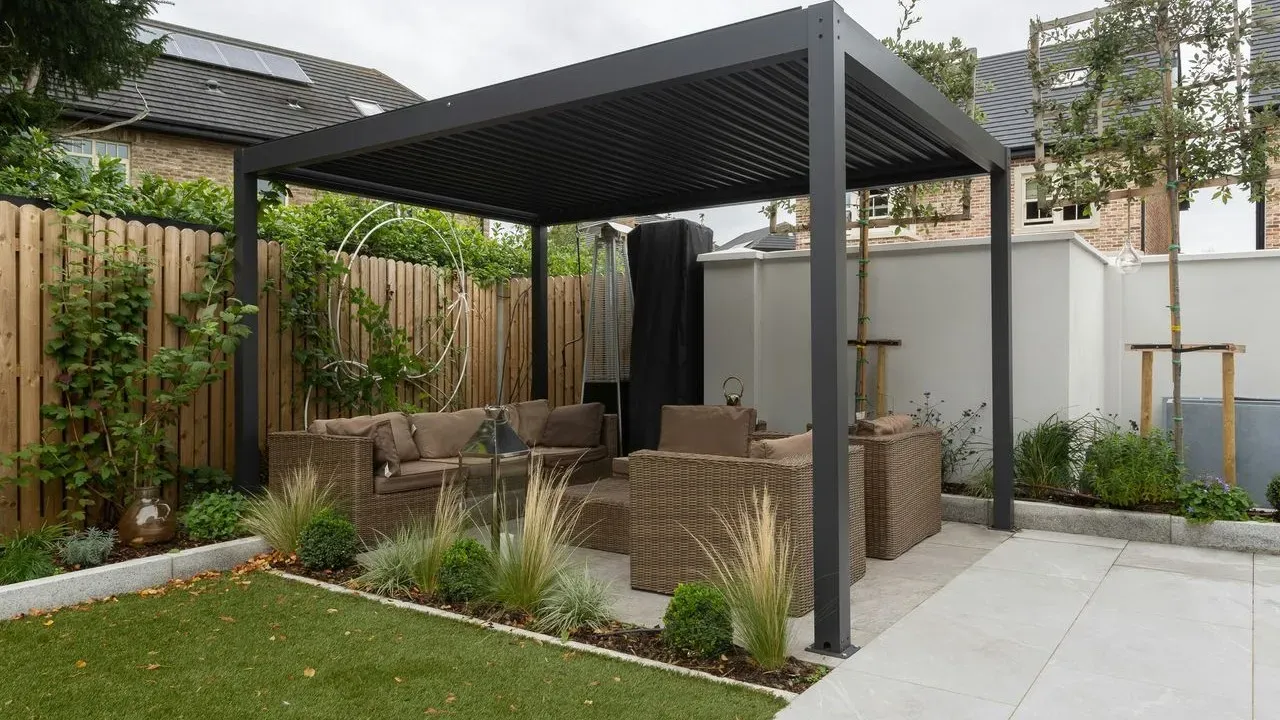

Modern louvered pergolas deliver adjustable shade and weather protection that fixed roofs cannot match. Their crisp profiles and mechanical elements, however, often appear abrupt against softer garden surroundings. Strategic planting resolves that contrast by allowing the structure to merge with existing greenery rather than dominate it.
Climbers That Disguise the Framework
Climbing plants quickly mask the vertical supports and any adjacent trellis work. Species such as fragrant jasmine, richly coloured clematis, climbing roses and wisteria introduce seasonal flowers, varied foliage and pleasant scent while the evergreen options maintain coverage through winter. These plants embrace posts and rails, adding texture and movement that the rigid aluminium or timber frame lacks on its own.
Care remains essential around the adjustable roof. Gardeners keep vigorous stems clear of the moving louvers to avoid mechanical interference and long-term damage. With that single precaution observed, the climbers transform an engineered object into a living vertical element that changes with the seasons.
Ground-Level Planting That Anchors the Design
Layered planting at the base creates a gradual transition from garden soil to the pergola itself. Ornamental grasses, flowering shrubs and compact evergreens planted at staggered heights draw the eye upward and soften the junction where posts meet the ground. Low-growing species along pathways define circulation routes while reducing soil compaction from foot traffic.
Taller shrubs positioned on the windward side add shelter and privacy without enclosing the space. The resulting mix of leaf shapes, colours and textures makes the pergola feel like a natural extension of the border rather than an added structure. This approach works equally well in formal and informal gardens.
Containers That Offer Flexibility and Style
Large pots and troughs provide instant greenery without permanent excavation. Olives, lavender and small specimen trees in substantial containers introduce silvery foliage, aromatic leaves and architectural form that complement the pergola’s clean lines. Because the planters can be moved, owners adjust the layout for entertaining, seasonal displays or maintenance access.
Modern troughs in stone or powder-coated metal further echo the pergola’s materials while supplying organic contrast. The combination of fixed climbers and portable containers gives gardeners precise control over the degree of integration at any stage of plant growth.
Finishing Touches That Complete the Outdoor Room
Once the planting framework is in place, simple additions turn the shaded area into a usable living space. Comfortable seating, subtle lighting and natural materials such as timber decking or stone paving reinforce the sense of an oasis. The louvered roof continues to regulate light and ventilation, while the surrounding greenery supplies privacy and seasonal interest.
The result is an outdoor room that feels both contemporary and rooted in the garden. Owners gain a versatile zone for reading, dining or working that changes character through the year yet remains visually connected to the wider landscape.
AI Disclaimer: This article was created with the assistance of AI tools and reviewed by a human editor.