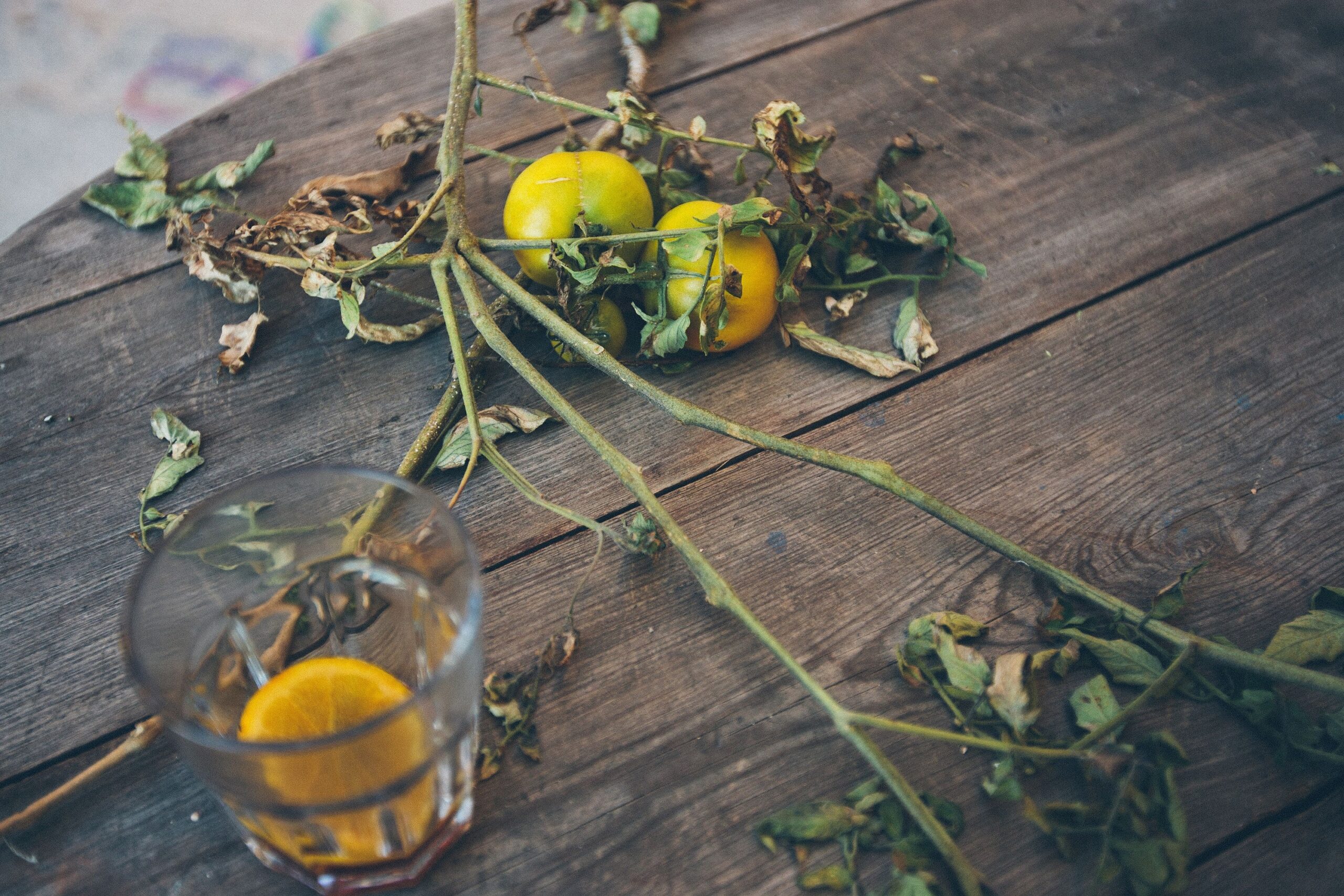

You’re out checking the garden in the early morning light, coffee in hand, and there it is. A lower leaf on one of your tomato plants has gone from healthy green to a dull, unmistakable yellow overnight, or so it seems. It’s one of the most common moments in vegetable gardening, and also one of the most confusing, because yellow leaves can mean a dozen different things depending on where they show up and what they look like up close.
1. Stop And Look Before You Do Anything Else

The instinct to grab fertilizer or fungicide the moment you spot yellow leaves is understandable, but it’s the wrong first move. According to Texas A&M AgriLife Extension, as a tomato plant grows, it is often thought that lower leaves naturally turn yellow and die off, but that is not actually true, and a healthy, well maintained plant should have green leaves from bottom to top.
That single fact changes how you should approach the problem. Instead of reaching for a bottle, take five minutes to note exactly which leaves are affected, whether the yellowing is uniform or blotchy, and whether the plant is wilting at the same time.
2. Check If It’s Nitrogen Deficiency First
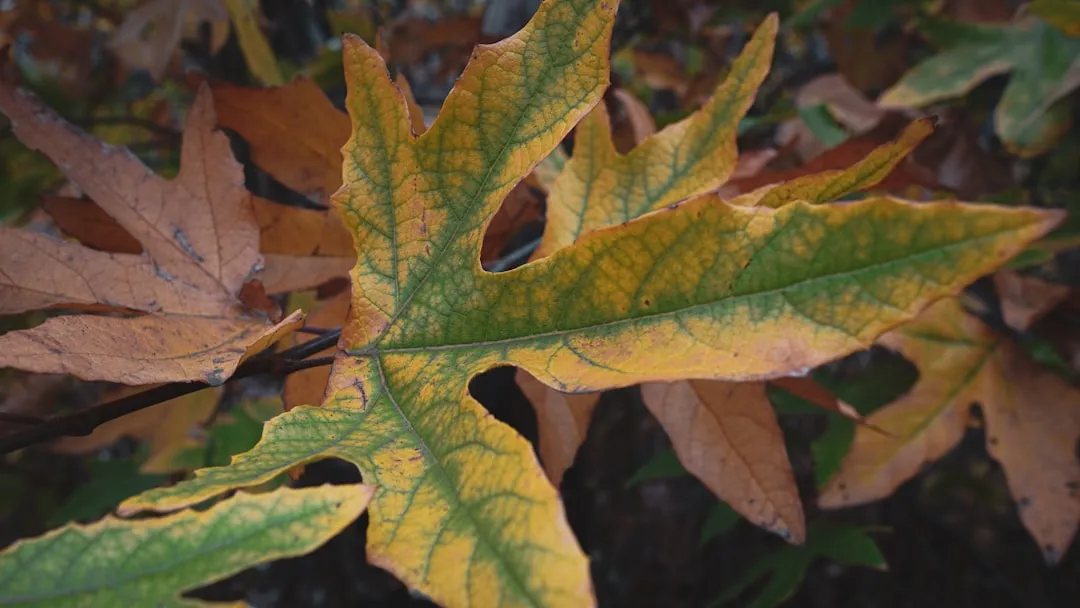
Nitrogen deficiency is the single most common reason home gardeners see yellow tomato leaves, and it has a very specific signature. Yara’s crop nutrition guide notes that when nitrogen is deficient, leaves are small and pale green to yellow in color, with symptoms first seen in the old leaves before gradually progressing to new growth.
Texas A&M AgriLife adds that nitrogen deficiency causes older leaves to turn yellow and die, since the plant is essentially cannibalizing nitrogen from its oldest foliage to keep new growth alive. If this matches what you’re seeing, a balanced fertilizer applied at the base, followed by consistent watering, usually turns things around within one to two weeks.
3. Rule Out Magnesium Deficiency Next
If the yellowing looks less like a solid wash of color and more like a pattern, with green veins standing out against yellow tissue, magnesium is the likely suspect. This condition, known as interveinal chlorosis, has a very distinct look, and gardening resource GrowVeg describes the main sign of magnesium deficiency as yellow leaves with distinct green veins, a phenomenon known as interveinal chlorosis.
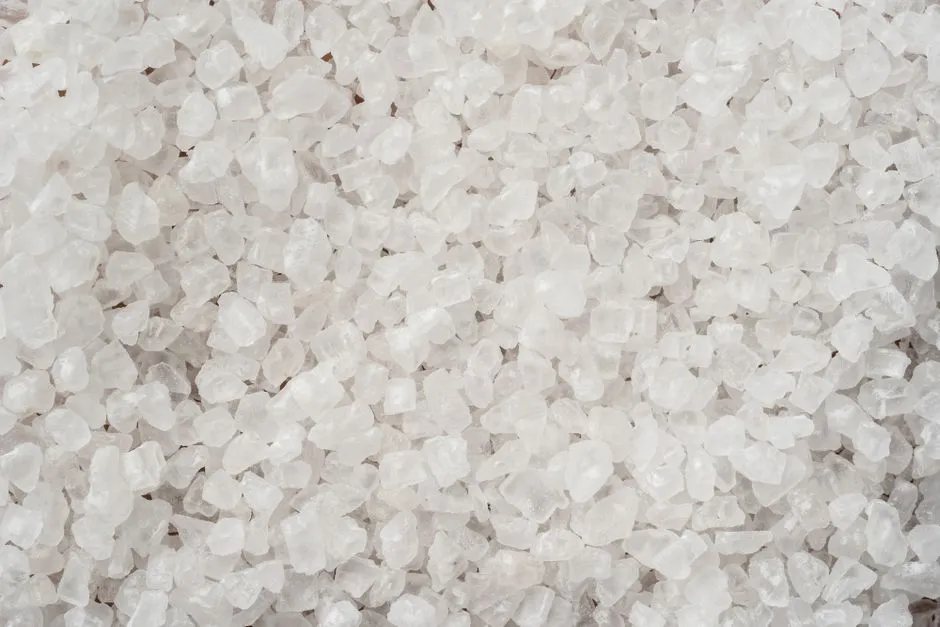
The fix is refreshingly simple. Gardeners can add some Epsom salt to the soil or spray the leaves with a diluted solution, and most sources agree this remedy works within about a week if magnesium is truly the issue.
4. Look At The Newest Leaves For Iron Problems
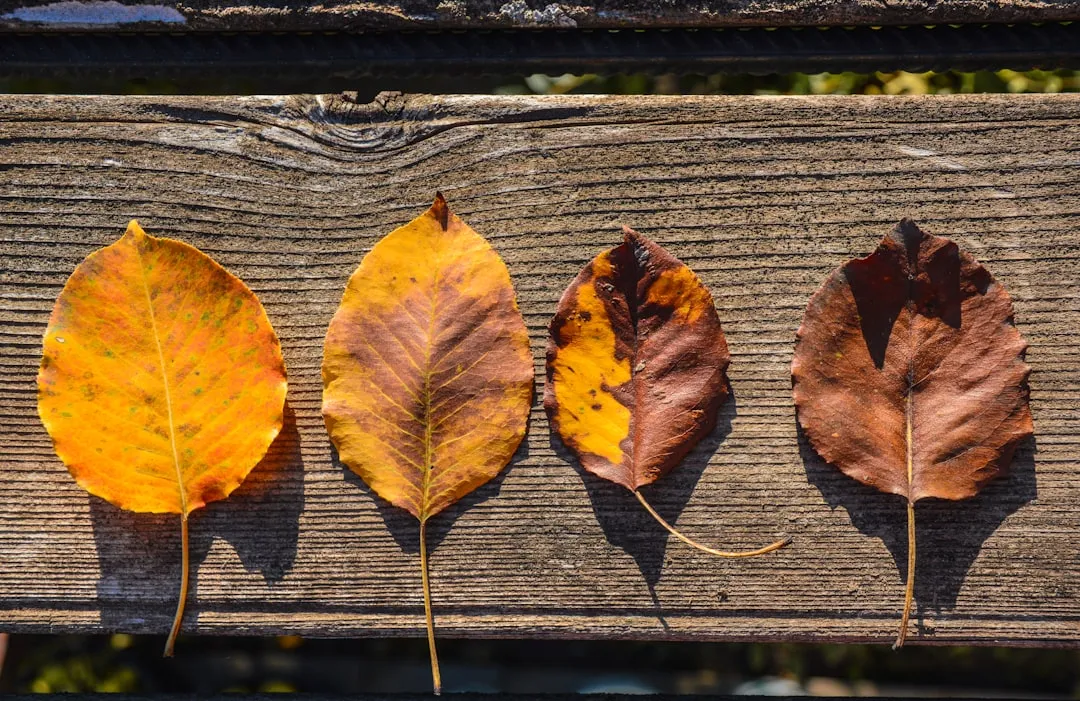
Not all deficiencies behave the same way, and iron is the exception to the “older leaves first” rule that applies to nitrogen and magnesium. Texas A&M AgriLife Extension notes plainly that iron deficiency causes yellowing in younger leaves, which is the opposite pattern from nitrogen shortage.
This distinction matters because treating an iron problem with more nitrogen fertilizer won’t help and can even make things worse. Iron deficiency is often tied to soil pH, since iron becomes less available to roots in alkaline soil, so a soil test is worth doing before adding any iron supplement.
5. Consider Your Watering Habits
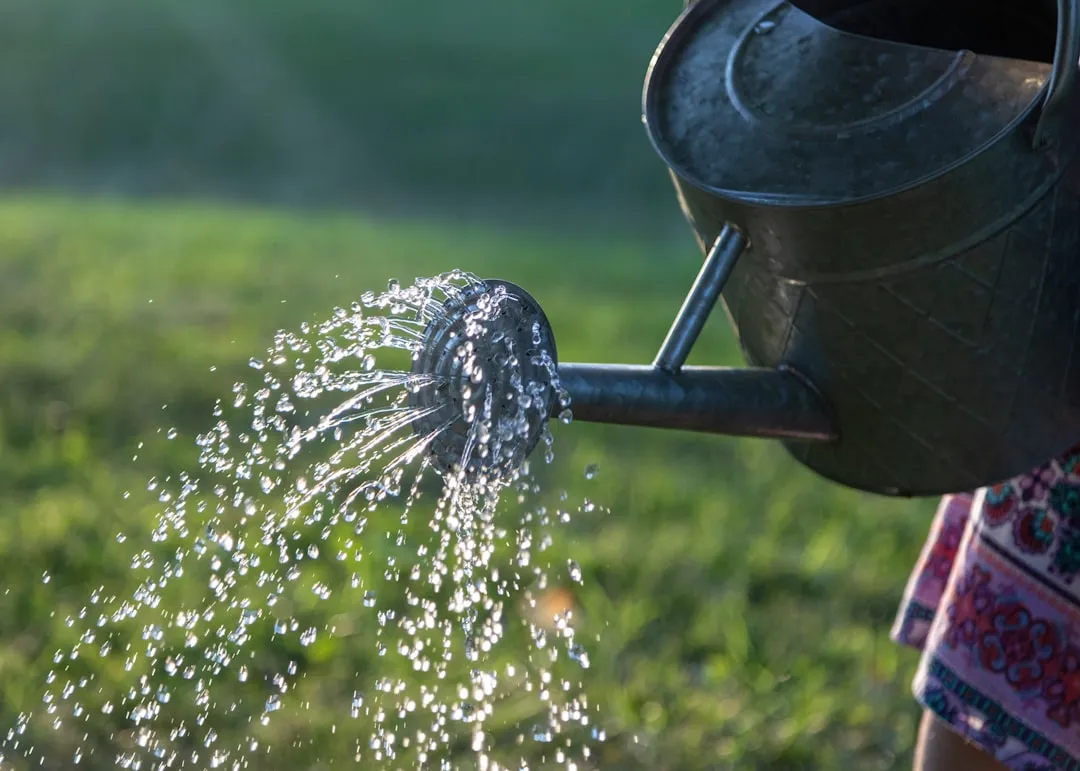
Sometimes the cause has nothing to do with nutrients at all and everything to do with the hose. Extension research notes that soil moisture plays a major role in nutrient uptake, since tomato plants require consistent, even moisture, not too soggy or too dry, because overwatering can wash away valuable nutrients while underwatering makes it hard for roots to access what’s there.
Irregular watering is also flagged by Texas A&M AgriLife as a contributing factor to overall plant stress and yellowing. The fix here isn’t a product at all, it’s a rhythm: deep, even watering on a consistent schedule, paired with a layer of mulch to keep soil temperature and moisture more stable.
6. Check For Early Blight On The Lower Leaves
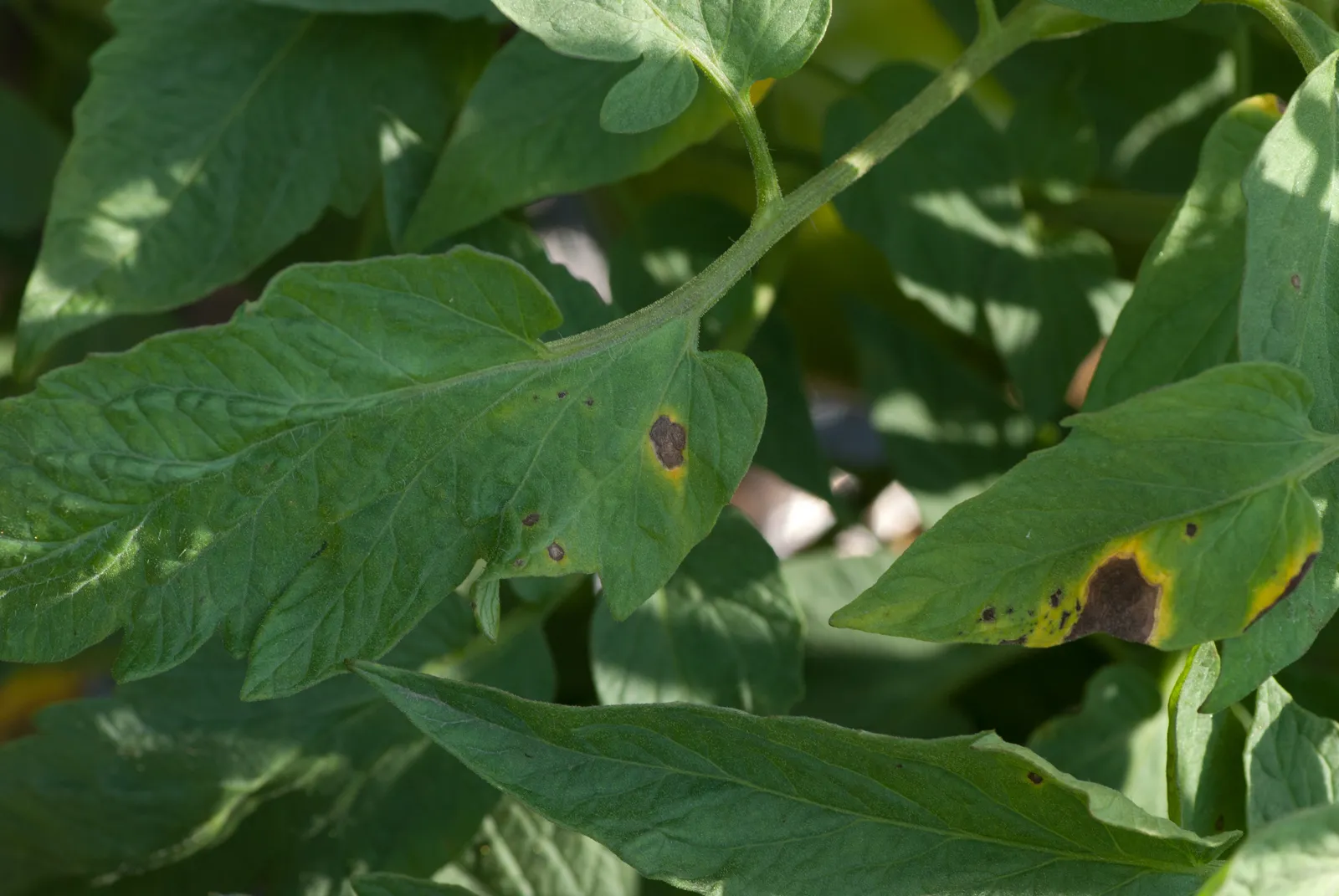
If the yellowing comes bundled with small dark spots that have a target-like ring pattern, you’re likely dealing with a fungus rather than a nutrient issue. The Old Farmer’s Almanac explains that this disease, caused by Alternaria fungi, first attacks the lower leaves of tomatoes and moves up the plant, and that during wet or humid conditions, the fungus can replicate rapidly, with spores produced as quickly as three to five days after spots first appear.
Texas A&M AgriLife confirms that fungal pathogens like early blight typically start on the bottom leaves, while yellowing can be a sign of nutrient deficiencies instead, which is exactly why the spotting pattern matters so much for correct diagnosis. Removing and destroying infected lower leaves, improving airflow around the plant, and watering at the soil line rather than overhead all help slow the spread.
7. Watch For One-Sided Yellowing, A Sign Of Fusarium Wilt
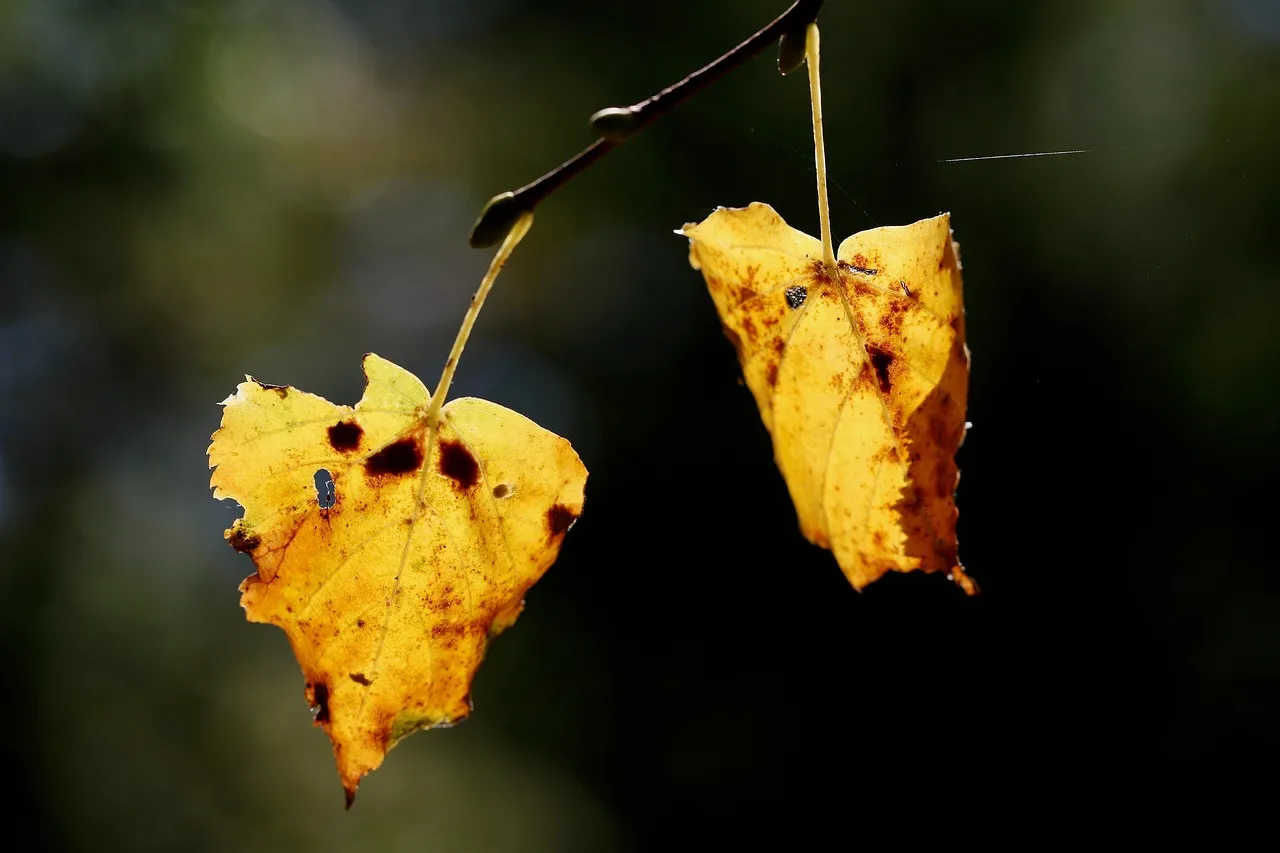
This one has a genuinely distinctive tell that sets it apart from almost every other cause on this list. NC State Extension describes how Fusarium wilt symptoms appear as one-sided wilting of only half of the plant, branch, or leaflet, and while the plant may initially seem to recover, the wilt becomes permanent as the disease progresses.
UC’s Integrated Pest Management program adds that individual branches and associated leaves on infected plants become yellow and wilt, sometimes affecting only one branch or one side of the plant, creating what’s called a yellow flag effect. If you suspect this, slice into the stem near the soil line, because NC State notes that longitudinal light brown streaks can be seen within the vascular tissue at the center of the inner stem, and unfortunately, there’s no cure once a plant is infected, only removal and future prevention through resistant varieties.
8. Don’t Confuse It With Verticillium Wilt
Verticillium wilt looks similar enough to Fusarium that even experienced gardeners mix them up, and sometimes a lab test is the only way to tell for certain. UC Cooperative Extension describes how Verticillium wilt is signaled by yellowing in the older leaves and wilting of shoot tips during the warmth of the day, with leaves starting to curl up and often fall, while wilting becomes worse until the plant’s condition becomes quite poor and it may die.
Both diseases are caused by soil-borne fungi that affect the plant through the roots and disrupt the tissues that conduct water through the plant, which is why crop rotation and resistant varieties matter so much for prevention. If you’ve had either disease in a bed before, avoid planting tomatoes, peppers, or eggplant there for several years, since these fungi can persist in soil for a long time without a host.
9. Look For Whiteflies If Yellowing Comes With Curling
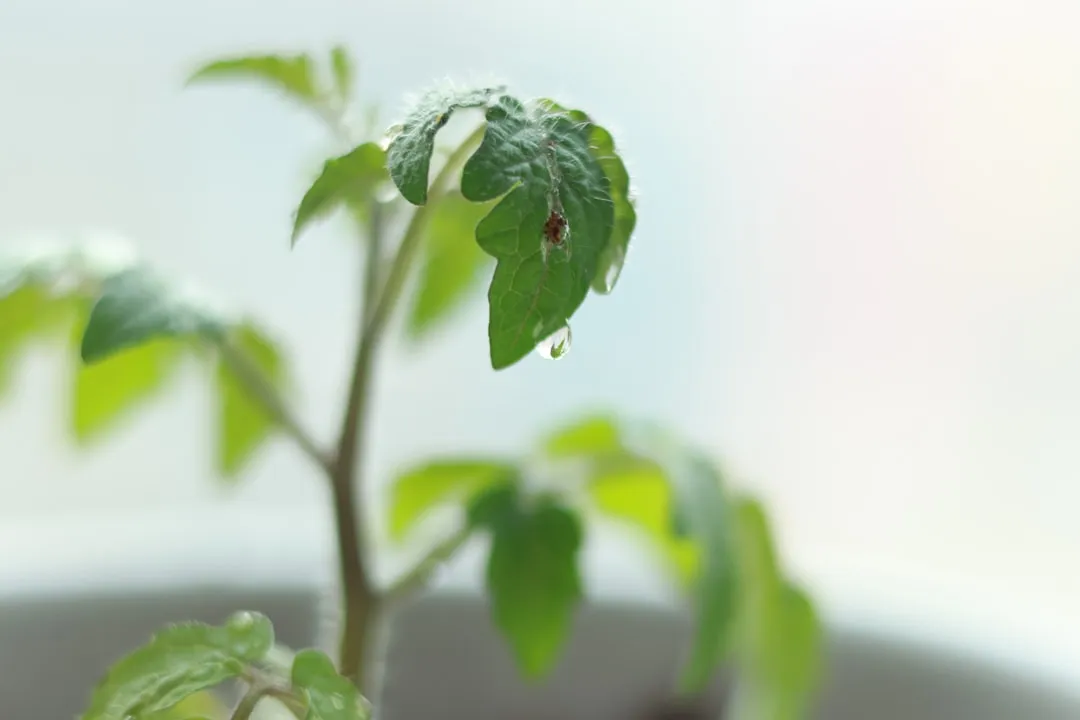
If yellow leaves are also curling upward or downward, especially on new growth, an insect-borne virus could be behind it. NC State Extension explains that Tomato Yellow Leaf Curl Virus causes yellowing of young leaves, upward and downward leaf curl, stunting, a bushy appearance, and flower drop, which occurs prior to fruit set and dramatically reduces fruit yield.
This virus is transmitted by adult whiteflies and is difficult to control once introduced to an area, so checking the undersides of leaves for tiny white flying insects is a useful diagnostic step. There’s no cure for infected plants, so the practical response is removing infected plants promptly and controlling the whitefly population with sticky traps, insecticidal soap, or reflective mulch to reduce transmission to healthy plants nearby.
10. Know When To Get A Second Opinion
Some of these problems look so similar on a phone screen that even a knowledgeable gardener benefits from outside input. An extension expert responding to a real gardener’s question in 2025 noted that a mixture of healthy-looking leaves and yellow leaves is a striking feature, since if the cause were something in the soil like a nutrient deficiency, it would be reasonable to expect all the leaves to show yellowing, which is exactly the kind of detail an experienced eye catches that a quick internet search might miss.
Most land-grant universities run free “ask an expert” services, and sending in a clear photo along with details about watering, fertilizing, and the pattern of yellowing often gets you a reliable answer within a day or two. This step matters most when the cause seems to be one of the wilts or viruses, since a wrong guess there can mean losing an entire bed of tomatoes for several seasons rather than just one plant.
The Bottom Line
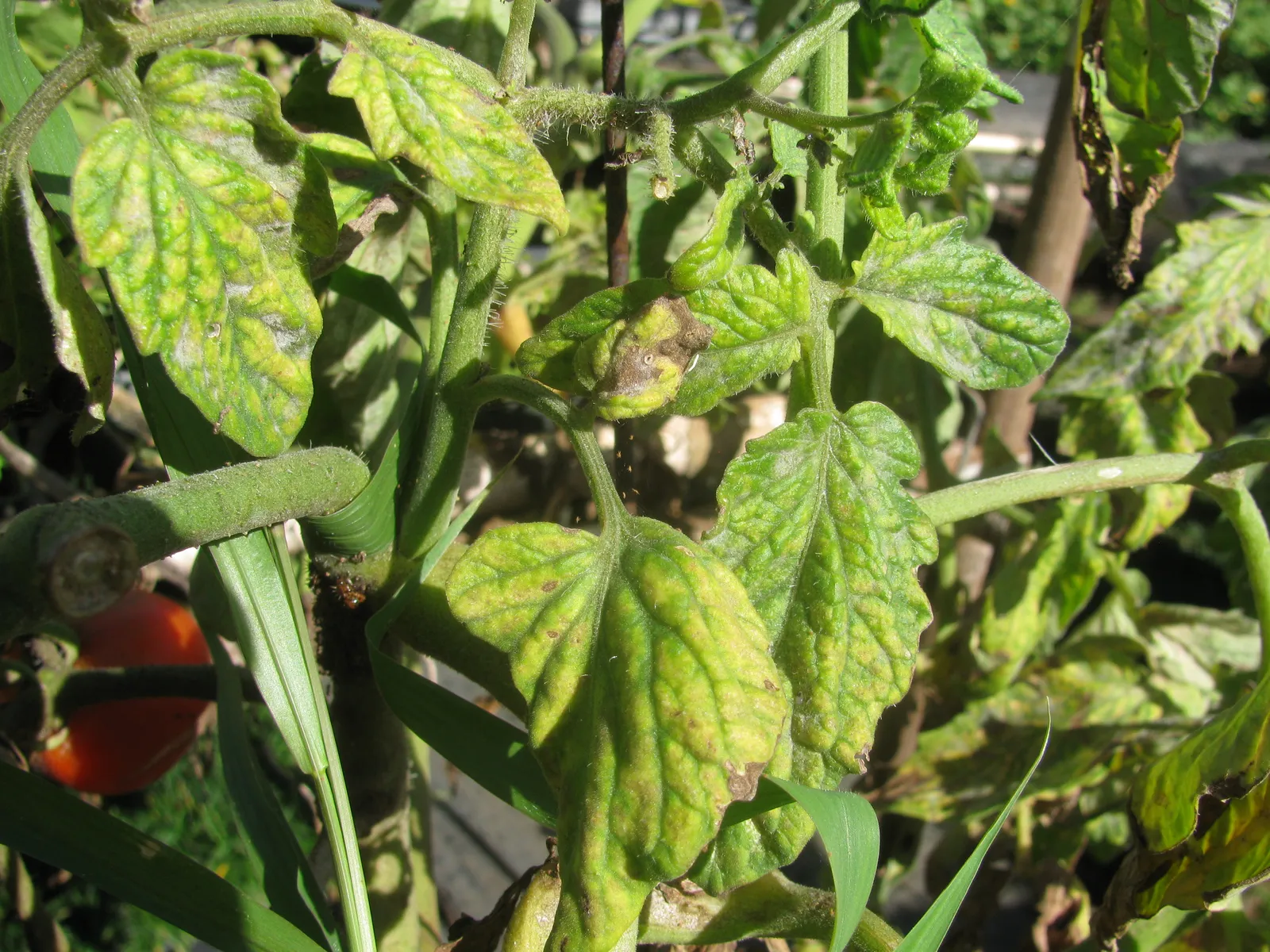
Yellow leaves on a tomato plant are never something to ignore, but they’re also not automatically a death sentence. The pattern of where the yellowing starts, whether it spreads evenly or to just one side, and what accompanies it, whether spots, wilting, or curling, together tell a fairly reliable story about the cause.
Working through these possibilities in order, from the simple fixes like nutrients and watering to the more serious soil-borne diseases and viruses, gives you the best shot at catching the problem early enough to save the plant, or at least protect the rest of your garden from whatever is going on.
AI Disclaimer: This article was created with the assistance of AI tools and reviewed by a human editor.