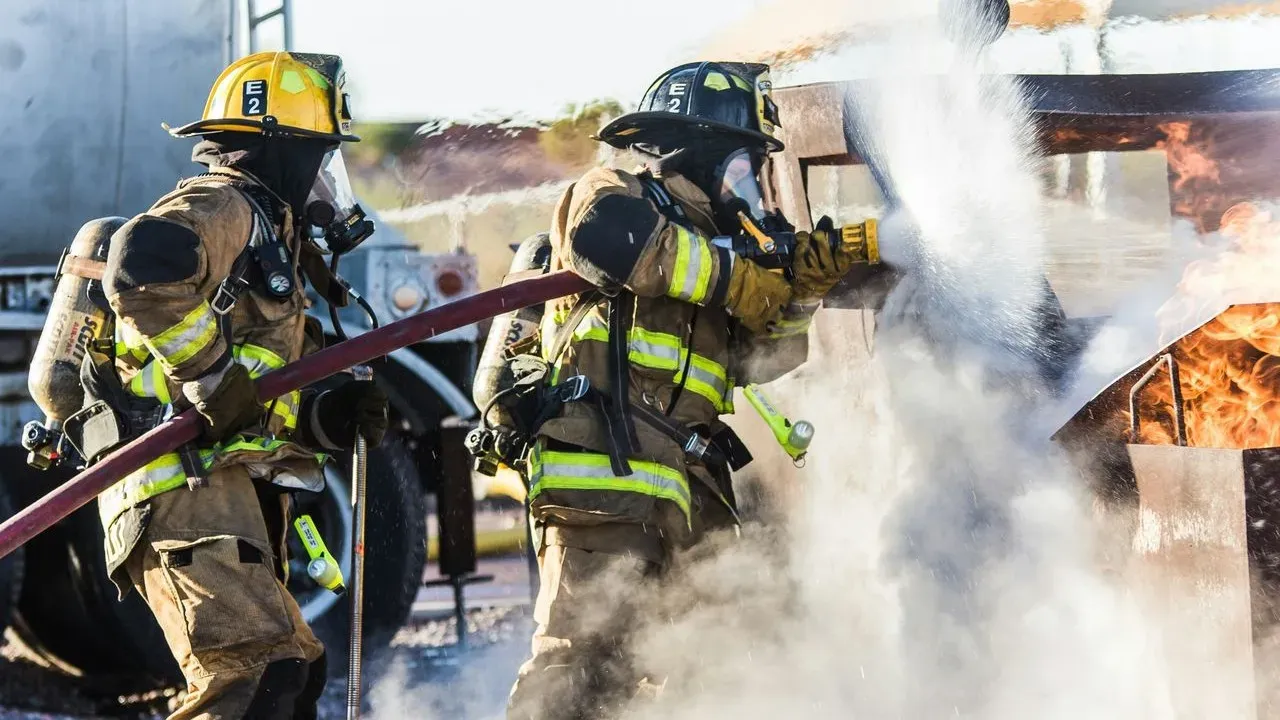

Southern Europe faced intense wildfire activity over the weekend, with crews in Portugal confronting a large blaze that had already scorched thousands of hectares. In Greece, officials issued urgent public health alerts after flames reached a recycling facility near Thessaloniki. The incidents highlight the ongoing strain on emergency services and local communities during the summer months.
Portugal Fire Spreads Across Thousands of Hectares
More than 1,200 firefighters supported by nearly 400 vehicles and 15 aircraft worked to contain the fire in central Portugal’s Vouzela region. The blaze began on Thursday and had burned through 12,000 hectares by Sunday, according to satellite data from the European Union’s Copernicus program. Strong conditions on the ground made containment difficult despite the large response.
Authorities described the fire as one of the more significant incidents in recent days. The affected area includes rural landscapes that support local agriculture and natural vegetation typical of the region. Residents in nearby zones remained on alert as crews continued operations into the following days.
Greek Authorities Issue Smoke Alerts Near Thessaloniki
A separate fire broke out Saturday evening at a recycling plant on the outskirts of Thessaloniki, Greece’s second-largest city. Officials advised people in affected suburbs to stay indoors and keep windows and doors closed because of toxic smoke. Evacuation notices went out for three suburbs plus a facility that houses 157 people with special needs.
Around 160 firefighters battled the flames overnight until aircraft could assist at dawn. The Oraiokastro mayor noted damage to several businesses and homes, with a full assessment planned once the situation stabilized. A 76-year-old man was arrested on suspicion of starting the fire through negligence involving sparks from his vehicle.
The incident followed another wildfire in a nearby area days earlier that claimed the lives of a 12-year-old boy and his father. Fire officials noted that roughly 85 percent of wildfires in Greece stem from preventable causes such as agricultural machinery, discarded cigarettes, or outdoor cooking.
Cross-Border Reinforcements Arrive in Portugal
Spain dispatched 120 firefighters and 45 vehicles to assist Portuguese crews on Friday. Italy and Spain also sent three firefighting aircraft to support the effort. The European Union’s Civil Protection and Humanitarian Aid office coordinated the additional resources.
Greece has faced repeated large fires in recent years, including a deadly 2018 blaze east of Athens and a record-setting 2023 fire in the northeast. The country recently launched four low-orbit satellites to improve early detection and monitoring of new outbreaks. While Greece has avoided the extreme heatwaves seen elsewhere in western Europe this summer, dozens of smaller fires have still occurred across the mainland and islands.
Key points from the weekend response:
- Portugal fire: active since Thursday, 12,000 hectares burned
- Greece: toxic smoke alert in Thessaloniki suburbs after plant fire
- Reinforcements: 120 Spanish firefighters plus aircraft from Italy and Spain
- Prevention note: most Greek fires linked to negligence
These events underscore the persistent challenges of managing summer fires in Mediterranean landscapes. Continued vigilance and rapid response remain central to protecting communities and natural areas.
AI Disclaimer: This article was created with the assistance of AI tools and reviewed by a human editor.