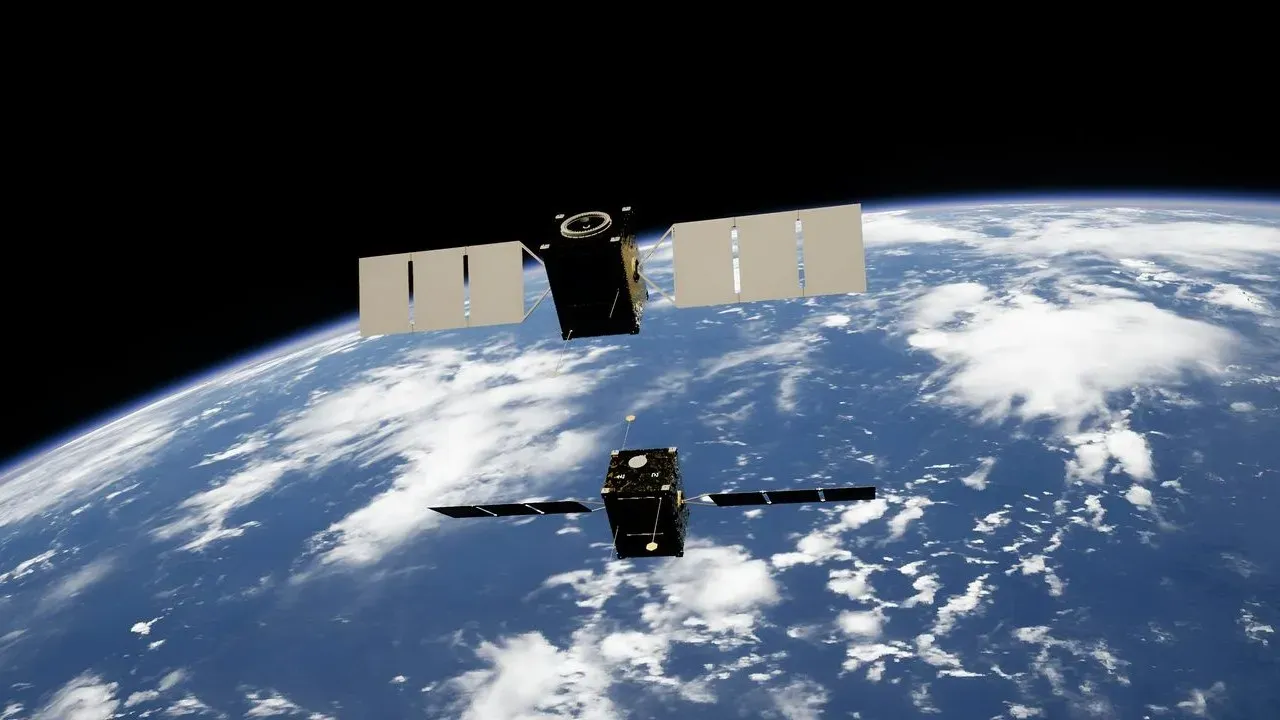

A specialized robotic spacecraft lifted off Friday from a remote Pacific site to intercept and stabilize a NASA observatory that has been losing altitude at an accelerating rate. The mission represents a last-minute effort to preserve an instrument that has tracked cosmic explosions for more than two decades. Without intervention, the telescope faces reentry within months.
Swift’s Accelerating Descent
The Swift Observatory, launched in 2004, has provided continuous data on gamma-ray bursts and other high-energy events across the universe. Recent increases in solar activity have expanded Earth’s upper atmosphere, creating additional drag that pulls the spacecraft downward faster than expected. At its current altitude of 224 miles, the 1.6-ton observatory is now projected to reenter the atmosphere as early as October if no corrective action is taken. NASA placed observations on hold to conserve the remaining fuel and orbital height. The agency determined that a rapid intervention offered the only realistic chance to restore the telescope to a stable orbit before conditions deteriorated further.
Development of the Rescue Vehicle
Katalyst Space Technologies assembled the Link spacecraft in just nine months under a $30 million NASA contract. The vehicle features a distinctive three-armed design intended to gently capture the observatory without causing structural stress. Northrop Grumman provided the Pegasus rocket that carried Link into orbit after release from a modified aircraft over the Marshall Islands. The compressed schedule reflected the narrow window for recovery. Engineers worked to ensure the spacecraft could reach Swift within roughly a month and then perform a controlled series of burns to raise its altitude by about 150 miles.
Execution of the Capture and Boost
Once Link arrives, its arms will secure the telescope before thrusters fire in a gradual sequence. The slow acceleration is intended to avoid any sudden forces that could damage instruments or disrupt the observatory’s delicate balance. If the operation succeeds, Swift could resume scanning the sky by September. The approach avoids the need for a full replacement mission and demonstrates a practical method for extending the life of existing space assets. Similar techniques could apply to other observatories facing comparable orbital decay.
High Stakes and Measured Outlook
Katalyst Space CEO Ghonhee Lee described the effort in advance of launch as a high-risk, high-reward undertaking. The greatest concern, he noted, had always been failing to launch at all and allowing Swift to burn up in the atmosphere. The team focused on eliminating that outcome through rapid development and careful execution. Weather and technical issues caused several delays before liftoff, underscoring the challenges of operating on a tight timeline. Success would mark an early demonstration of commercial spacecraft performing targeted orbital maintenance for government science missions.
Looking Ahead
The same solar-driven atmospheric expansion that threatens Swift is also affecting other spacecraft, including the Hubble Space Telescope. NASA has already identified Hubble as a potential candidate for a comparable rescue operation in coming years. The current mission therefore serves as both an immediate salvage effort and a test case for future interventions. If Link completes its task, Swift will return to an orbit close to its original height and resume its long-running program of observations. The outcome will help determine whether such robotic interventions become a standard tool for preserving valuable scientific assets already in space.
AI Disclaimer: This article was created with the assistance of AI tools and reviewed by a human editor.