
Walk through most suburban neighborhoods and you’ll spot them within minutes. Trees ringed with towering mounds of mulch piled high against their trunks, shaped like small volcanoes. It looks intentional, even caring. Most homeowners who do it think they’re protecting their investment. The reality, as arborists and researchers now document clearly, is the opposite.
Over-mulching has quietly become one of the most widespread threats to landscape trees in North America. A serious and growing trend in landscape maintenance, commonly called “mulch volcanoes,” is rapidly becoming the number one cause of death to shrubs and trees. The damage doesn’t show up overnight, which is part of what makes it so insidious. By the time most people notice something is wrong, the tree may already be beyond saving.
What a Mulch Volcano Actually Is
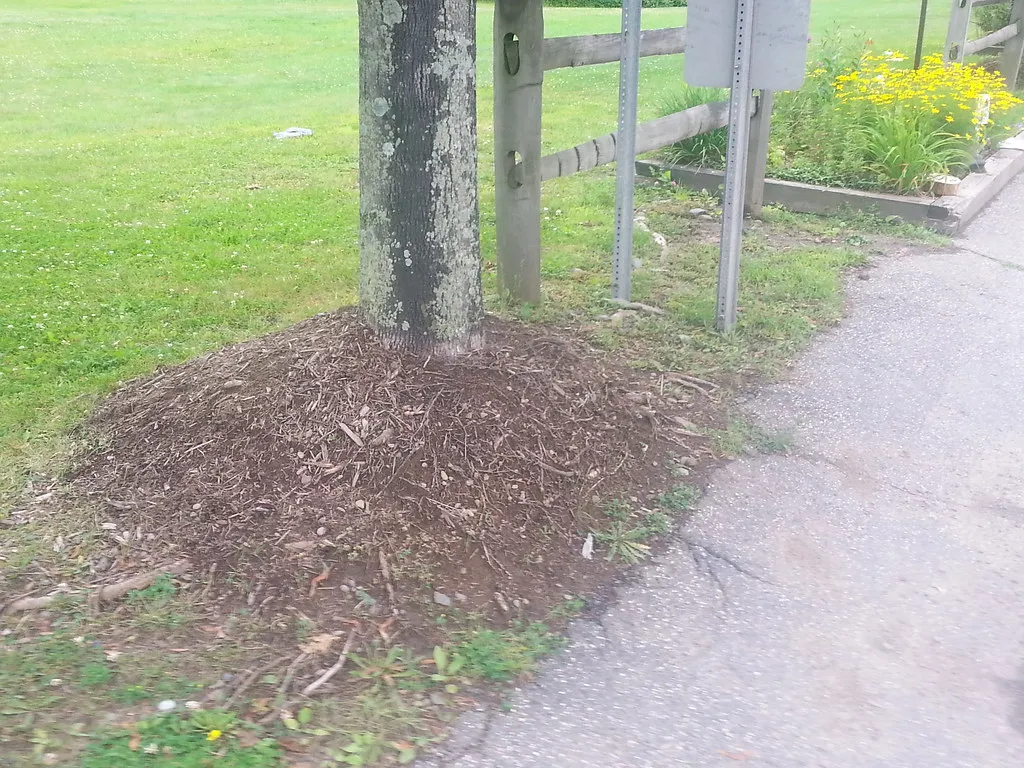
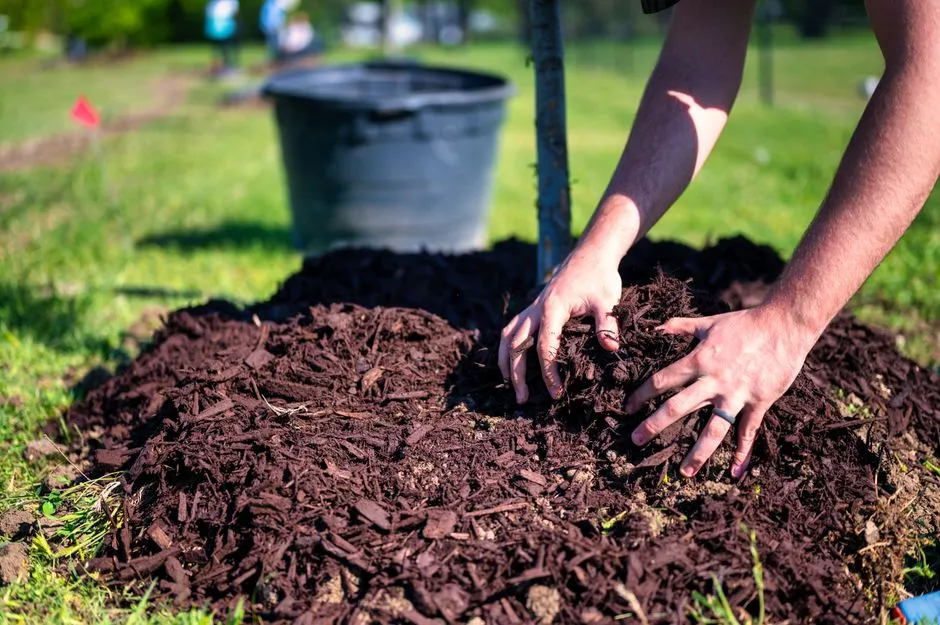
Volcano mulching, also known as over-mulching, is the improper technique of piling mulch high around the tree directly against the tree trunk. It’s the landscaping equivalent of burying a tree alive in slow motion. At its core, this common mistake stems from a misunderstanding of how trees actually function. Trees are not designed to have their trunks buried in organic material. When mulch touches the bark, it sets off a chain reaction that can weaken or even kill the tree over time.
Over-mulching, both by excess depth and by placing mulch against the trunk, allegedly causes suffocation of shallow roots, decomposition of roots, production of roots from the trunk, formation of trunk cankers, and creates environments conducive to pathogens like Phytophthora cinnamomi and Botryosphaeria ribis. These risks have been documented in arboricultural literature for decades, yet the practice remains extremely common.
#1: You’re Suffocating the Roots
One of the most common causes of stress from over-mulching is suffocation of plant roots. Repeated applications of mulch contribute to a waterlogged soil and root zone by slowing soil water loss through evaporation. Roots must respire and take in oxygen, unlike leaves which give off oxygen. When oxygen levels in the soil drop below 10 percent, root growth declines.
A thick, compacted layer of volcano mulch acts like a heavy blanket, preventing the necessary exchange of gases between the soil and the atmosphere. Without enough oxygen, the roots can’t perform their essential functions of absorbing water and nutrients.
Roots respire, meaning they take in oxygen and release carbon dioxide. This exchange of gases takes place in the upper 18 inches of soil. It’s no accident that roots proliferate in the top 18 inches because this is where oxygen is most readily available. The problems caused from yearly over-mulching are not immediate, but progress slowly with time.
#2: You’re Killing the Inner Bark
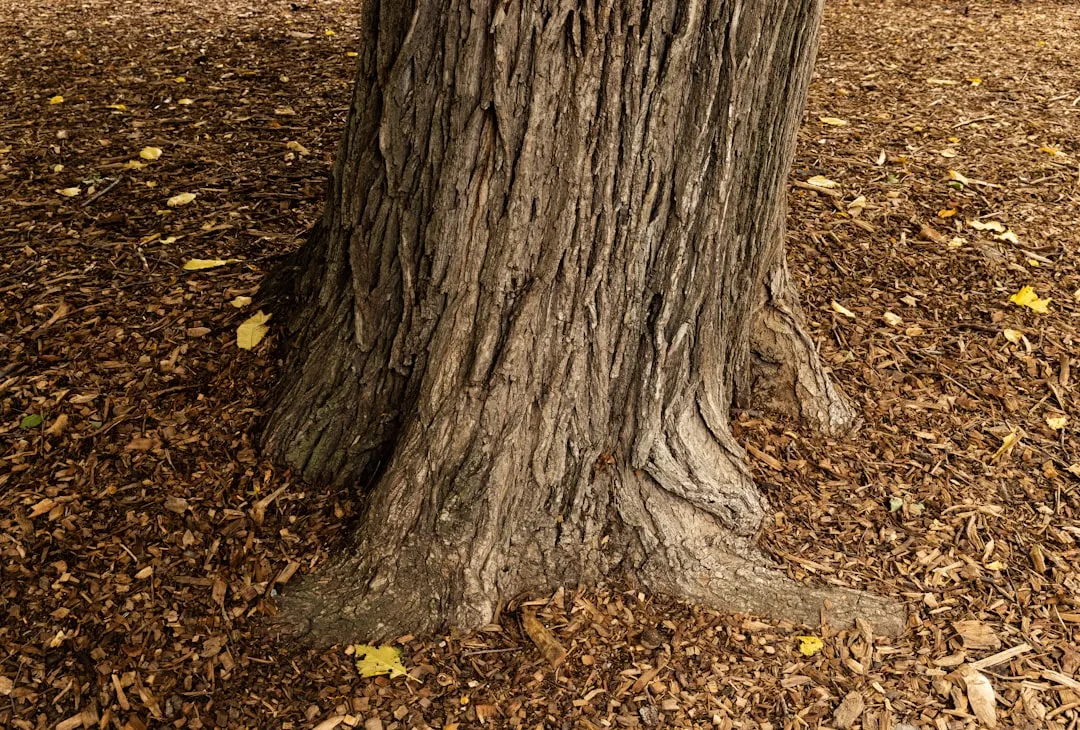
Inner bark death comes from piling mulch directly against the stems and trunks of trees at and above the root flare. Stems and trunks at the root flare have tissues that are quite different from those on roots. These tissues cannot survive a continually moist environment and must be able to breathe through pores called lenticels.
Piling wet mulch up against trees results in heat accumulation in that area. This effect results in rapid decomposition of the bark. Temperatures under the mulch can reach 120 to 140 degrees Fahrenheit, similar to composting. The elevated temperature can kill the phloem or prevent the tree from undergoing the hardening period during fall.
Once the inner bark dies, roots become malnourished and weakened, resulting in a subsequent reduction in water and nutrient uptake by the roots. The entire health of the plant is affected, and thus its eventual survival. Unfortunately, by the time the symptoms are noticed, it is generally too late to correct the problem. At this point, the plant is usually in a state of irreversible decline and will most likely die.
#3: You’re Triggering Girdling Roots
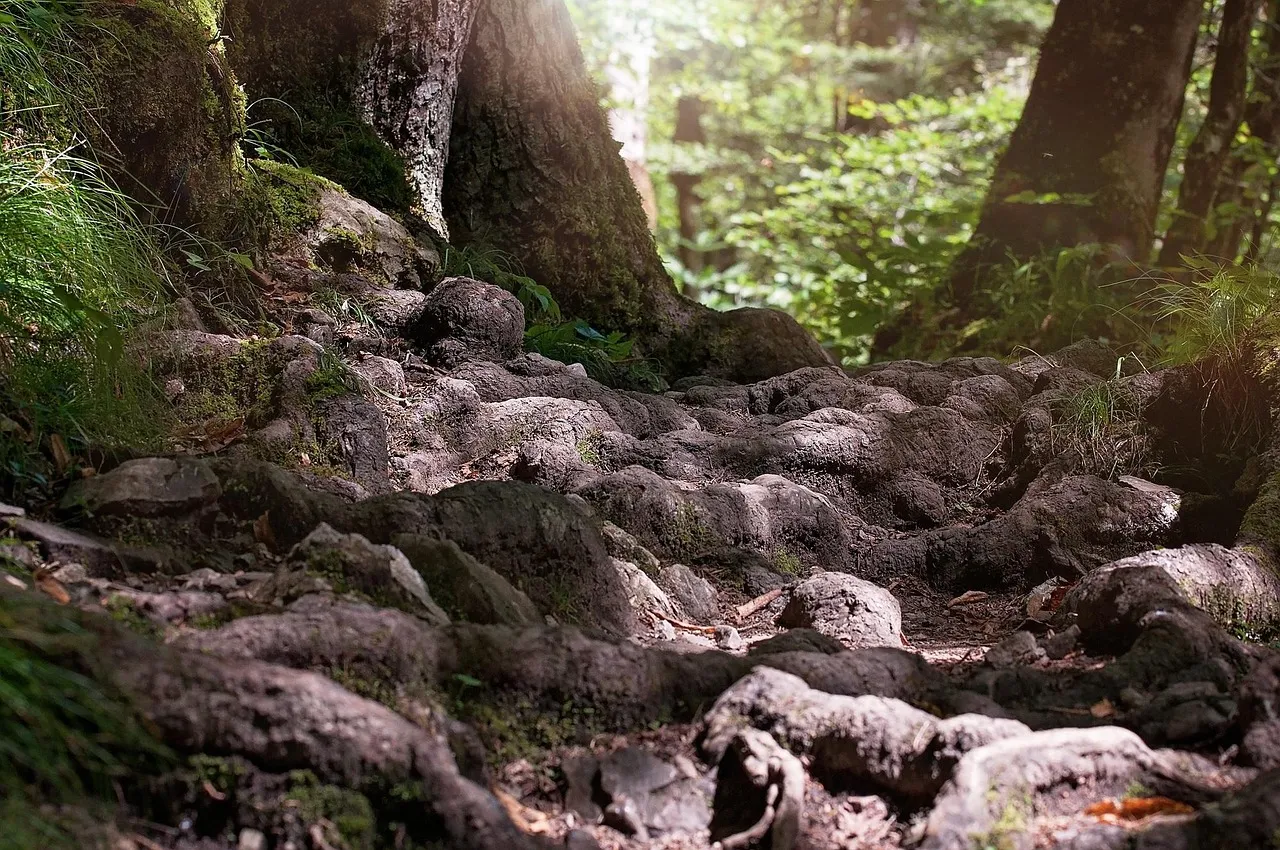
One of the most insidious effects of volcano mulching is the development of girdling roots. The moist, dark environment of the mulch pile encourages roots to grow upward and into the mulch instead of outward into the soil. These roots often begin to circle the tree’s trunk. As the tree and the roots grow, these circling roots tighten their grip, effectively strangling the tree by cutting off the flow of water and nutrients.
Secondary roots growing into mulch piled high on the trunk will encounter the slopes of mulch volcanoes, causing the roots to turn. Eventually, these roots encircle the tree trunk and merge with the stem tissue.
Research from the University of Minnesota found that over 80 percent of trees with severe girdling roots showed significant decline within 10 years. Stem girdling roots can lead to dieback, stunted growth, and delayed or shrunken leaves popping out in spring.
#4: You’re Opening the Door to Disease and Pests
Most fungal and bacterial diseases require moisture to spread and reproduce. Trunk diseases gain a foothold in the moist, decaying bark tissue under the mulch. Once established, the disease organisms ultimately invade the inner bark, disrupting the flow and storage of sugars produced during photosynthesis, starving and finally killing the plant.
Often this scenario is accompanied by bark beetles and borers that are also attracted to stressed plants, expediting the decline and allowing entrance of other fungal pathogens into the plant. It is generally believed that wood borers are secondary pests that develop because trees and shrubs are stressed, injured, or dying from other causes.
Over-mulching is a leading cause of death in azaleas and rhododendrons, dogwood, boxwood, mountain laurel, holly, cherry trees, ash, birch, linden, spruce, and many other landscape plants. The list covers most of the species people plant most often.
The Compaction Problem Nobody Talks About
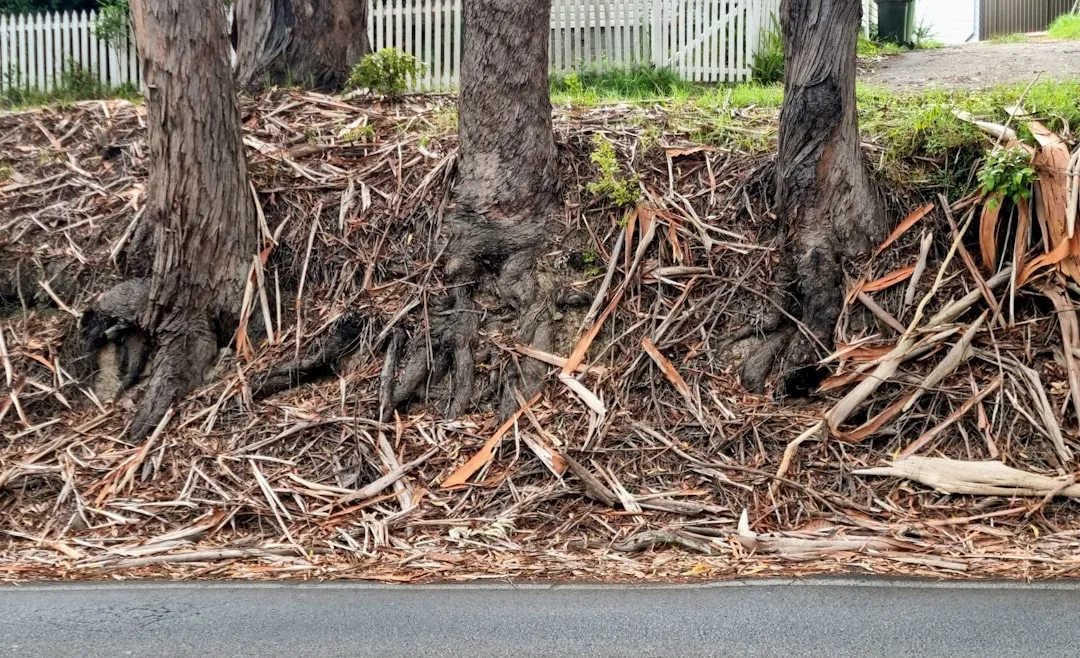
Although bark mulch may at first appear light and airy, it ultimately becomes compacted as it degrades, interfering with oxygen reaching tree root cells. Trees respond by growing a secondary root system into the mulch, the same response seen in trees planted too deep in the soil. The roots growing into the mulch can become exposed and dehydrate as old mulch eventually degrades and disappears.
For a mulch volcano with compacted mulch, less water is actually retained and runs off to the bottom perimeter. This results in less water availability for the tree as it may run off elsewhere on the property or be absorbed by grass and other plants instead of by the tree.
What starts as an attempt to retain moisture ends up denying the tree access to it. That’s the contradiction at the heart of over-mulching.
How the Vascular System Gets Compromised
The tree’s vascular system, which transports water, nutrients, and carbohydrates throughout the tree, can be severely compromised by mulch volcanoes. Phloem tissue, the part that transports sugars from leaves to roots, can be damaged, effectively starving the root system. This is particularly harmful for young trees that haven’t established extensive root systems. The cambium layer, which produces new wood and bark cells, may die under constant moisture, preventing normal trunk expansion and growth.
Once the inner bark dies, roots become malnourished and weakened, with a subsequent reduction in water and nutrient uptake. The entire health of the plant is thus affected. If such wet conditions continue long enough, the phloem tissue may die, starving the roots since they then receive none of the essential photosynthates produced by the leaves.
Warning Signs Your Tree Is Already Struggling
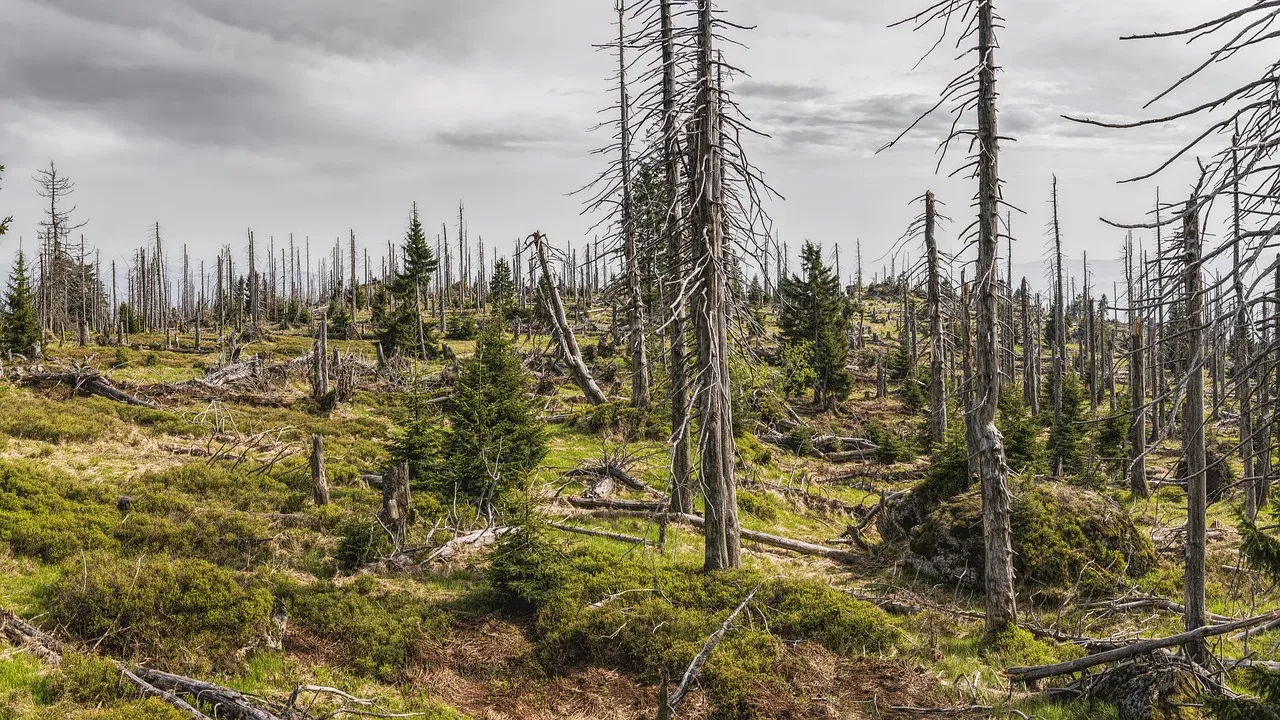
Symptoms may take several years to appear, depending on the plant and the soil type. Symptoms include off-color or yellowing foliage, abnormally small leaves, poor twig growth, and dieback of older branches.
These cumulative impacts produce symptoms like foliar chlorosis, small leaves, poor growth, and dieback. Girdling roots act like a tourniquet, slowly killing the tree. The damage often goes unnoticed until the tree shows significant signs of decline, such as a thinning canopy or dieback, at which point it may be too late.
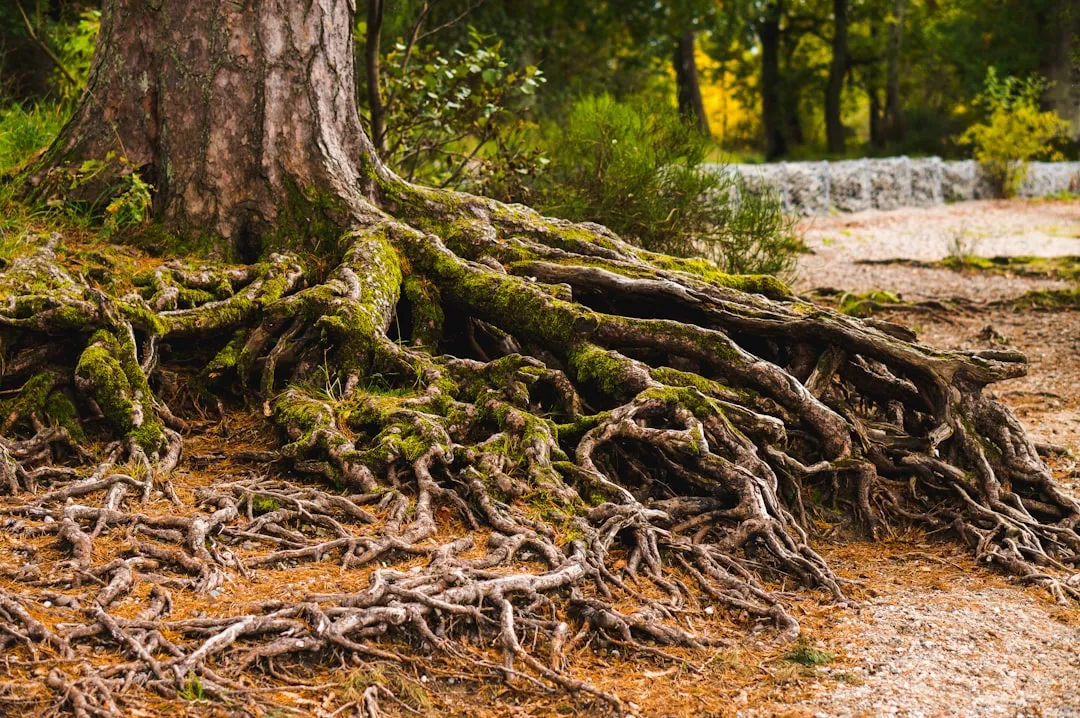
If the tree has been over-mulched for a while, secondary roots growing up out of the ground and into the mulch will be visible. These secondary roots are the tree’s response to lack of oxygen, indicating that the primary root system has been suffocating under the pile of mulch.
What the Research Actually Recommends
Current industry best practices recommend a mulch depth of 2 to 4 inches and caution against exceeding this depth, warning of issues affecting stem tissue like stem girdling roots and pathogens. That recommendation comes from the International Society of Arboriculture and is echoed by virtually every major university extension program.
Many arborists follow what’s called the 3-3-3 Rule: the mulch should be about 3 inches deep, extend out to a radius of about 3 feet from the trunk, and leave a 3-inch gap, like a donut, around the trunk itself. It is also important that the mulch not be piled too deeply at any point along this flat donut shape. Deep mulch can reduce the penetration of water and air, which are necessary for proper tree root growth.
How to Fix It If You’ve Already Over-Mulched
Research shows that a large number of plants have rapidly improved in color and vigor within months of root flare excavations. Professional arborists often employ an industrial pneumatic air spade to expose buried root flares and alleviate soil compaction in mature or specimen trees, leading to remarkable recoveries in overall health.
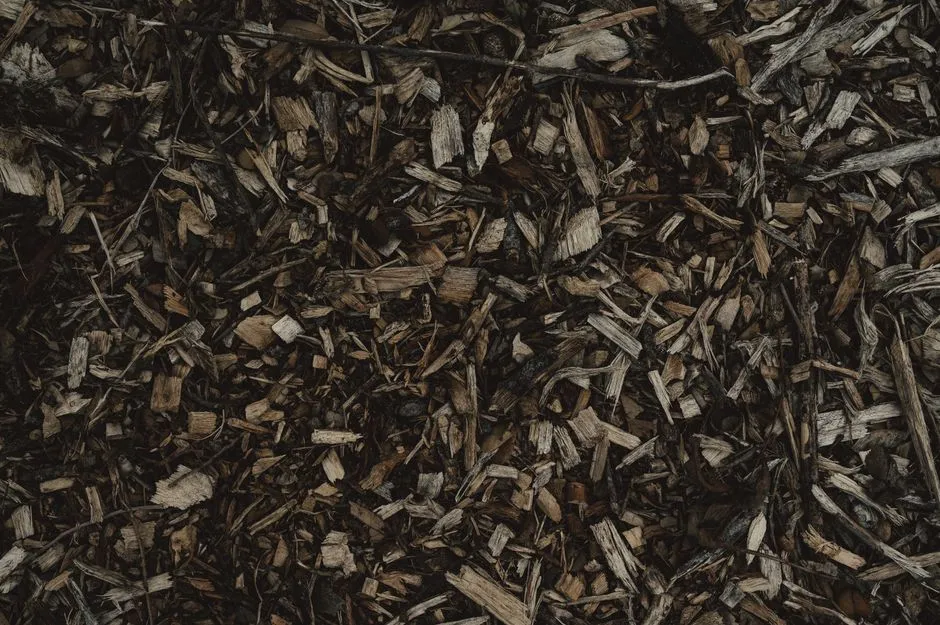
Remove existing volcano mulch completely from the trunk area first. Spread fresh mulch in a wide circle three to four feet in diameter, or wider for larger trees. Maintain 2 to 4 inches depth and never go deeper, as excessive thickness blocks oxygen.
Trees that receive the donut treatment develop deeper root systems, resist drought better, and show vibrant foliage year after year. Organic mulches such as shredded hardwood, pine bark, or leaf compost work best for most residential trees.
The Correct Way to Mulch Going Forward
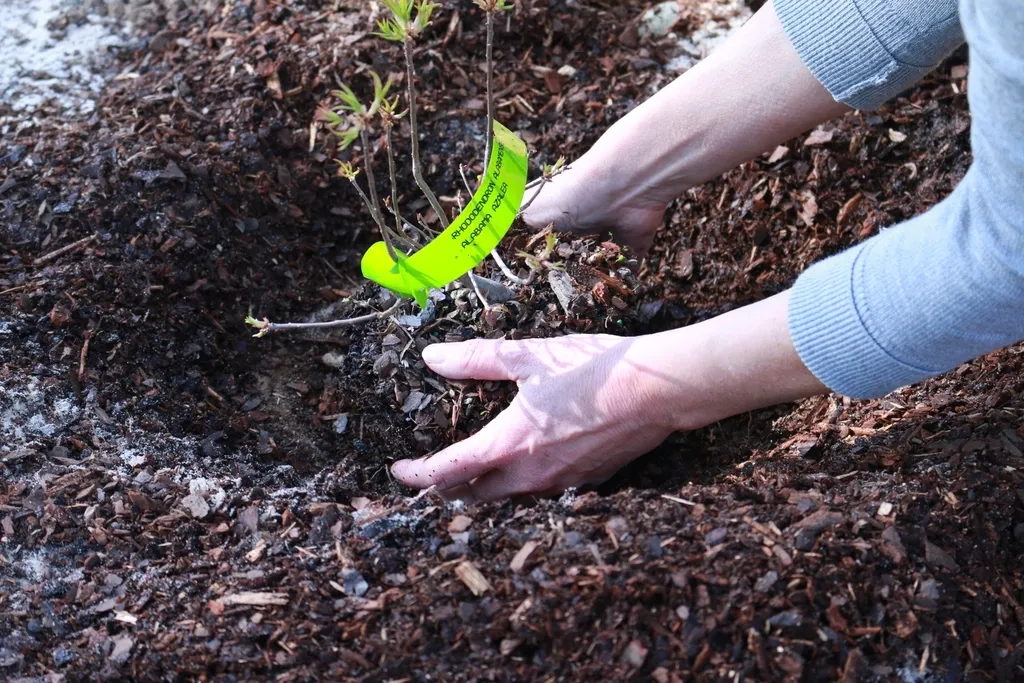
To properly mulch a tree, spread the mulch evenly around the tree in a donut shape. Leave 3 to 6 inches around the trunk and avoid mounding the mulch against the trunk. As a general rule, you should be able to see the root flare, the spot where the tree trunk and the roots begin. Rake the mulch outward to a distance of 3 to 6 feet from the center of the tree and 2 to 4 inches deep.
The goal is to mimic nature. In forests, organic matter like leaves falls to the ground in thin, even layers, never stacked against trunks. According to Kansas State University Extension, wood-based mulches are best for tree health. They resist pests and diseases while enriching soil as they decompose, benefits that inorganic mulches like rubber or stone cannot provide.
Properly mulching your trees is one of the simplest and most beneficial ways to help them grow healthy to full maturity. The difference between killing a tree slowly and giving it decades of healthy growth comes down, often, to just a few inches of mulch in the wrong place.
Mulch is genuinely good for trees. The problem isn’t the material. It’s the mountain. Pull it back from the trunk, keep the layer thin and flat, and let the root flare breathe. That single adjustment, made across millions of landscape trees, could quietly save a lot of them.
AI Disclaimer: This article was created with the assistance of AI tools and reviewed by a human editor.