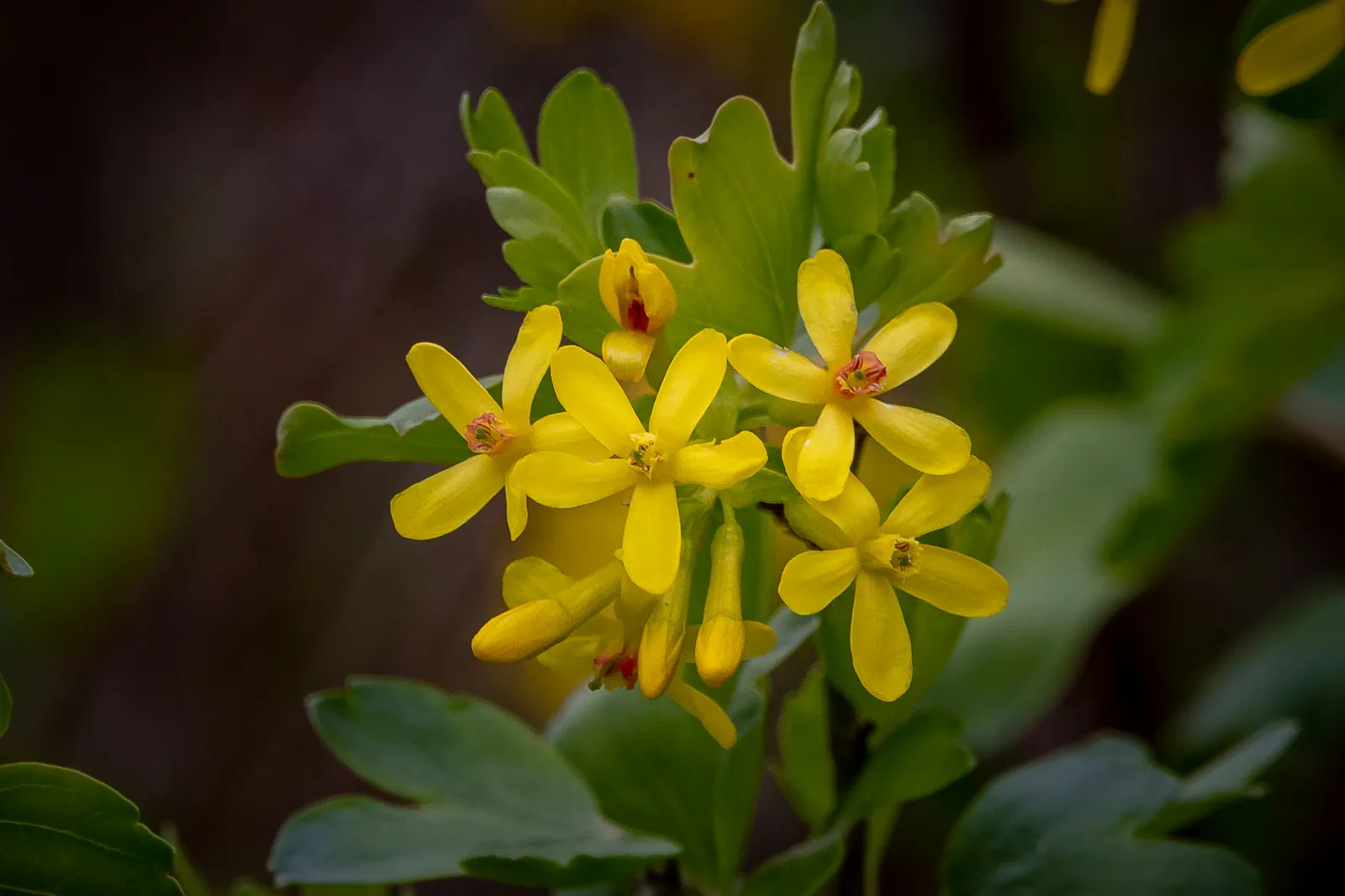

Gardeners dealing with water limits often discover that certain native shrubs deliver both visual interest and ecological value without heavy irrigation. The golden currant fits this description through its combination of fragrant blooms and resilience in low-water settings. Its flowers carry a distinct clove scent that proves especially attractive to bees and other pollinators. This adaptability makes the shrub a practical choice for landscapes where rainfall is inconsistent.
Fragrance as a Key Attraction
The clove-like aroma sets golden currant apart from many other flowering shrubs. This scent emerges from the clusters of small yellow blooms that appear in spring. Pollinators respond strongly to the fragrance, which guides them to the nectar and pollen sources. The result is reliable activity around the plant during its flowering period.
Because the scent is noticeable to humans as well, the shrub adds sensory appeal to garden spaces. Placement near paths or seating areas allows visitors to enjoy the aroma without extra effort. The flowers themselves remain modest in size yet effective at drawing consistent insect traffic.
Support for Pollinators and Local Wildlife
Golden currant serves as a dependable resource for bees and other beneficial insects. The shrub’s blooms coincide with periods when many pollinators seek early-season food. This timing helps sustain populations that later support fruit and vegetable production in nearby gardens.
Birds may also visit the plant once berries form later in the season. The berries provide a food source that extends the shrub’s value beyond the flowering stage. Overall, the plant contributes to a more balanced garden ecosystem with minimal additional inputs.
Performance Under Drought Stress
Once established, golden currant tolerates extended dry spells better than many non-native ornamentals. Its root system allows it to access deeper soil moisture, reducing the need for supplemental watering. This trait proves especially useful in regions experiencing hotter summers and reduced precipitation.
The shrub maintains healthy foliage and continues to flower even when surrounding plants show stress. Gardeners report fewer losses during dry years compared with thirstier species. Such reliability lowers long-term maintenance costs and water bills.
Practical Steps for Successful Planting
Site selection begins with full sun to partial shade and well-drained soil. Young plants benefit from regular watering during the first growing season to develop strong roots. After that point, irrigation can be reduced significantly.
Spacing recommendations allow room for the shrub to reach its mature width without crowding. Pruning after flowering helps maintain shape and encourages denser growth the following year. These steps align with standard practices for native plantings and require no specialized equipment.
Long-Term Value for Changing Landscapes
Golden currant addresses two common challenges at once: supporting declining pollinator numbers and conserving water. Its native status means it integrates well with existing local plant communities. Homeowners and land managers gain a low-input option that performs reliably across multiple seasons.
As water availability becomes a greater concern in many areas, shrubs like this one offer a measured response. They deliver measurable ecological benefits while fitting into existing garden designs. The combination of fragrance, pollinator support, and drought tolerance positions golden currant as a durable addition worth considering for future plantings.
AI Disclaimer: This article was created with the assistance of AI tools and reviewed by a human editor.