

Most backpackers spend hours researching tents and sleeping bags, then grab the first pad they see on the shelf. It’s a surprisingly common mistake. Your sleeping pad is the one piece of gear sitting directly between your body and the ground all night long, and the ground does something your sleeping bag simply can’t compensate for on its own.
Getting this choice right makes a genuine difference. A cold night with the wrong pad doesn’t just leave you groggy. It can push the boundaries of safety on longer or more remote trips. Here’s what you actually need to know before buying.
Why Ground Insulation Matters More Than Most Hikers Realize
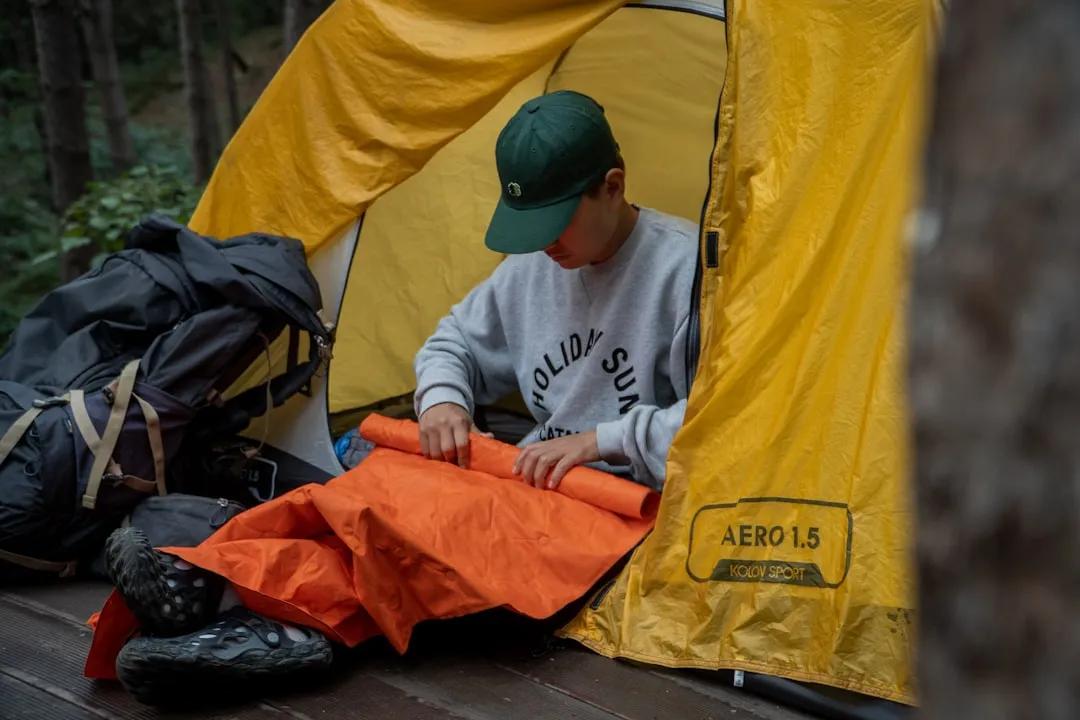
The ground can sap heat roughly 25 times faster than still air, and R-value is the single number that tells you whether your pad can stop that heat loss. That comparison tends to surprise people who assume a high-rated sleeping bag is all they need. The truth is more mechanical than that.
A common mistake people make when camping in cool or cold conditions is relying solely on their sleeping bag for warmth. Your sleeping bag cannot make up for a sleeping pad that doesn’t have a high enough R-value for the conditions.
A sleeping bag provides warmth because the lofting filling retains the heat given off by your body. Anywhere that it is compressed, such as underneath you, the insulative properties of your sleeping bag are significantly diminished. So, without adequate insulation beneath you, all your hard-earned warmth will just dissipate away into the ground, no matter what warm rating your sleeping bag has.
Understanding R-Value: The Core Metric

A backpacking sleeping pad’s R-value measures its resistance to heat loss to the ground when you lie on it at night. Pads with higher R-values do this more effectively than pads with lower R-values. R-value isn’t a measure of warmth per se, but of a pad’s ability to prevent the loss of the warmth that your body generates.
The measurement is standardized under ASTM F3340, making comparisons between brands accurate and reliable. Prior to this standard being introduced, R-values were essentially self-reported by manufacturers and often unreliable. That matters when you’re comparing two pads from different brands.
Many off-brand pads don’t pay for the standardized test, so buyer beware because the R-value is often just made up by a marketing person. Sticking to brands that use the ASTM standard is a sound rule of thumb.
Matching R-Value to Your Camping Conditions

For summer camping, you need an R-value of 1.0 to 2.0. For three-season use, aim for 3.0 to 4.5. For winter camping below 10°F, choose an R-value of 6.0 or higher. These ranges are well-established across outdoor gear communities and remain the most reliable framework for matching pad warmth to temperature.
If you are camping in cold conditions where the temperature is guaranteed to drop to freezing or just below it overnight, then you will need a sleeping mat with an R-value in the 4.0 to 5.0 range. For adventurers who camp in extremely cold, winter conditions with overnight temperatures below -5°C, a sleeping mat with an R-value of 5.0 or higher is advisable.
If you’re not limited by space, weight, or price, consider a higher R-value – unlike a too-warm sleeping bag, you’re unlikely to overheat with a high-R-value pad. That’s a useful frame when you’re unsure which end of a range to aim for.
The Three Main Types of Sleeping Pads
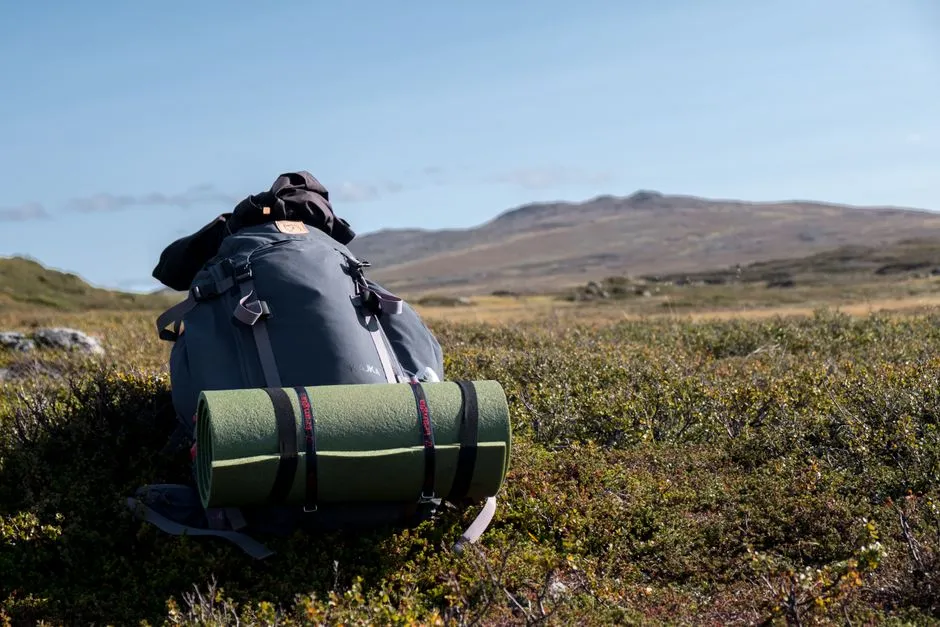
There are three main types of sleeping pads: air pads, closed-cell foam pads, and self-inflating pads. Whether or not they inflate, and their mechanism for inflation, affects weight, packability, comfort, price, and convenience.
Closed-cell foam pads are made of dense foam filled with tiny, closed air cells, usually rolled up or folded in an accordion formation. They’re lightweight, inexpensive, durable, and offer consistent insulation in all conditions. You don’t need to worry about punctures or leaks.
Inflatable pads offer the best packability and weight savings, compressing to water bottle size and weighing under one pound. Self-inflating pads balance comfort and convenience with open-cell foam cores providing insulation and moderate weight of 1 to 2 pounds.
Air Pads: Comfort and Versatility at a Cost
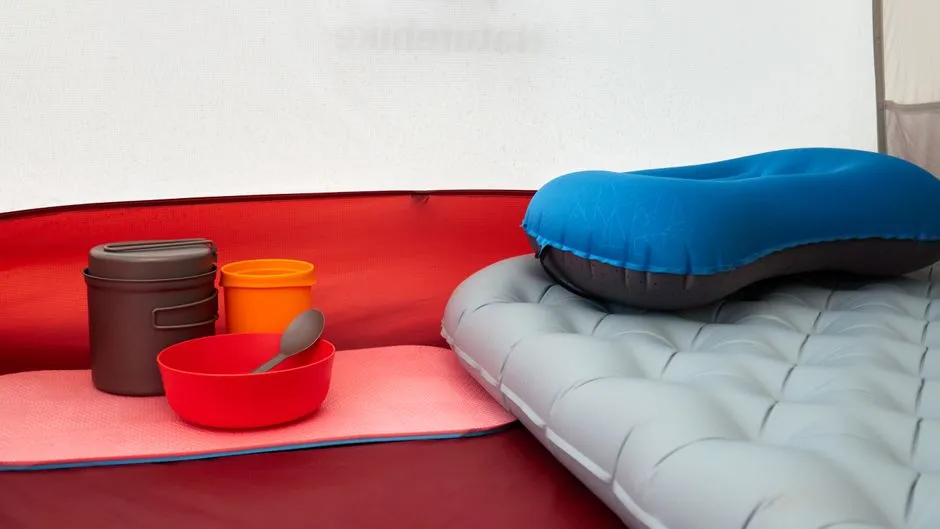
Air pads are comfortable, lightweight, and pack down very small. You can customize the firmness of the mattress by releasing or adding air from the valves. That adjustability makes them genuinely useful for a wide range of sleeping styles and body types.
R-value only measures warmth transfer in a static test. When it comes to air-filled pads, if your pad wobbles as you move around, the warmth you introduced into the pad will be dissipated as the air inside moves back and forth. Therefore, stable air pads are better insulators. Construction quality matters more than most buyers expect.
Of all three types of sleeping pads, air pads are the most likely to rip or puncture. Choosing a campsite carefully and carrying a patch kit are both smart habits whenever you rely on an inflatable pad.
Closed-Cell Foam Pads: The Reliable Workhorse
Closed-cell foam pads work great underneath other types of pads to improve insulation, prevent punctures, and reduce the buildup of moisture from under-pad condensation in cold conditions. You can carry them on the outside of your backpack without fear of damage, and they can double as sit pads at camp.
Closed-cell foam pads are the most durable and affordable option, often under $50, but they lack packability and require external storage. Many experienced backpackers use one as a backup or base layer under an air pad rather than as their sole sleeping surface.
They are relatively stiff and firm, making them less comfortable than air pads, and they tend to be bulky. They are also not as warm: most have an R-value around 2. For warm-season solo trips, that’s often sufficient. For shoulder-season or winter use, they work best in combination with another pad.
Self-Inflating Pads: Convenience with Trade-Offs
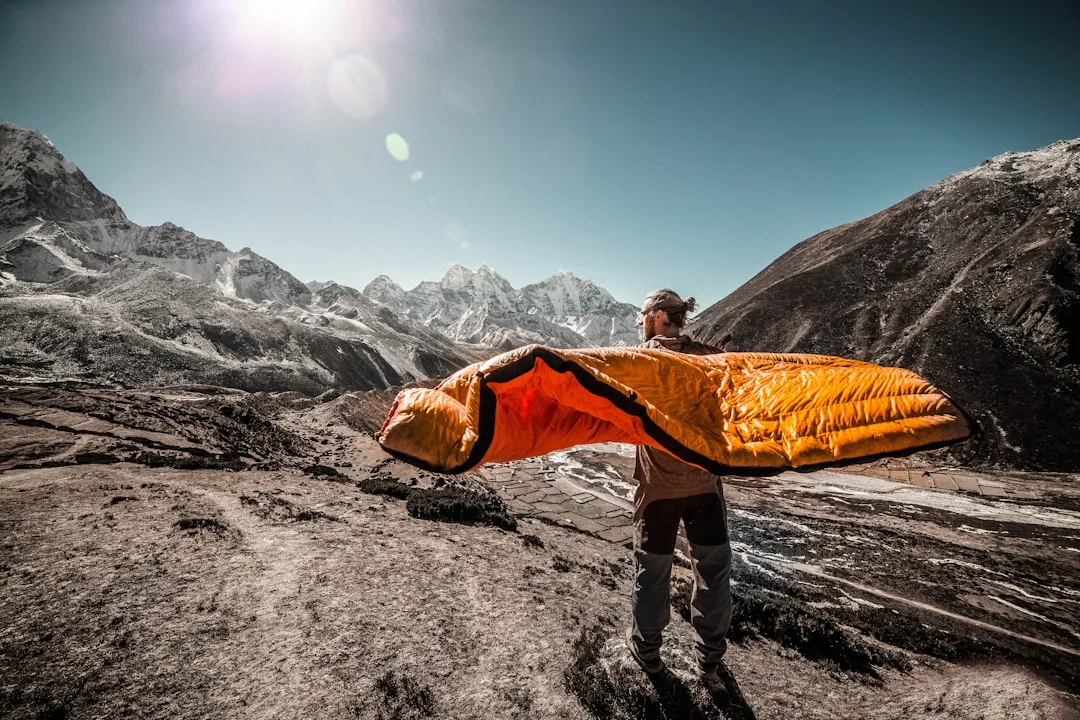
Self-inflating sleeping pads tend to be a more comfortable option because they are thicker and better at conforming to your body than closed-cell pads. The foam core provides a base level of cushioning and support, while the ability to adjust the air pressure allows you to fine-tune the firmness.
Typically, self-inflating pads have higher R-values, which can start at less than 2 and go up to 5.5 or more, than closed-cell pads, making them more versatile across seasons and better suited to cold-weather camping.
Self-inflating pads are heavier and more expensive than closed-cell foam pads, yet not as compact as air pads. They can be punctured or ripped, though it’s typically easy to repair them in the field. For car camping or short basecamp-style trips, the comfort payoff often justifies the extra bulk.
How Sleeping Position and Body Type Affect Your Choice

Side sleepers have less body contact with the pad, creating air gaps where warm air escapes. They typically need 0.5 to 1.0 higher R-value than back or stomach sleepers for the same warmth. Side sleepers also appreciate thicker pads, generally 3 inches or more, for comfort, which usually correlates with higher R-values anyway.
Research and experience show that women typically sleep colder than men. The Outdoor Industry Association identifies this as a key consideration in gear design. Women often benefit from R-values 0.5 to 1.0 higher than the baseline recommendations. If the chart suggests R-value 3.0 for your conditions, women might be more comfortable at R-value 3.5 to 4.0.
Heavier campers compress insulation more, potentially reducing effective R-value. Lighter campers may feel colder simply due to lower mass-to-surface-area ratios. Your personal metabolism matters most. These body-related factors are often underestimated when people select a pad purely based on published temperature ratings.
Stacking Pads for Extra Warmth

R-values are additive, so you can combine two pads to increase your warmth level. For example, it’s common to carry a foam sleeping pad, usually around R-2, in winter to use as a sit pad when eating and melting snow, which you can then place under an inflatable pad to increase the combined R-value for sleeping.
Using layering strategies, place a closed-cell foam pad beneath an inflatable or air pad to increase the overall R-value. This method serves as an insulation substitute if a single pad isn’t enough. Just ensure they fit well together to prevent gaps and cold spots, giving you better warmth and comfort on chilly nights.
Most people find it warmer to layer foam on top of inflatable rather than inflatable on top. That said, the more common setup places the foam below for puncture protection, which also works well in practice. Test your stacked combination before committing to it in the field.
Pad Thickness, Inflation, and Real-World Performance
Under-inflated pads compress more under your weight, reducing insulation effectiveness. Over-inflation creates a firm surface where you roll off the pad or compress it fully anyway. For maximum warmth, inflate so the pad barely deforms when you lie down.
For the ultimate comfort miles from the trailhead, many gear reviewers point to pads like the Therm-a-Rest NeoLoft. At 4.6 inches, it’s thicker than almost any other trail pad currently tested. Comfort-focused designs like this have raised expectations across the category in recent years.
The Nemo Tensor All-Season sits at a near-perfect nexus of weight, cushion, and warmth. It’s light enough for long-range backpacking, warm enough for sleeping in winter conditions, and thick, quiet, and comfortable enough for side-sleepers and restless dreamers alike. Identifying that kind of balance in any pad you consider is the key practical step in your decision.
Conclusion: Sleep Is Part of Your Safety System

Choosing a sleeping pad isn’t just a comfort question. In shoulder-season or winter conditions, it’s a thermal safety calculation. Your actual warmth depends on multiple factors: your sleeping bag, clothing, metabolism, whether you’re a hot or cold sleeper, ground conditions, and more. The outdoor community has developed general guidelines connecting R-values to temperature ranges based on years of field experience.
Your sleep system setup will influence your camping mat R-value requirements. Your sleep system includes everything else that goes into your setup for sleeping outdoors, from the shelter type to your sleeping bag, along with any extra items such as a liner. No single piece of gear operates in isolation, and your pad is no exception.
The best pad is the one that matches your actual conditions, your body, and your trail style, not just the one with the best marketing. Get that match right, and the difference on the ground, literally, is felt from the very first night out.
AI Disclaimer: This article was created with the assistance of AI tools and reviewed by a human editor.