
In plant biology, nyctinasty is the circadian rhythm-based nastic movement of higher plants in response to the onset of darkness, often described as a plant “sleeping.” These movements are associated with diurnal light and temperature changes and are controlled by the circadian clock.
Nyctinasty is widely observed in leguminous plants and has been of great interest to scientists for centuries, with the oldest records dating from the time of Alexander the Great. Specifically, Androsthenes of Thasos, admiral to Alexander the Great, documented nightly leaf-folding in a tamarind-like plant in the 4th century BCE.
It has been argued that for plants displaying foliar nyctinasty, it is a crucial mechanism for survival. Nyctinasty is found across xeric, mesic, and aquatic environments, suggesting this behavior may serve a variety of evolutionary benefits.
The Pulvinus: The Tiny Engine Behind the Movement

Nyctinastic movement is mediated by a specialized motor organ called the pulvinus, located at the base of the leaf. The pulvinus consists of flexor and extensor motor cells, and the turgor pressure difference between these two cell types generates a driving force for the bending and deformation of the pulvinus.
The movement itself is caused by the asymmetric volume change of motor cells between the adaxial and abaxial sides of the leaflet. As pulvini cells lose or gain turgor pressure, they cause the leaves to rise, sink, fold, or bend.
Research indicates that these plant movements are endogenous, although environmental factors certainly have an influence. The majority of plants with nyctinastic leaf movements have a pulvinus as the crucial part of the plant enabling this movement.
How the Plant “Reads” Darkness
Nyctinastic plants know when to seal and unfurl thanks to phytochrome, a blue-green pigment associated with the absorption of light that helps regulate growth and development. The phytochrome detects both red light and far-red light to establish circadian rhythms.
These cycles direct daily leaf movements by determining what type of light the plant is absorbing. Red light is more abundant during the day, while far-red light occurs near the day’s end.
These movements are triggered by environmental cues like light, temperature, and humidity, but they persist even when plants are kept in constant darkness, confirming that the circadian clock runs independently of outside conditions. Jean-Jacques d’Ortous de Mairan provided experimental evidence for this in 1729, showing that Mimosa pudica continued its leaf-folding rhythm even in total darkness.
The Chemistry Behind Leaf Closing and Opening
Nyctinasty is a circadian-regulated leaf movement observed in legumes that has long intrigued scientists. Research has now identified genus-specific endogenous chemical factors, called leaf-closing factors (LCFs) and leaf-opening factors (LOFs), that control this rhythmic behavior.
In Samanea saman, a model plant for nyctinasty, the LCF known as 12-hydroxyjasmonic acid glucoside induces leaf-folding by selectively targeting extensor motor cells and activating reactive oxygen species-dependent K+ efflux via the SPORK2 channel.
Remarkably, SPORK2 also functions as a temperature-sensitive K+ channel, inactivating at low temperatures to mediate rain-induced leaf folding, a phenomenon underlying the nickname “rain tree.” Nyctinastic plants from five different genera are known to contain species-specific leaf-opening and leaf-closing factors.
Protection from Insects and Herbivores
The folding of leaves at night decreases their visibility and accessibility to nocturnal herbivores, potentially reducing palatability and direct predation. This structural change can make foliage less detectable in low-light conditions, serving as a passive defense mechanism.
The closure of Mimosa pudica leaves in response to touch has been experimentally confirmed to reduce herbivory by grasshoppers and caterpillars. Scientists have explored whether a similar benefit applies specifically to nyctinastic nighttime folding.
Nyctinasty may indirectly enhance plant protection by increasing understory light penetration, which improves visibility for predatory arthropods that target herbivores, as proposed in a tritrophic interaction hypothesis. In other words, the plant’s folding at night may actually help the creatures that protect it.
Shielding Against Frost and Cold

Charles Darwin believed that nyctinasty exists to reduce the risk of plants freezing. That idea, though simple, has held up reasonably well. Scientists have proposed that tightly folded leaves retain heat better on cold nights and that closed leaves can avoid radiation frost damage.
Nyctinastic movements also contribute to thermoregulation by altering leaf exposure to environmental factors such as wind and dew, helping to maintain optimal temperatures within the foliage.
Folding leaves or closing petals reduces exposure to chilling nighttime temperatures or dew accumulation, limiting water loss through transpiration. For plants in cool highland zones or areas with sharp temperature swings, this thermal buffering could make a real difference to their overnight survival.
Conserving Water Through the Night
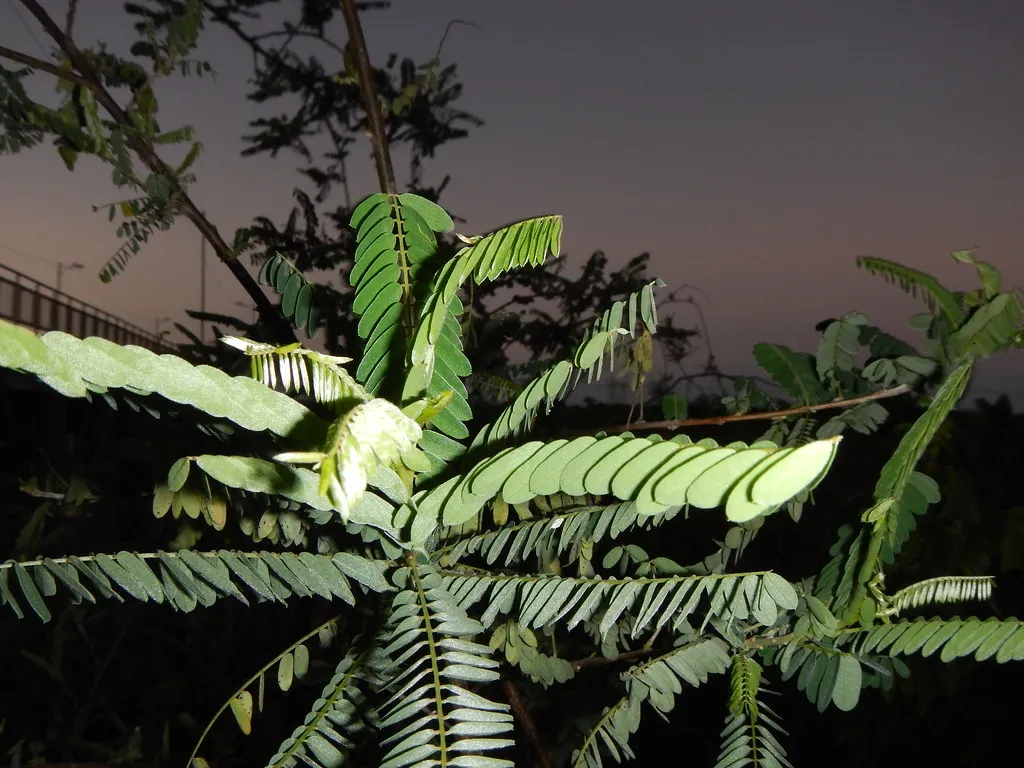
Some researchers have noted a correspondence between the stomatal distribution of leaflets and their method of nyctinastic folding. In members of the dry-adapted Dichrostachys group of legumes, the leaflets fold in such a manner that only the abaxial surface is exposed, with the stomata-rich adaxial surface being covered at night.
In species like Dichrostachys, leaflet folding covers stomata-rich surfaces, limiting water loss during periods of low photosynthetic activity. This is a notably efficient adaptation for plants living in drier climates, where water conservation overnight can influence survival during dry seasons.
It appears that a reduction of nocturnal transpiration by foliar nyctinasty may be useful to certain plants endemic to xeric environments. The folding essentially acts like closing a window on a cold, dry night.
Protecting Pollen and Reproductive Structures

Nyctinasty may occur to protect the pollen, keeping it dry and intact during the nighttime when most pollinating insects are inactive. Closing leaves and flowers at night protects reproductive organs and conserves resources.
For pollinator plants associated with insects active during the day, like bees and butterflies, closing at night could protect the pollen. Folded leaves and petals make it difficult for unwanted pests or nocturnal pollinators, like bats, moths, and beetles, to access the pollen.
Conversely, some flowers that are pollinated by moths or bats exhibit nyctinastic flower opening at night, showing that the same basic mechanism can serve opposite ecological strategies depending on the plant’s pollination system.
Blocking Out the Moon: A Surprising Hypothesis
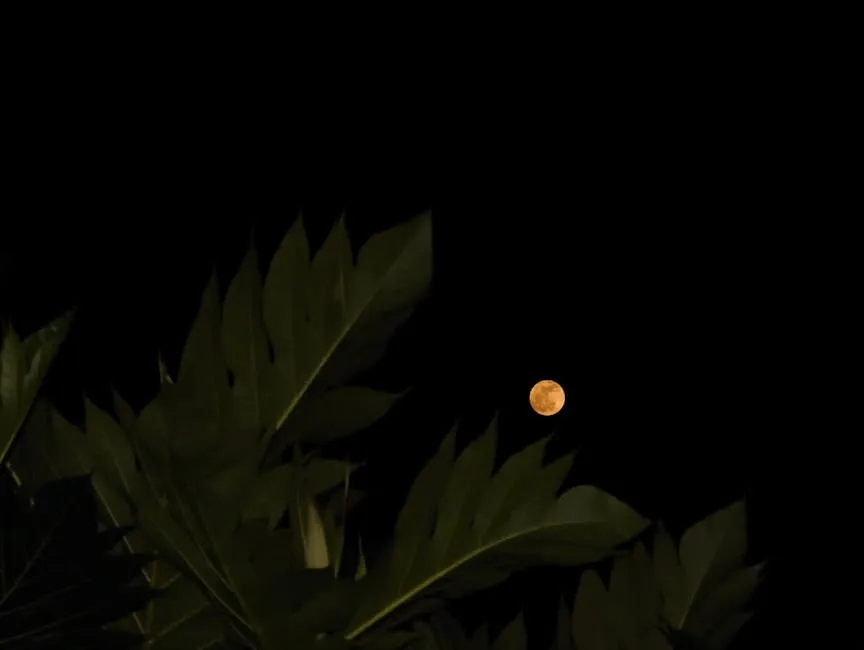
Bünning and Mose in 1969 hypothesized that a light intensity as low as 0.1 lux, equivalent to the light from a very small candle, can influence photoperiodism in plants. This opened the door to a question that sounds almost poetic: could moonlight actually interfere with a plant’s internal schedule?
They suggested that nyctinastic leaf folding in legumes could be a means of preventing moonlight from activating the photoreceptors that regulate flowering and other light-dependent processes. If even a faint light source can shift a plant’s biological clock, folding leaves to block it would be a meaningful defense.
Among the ideas put forth to explain foliar nyctinasty are that it improves the temperature relations of plants, helps remove surface water from foliage, prevents the disruption of photoperiodism by moonlight, and directly discourages insect herbivory. The moonlight hypothesis remains unproven but is taken seriously by researchers working on plant photobiology.
Deep Evolutionary Roots: 250 Million Years of Sleep

Researchers reporting in the journal Current Biology in February 2023 offered the first convincing evidence for nightly sleep movements, also known as foliar nyctinasty, in fossil plants that lived more than 250 million years ago. The discovery came from an unexpected direction.
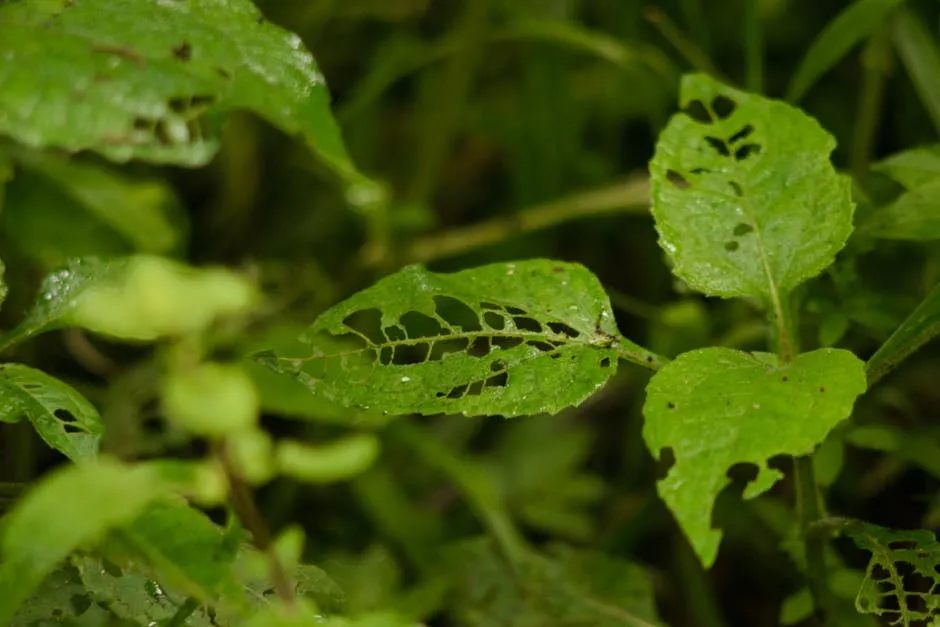
Since it is impossible to tell whether a folded leaf found in the fossil record was closed because of sleeping behavior or because it shriveled after death, researchers looked for insect damage patterns unique to nyctinastic plants. In 2013, Feng discovered an interesting pattern in living plants: symmetrical holes punctured through leaves, which formed because insects fed on the leaves while they were folded.
“It is now clear that sleeping behavior has evolved independently in various plant groups and at different times in the course of Earth’s history, so it must have some ecological benefits to the parent plant,” noted McLoughlin of the Swedish Museum of Natural History. Studies using mutant plants with a loss-of-function gene that results in petiole growth instead of pulvini found that these plants have less biomass and smaller leaf area than the wild type, indicating nyctinastic movement may be beneficial toward plant growth.
What Current Research Still Wants to Understand

As of 2025, no genetically modified Samanea plants have been successfully prepared, making it difficult to fully analyze the underlying gene network that regulates nyctinasty. The molecular pathway is known in rough outline but remains incomplete at the genetic level.
A singular explanation may not provide a complete answer as to why nyctinasty evolved in some plants. The movement could be associated with several behaviors that increase the likelihood of a plant’s growth and survival. Most researchers now lean toward a multi-function view rather than searching for one single reason.
Biomechanical modeling explores how structural tissue properties contribute to efficient leaf folding and unfolding dynamics. Further exploration could uncover novel applications such as biomimetic actuators inspired by plant motor cells, or improved agricultural practices leveraging plants’ natural rhythms for crop optimization.
Conclusion
Nyctinasty is one of those phenomena that rewards a second look. What appears to be a simple overnight movement turns out to involve circadian clocks, ion channels, chemical signals, thermal physics, and a 250-million-year evolutionary track record. Plants are doing something genuinely complex each night, even if they do it quietly.
The full picture isn’t complete yet. Researchers are still untangling exactly which benefits weigh most in which environments, and the genetics of the underlying mechanism remain an open problem. What’s clear is that this behavior didn’t survive across hundreds of millions of years by accident.
Plants, it turns out, are better prepared for the night than most of us ever assumed.
AI Disclaimer: This article was created with the assistance of AI tools and reviewed by a human editor.