
Most gardeners pick a spot, put seeds in the ground, and hope for the best. The light seems fine in May, and then the tomatoes stall in August without any obvious reason. What’s usually missing isn’t skill or soil quality – it’s a working understanding of how the sun actually moves across your specific property across the entire year.
Mapping the sun’s changing angle is not complicated. It’s mostly about observation, a few reliable tools, and understanding the basic geometry behind why shadows behave so differently in June versus December. Done properly, it turns garden planning from guesswork into something much more deliberate.
Why the Sun’s Angle Changes More Than Most Gardeners Expect

The solar declination angle oscillates between +23.45° at the summer solstice around June 21 and -23.45° at the winter solstice around December 21. This sinusoidal variation directly determines the maximum possible solar elevation at any latitude, where at solar noon the elevation angle equals 90° minus the absolute difference between your latitude and the declination.
For a location at 40.7°N latitude, the maximum solar elevation reaches roughly 72.75° on the summer solstice, while on the winter solstice it drops to about 26.15° – a dramatic annual swing of nearly 47° that drives significant seasonal differences in light and heat.
The sun’s path changes dramatically across the year. A spot that gets 8 hours of sun on June 21 might get only 2 hours on December 21 because the sun is lower and building shadows are much longer. That kind of difference doesn’t just affect winter crops. It shapes which permanent beds will ever really perform.
The Summer and Winter Shadow Problem

Shadow length is not a fixed property of an object. It changes by season, latitude, and time of day, and the difference between a summer shadow and a winter shadow is not small.
At 45 degrees north latitude, a 20-foot house casts roughly an 8-foot shadow at solar noon in June. By December, that same house casts a shadow past 50 feet. That’s not a subtle shift. It’s a change that can swallow entire growing beds entirely.
Garden beds that get full sun in July can be in deep shade for four consecutive months without the gardener ever realizing it until the crops fail. This is one of the most common and most preventable problems in garden planning, and a basic sun mapping practice addresses it directly.
How to Build Your Base Map
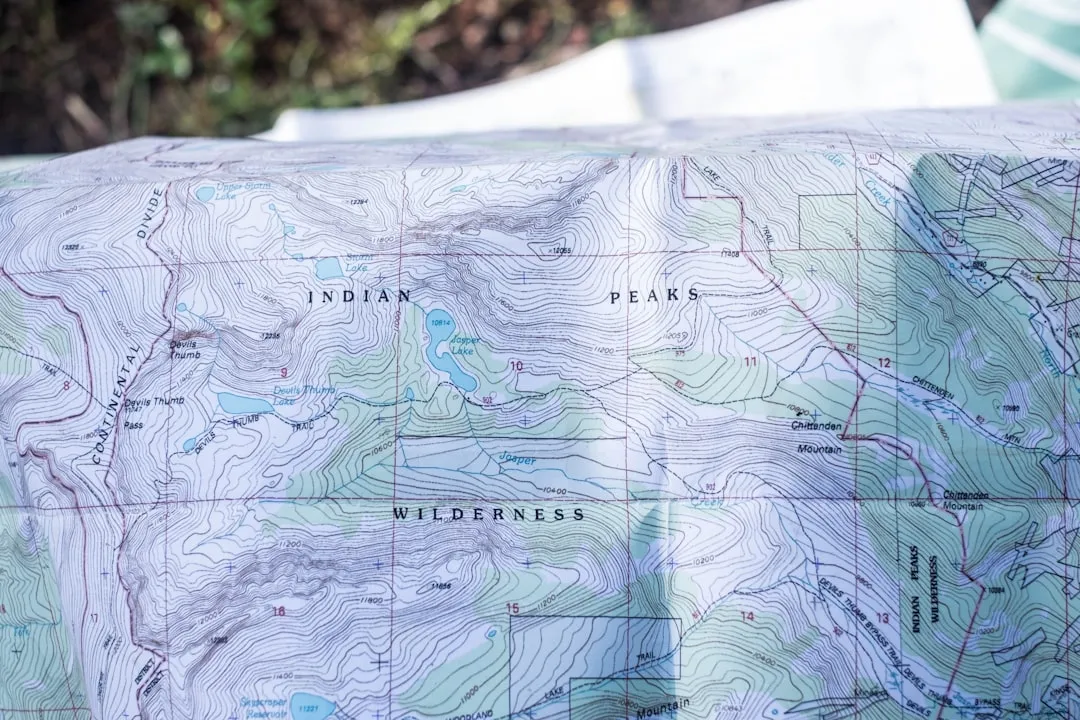
Start by sketching a simple outline of your property. You don’t need to be an artist – just create a basic layout that includes key features like your house, sheds, fences, trees, patios, and any large structures that could cast shadows.
Start with a map that covers permanent structures and consistent environmental factors. At this step, exact measurements aren’t critical. Focus on capturing your garden elements’ approximate shapes and sizes, ensuring a general sense of proportion.
Label these features clearly. This will serve as your base map for tracking sun exposure. From there, you’ll layer in shadow data gathered at specific times of day across different seasons. The base map is the foundation everything else builds on.
Choosing the Right Dates to Observe

To truly understand your garden’s sun profile, you need data for multiple times of year. The most important dates to check are the summer solstice around June 21, the winter solstice around December 21, and the equinoxes around March 20 and September 22.
The solstices show the extremes – maximum and minimum sun exposure. The equinoxes show the middle ground, which is roughly representative of the growing season’s average conditions.
Check the summer solstice for maximum sun height and longest day length. For a complete picture, also check the spring and fall equinoxes to understand how sun patterns shift during the growing season. Three or four targeted observations give you far more useful data than a dozen casual glances.
Free Digital Tools That Make This Easier

Most vegetables require 6 to 8 hours of direct sunlight daily, and even a few hours of unexpected shade from a nearby building, fence, or tree can significantly reduce yields. SunCalc lets you enter your garden’s address or GPS coordinates, select a date, and watch an animated simulation of how sunlight and shadows will interact with your space from dawn to dusk.
The tool’s date-specific sun simulation lets you select any date of the year to see exactly where the sun will rise, travel, and set. Its shadow length calculator lets you enter an object height and computes the shadow it will cast at any time of day, helping you predict shade from fences, buildings, and trees.
The NOAA Solar Calculator simplifies finding optimal angles by considering your latitude, longitude, and time zone. The Sun Seeker phone app, available for both Apple and Android, uses your phone’s GPS and compass to find the solar angle at your location at any time of year. These tools eliminate most of the manual math while still giving you precise, actionable data.
Calculating Shadow Length by Hand
To work it out manually, look up the sun angle at mid-winter, then measure or estimate the height of an obstacle around your garden such as your house, the back fence, or a large tree. With those two figures, you can calculate shadow length using the trigonometry formula: length equals height divided by the tangent of the sun angle.
A 2-meter fence at 40 degrees north latitude casts a noon shadow of about 1.0 meter in June but roughly 4.0 meters in December. That 3-meter difference defines a transitional planting zone that receives full sun in summer but deep shade in winter.
Place vegetable beds at least as far from any structure as the structure’s winter shadow length, measured from the north-facing side. That single rule alone prevents most of the shadow-related failures that garden layouts suffer from year after year.
Understanding Full Sun, Partial Sun, and Shade Zones
Full sun means at least 6 hours of direct sunlight per day. Partial sun or partial shade means 3 to 6 hours of direct sun. Full shade means less than 3 hours of direct sunlight, or dappled light filtered through tree canopy throughout the day.
These definitions need nuance. Six hours of gentle morning sun from 7 AM to 1 PM is very different from six hours of intense afternoon sun from noon to 6 PM. Where and when those hours land matters as much as the count itself.
Sketch a simple map of your garden and note which areas receive full sun (6 or more hours), partial sun (3 to 6 hours), and full shade (less than 3 hours). These three zones will directly guide where you place specific crops once the data is collected.
Matching Crops to Your Sun Zones
Tomatoes need at least 6 to 8 hours of direct sun per day. Lettuce can thrive with just 3 to 4 hours. Hostas and ferns prefer shade. If you plant sun-loving vegetables in a spot that only gets 2 hours of direct light, they will grow leggy, produce poorly, and disappoint you no matter how good your soil and watering habits are.
For partial-shade zones getting 3 to 6 hours of sun, plant lettuce, spinach, kale, chard, peas, radishes, herbs like parsley and cilantro, and root vegetables like carrots and beets. These plants actually benefit from some shade protection, especially from intense afternoon sun in summer. Many leafy greens will bolt to seed quickly in full hot sun but produce beautiful harvests with just a few hours of direct light.
Heat-loving crops like tomatoes, peppers, squash, and melons generally won’t thrive with limited sunlight. Reserve your sunniest, most consistent beds for those crops. Let the shaded corners work for you rather than fighting against them.
Accounting for Structures That Will Change Over Time
Keep in mind future changes to your garden or surroundings that might affect light patterns, such as the growth of trees or construction of new structures. This is easy to overlook but can quietly invalidate an otherwise solid layout over several growing seasons.
A 10-foot shrub planted near a garden today may be a 25-foot shrub in five years. Factor in expected mature height, not current height, when making permanent bed placement decisions.
Most vegetable gardening decisions are made in summer, when shadows are shortest and the problem is invisible. Overwintering crops, cold frames, and spring succession plantings are heavily affected by winter sun angles. A structure that appears harmless in July can block direct light from adjacent beds for six or more hours per day in December. Planning for that in advance is far easier than rearranging raised beds after the fact.
Putting Your Sun Map to Work in the Garden Layout

Sun mapping involves tracking and recording the amount of sunlight different parts of a garden receive over a given period. This process helps gardeners make informed decisions about plant placement based on light requirements, ultimately leading to a healthier, more vibrant garden.
A south-facing garden will receive the most sun, while a north-facing garden will receive the least. If you have a choice, choose a location that faces south or west, as these orientations will receive the most sun. When possible, adjust how much sun each plant receives by using a trellis, shade cloth, choosing the best location in the raised bed, and the best spot in your garden.
Sunlight mapping reveals how shadows move throughout the day, helping you position plants strategically. Companion planting pairs sun-loving vegetables with shade-tolerant ones, creating efficient microclimates. Once you have a reliable sun map in hand, the layout almost plans itself – every zone gets the right plant, and very little space goes to waste.
Conclusion

Mapping the sun’s changing angle isn’t a one-afternoon task. It’s an ongoing conversation between your garden and the sky above it, one that unfolds differently in March than it does in September. The tools are free, the math is manageable, and the payoff is a garden where every bed actually earns its place.
Most poor harvests aren’t caused by bad seeds or bad soil. They’re caused by misread light. Get the light right, and nearly everything else follows.
AI Disclaimer: This article was created with the assistance of AI tools and reviewed by a human editor.