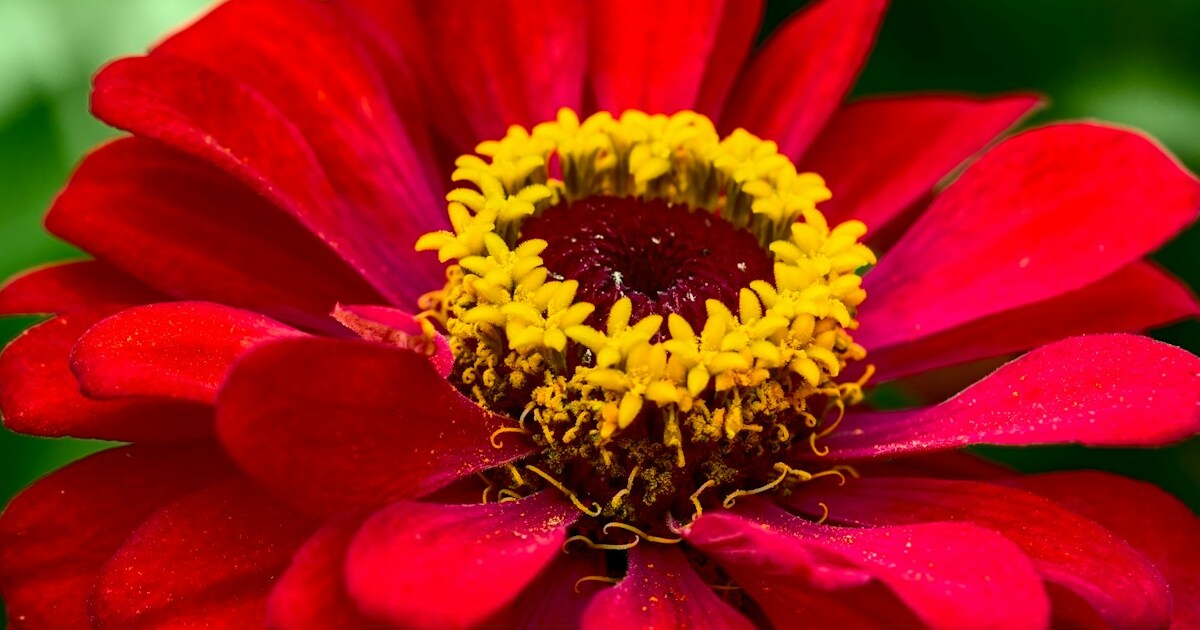

I’m thrilled you’re looking to add a burst of red drama to your entryway! Nothing greets guests quite like a pop of scarlet blooms framing your doorstep. Red flowers can create a warm, welcoming vibe, whether you’re working with full sun or a cozy shaded porch. As a gardener who’s had sun-scorched failures and shady triumphs alike, I know the magic of finding that perfect red bloomer that thrives in your unique spot!
In this guide, you’ll discover fifteen red flowering stars—each with its own origins, behaviors, and favorite pollinators. We’ll cover whether they self-seed or risk becoming invasive, how they attract beneficial insects (and even provide nesting nooks), and the care tricks I’ve learned through trial and error. Ready to transform your front door into a red-hot haven? Let’s dive in!
Red Pentas (Pentas lanceolata)
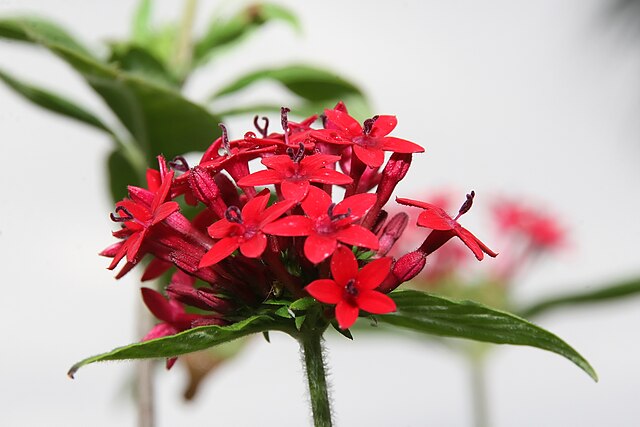
Native to tropical Africa, red pentas are non-invasive in containers and reward you with clusters of star-shaped blooms that hum with hummingbirds and butterflies. These sturdy perennials thrive in full sun, and their long bloom period—often from late spring through fall—means your entry stays vibrant for months. Ground-nesting bees often burrow in the soil below, making your porch a little pollinator village!
I plant mine in rich, well-draining mix and water consistently—pentas don’t tolerate drought. A monthly dose of balanced fertilizer keeps blooms prolific. When I pinch back spent flower spikes, bushier growth emerges, giving me even more bouquets to clip for the vase!
Scarlet Sage (Salvia splendens)

Scarlet sage hails from Brazil and is perfect for sun-drenched steps. Its upright spikes of tubular red flowers act like neon signs for hummingbirds, which dart in and nest in nearby shrubs. Salvia splendens isn’t invasive in pots, but it can self-seed in warm climates—so I deadhead spent blooms before seeds set to keep things tidy.
These plants flourish in moist, fertile soil. I space them 8–10 inches apart for good airflow and pinch off the tips early on to encourage branching. When temperatures dip, I relocate containers under a covered porch to extend bloom into cooler months!
Gerbera Daisy (Gerbera jamesonii)
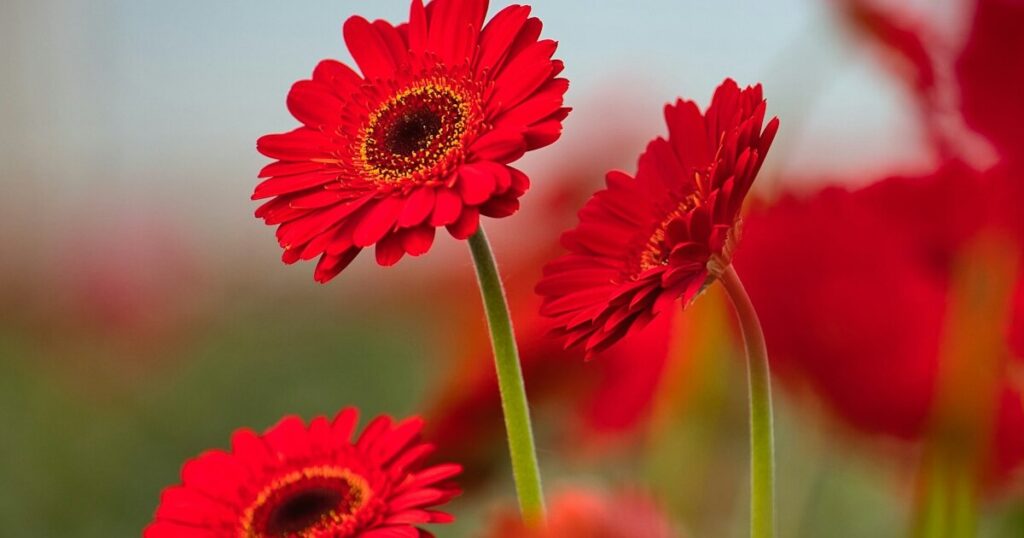
Originally from South Africa, gerbera daisies bring cheerful, large red blooms that aren’t invasive in patio pots. Their flat, daisy-like flowers provide landing pads for butterflies and hoverflies, which sometimes nest nearby in sheltered soil cracks. I love how these daisies stand tall on sturdy stems—perfect for dramatic front-door arrangements!
Gerberas crave bright light but dislike scorching midday sun. I give them morning sun and afternoon shade, keeping soil evenly moist without waterlogging. Every time a bloom fades, I snip it off at the base to coax out the next round of vivid petals!
Red Impatiens (Impatiens walleriana)
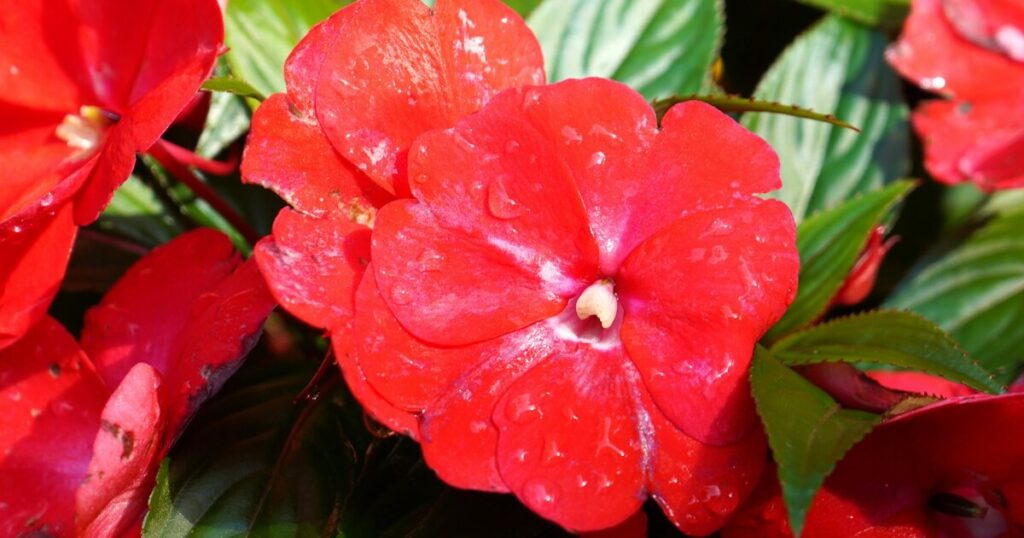
Classic red impatiens, native to East Africa, are shade-loving champions for north-facing doors. They’re not invasive, though some newer SunPatiens® cultivars handle brighter spots. Their abundant blooms attract small bees and syrphid flies that nest in nearby leaf litter, helping control aphids in your garden!
I plant mine in rich, well-draining mix and water at the base to prevent crown rot. Weekly feeding with liquid fertilizer keeps the blossoms coming. When downy mildew hits, I swap to resistant varieties—learning that lesson the hard way!
Red Dahlia (Dahlia pinnata)
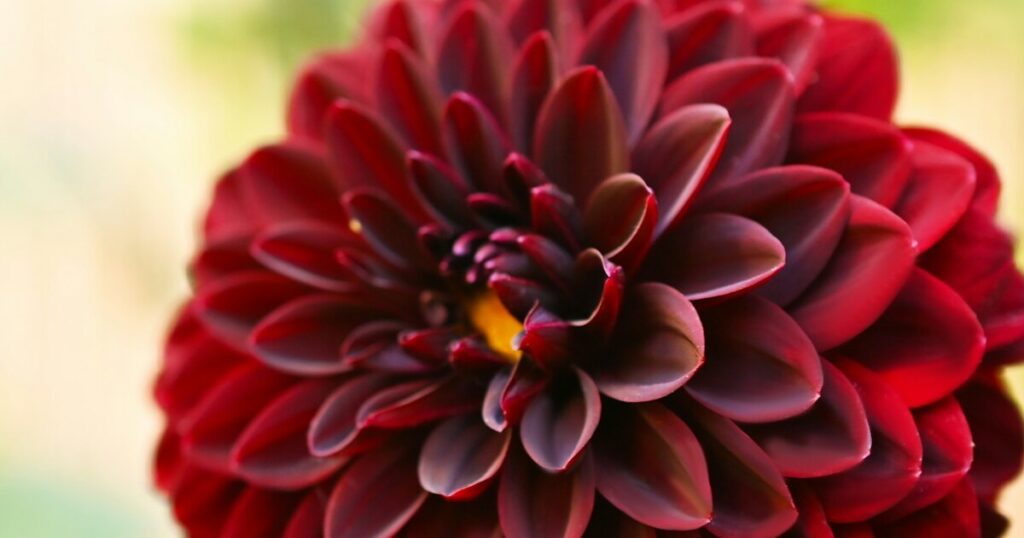
Dahlias, native to Mexico, are tuberous perennials that excel in large containers. Red cactus and decorative forms burst forth with layered petals that butterflies adore, and ground-nesting bees sometimes take refuge in pots’ open spaces. These beauties are non-invasive when tubers are contained but may self-sow in mild climates.
I lift and store tubers over winter, then replant in spring with fresh compost. Deadheading spent blooms daily keeps the plant pushing out new flowers. The reward? A dazzling red display from midsummer until the first frost!
Red Camellia (Camellia japonica)
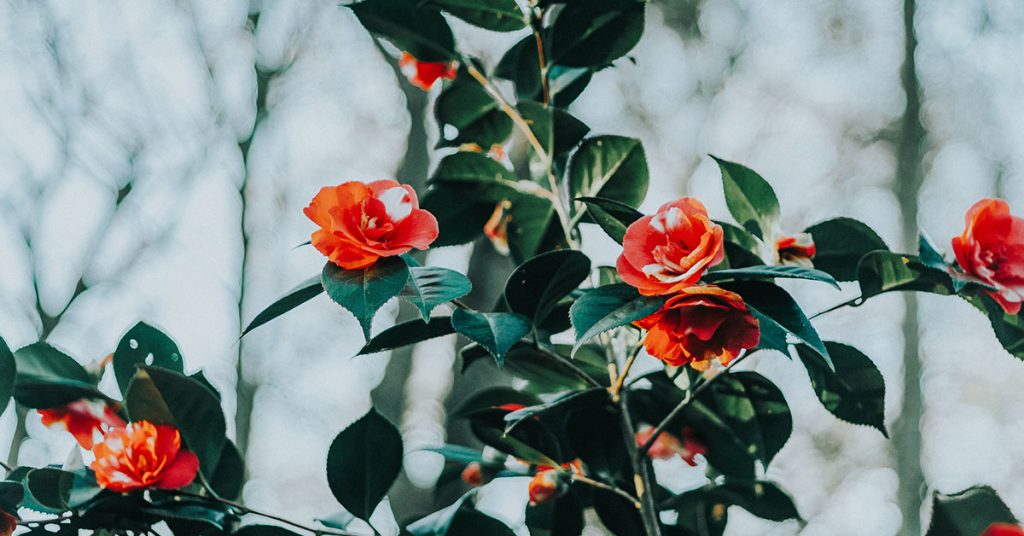
Camellias hail from Japan and Korea and bring lush, rose-like red blooms to sheltered entryways in cooler climates. They’re evergreen shrubs that aren’t invasive, and their thick foliage provides nesting sites for small birds and predatory insects that keep pests at bay. Early spring blooms herald warmer days ahead!
These slow-growing shrubs prefer acidic, humus-rich soil and morning sun. I mulch each spring with pine needles to maintain pH and protect roots. When blooms drop, they decompose beneath the plant, enriching the soil and inviting earthworms to aerate the root zone.
Red Begonia (Begonia × semperflorens-cultorum)
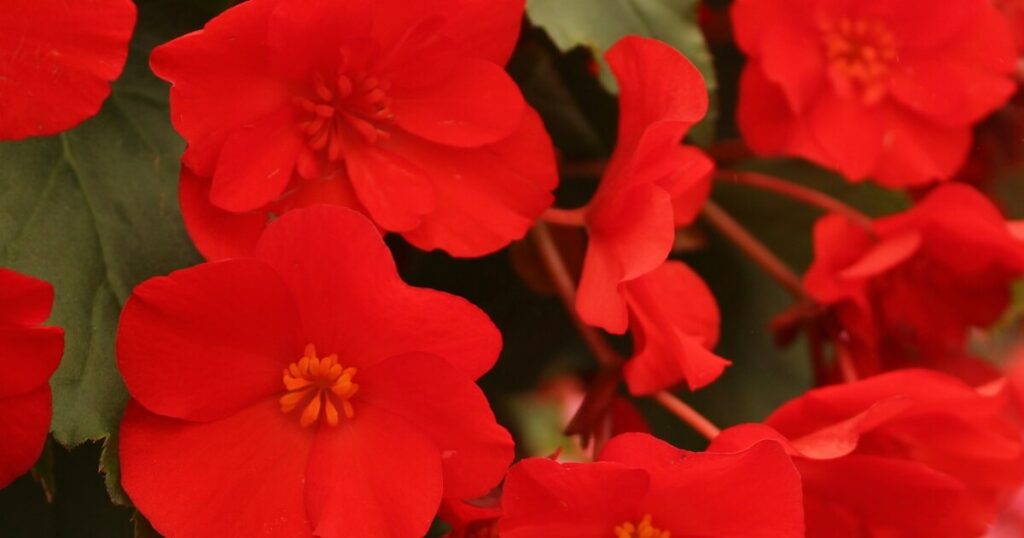
Wax begonias, native to tropical Americas, shine in partial shade pots with clusters of vibrant red flowers nestled among glossy foliage. They’re contained performers, rarely invasive, and their thick leaves often host beneficial soldier beetles hunting aphids. Begonias are a shade gardener’s best friend for a red accent!
Well-draining, peat-rich soil is key. I water when the top inch of mix feels dry and feed monthly with a balanced fertilizer. Pinch back leggy stems to maintain a mounded habit and reveal even more of those rose-red blooms!
Zonal Geranium (Pelargonium × hortorum)
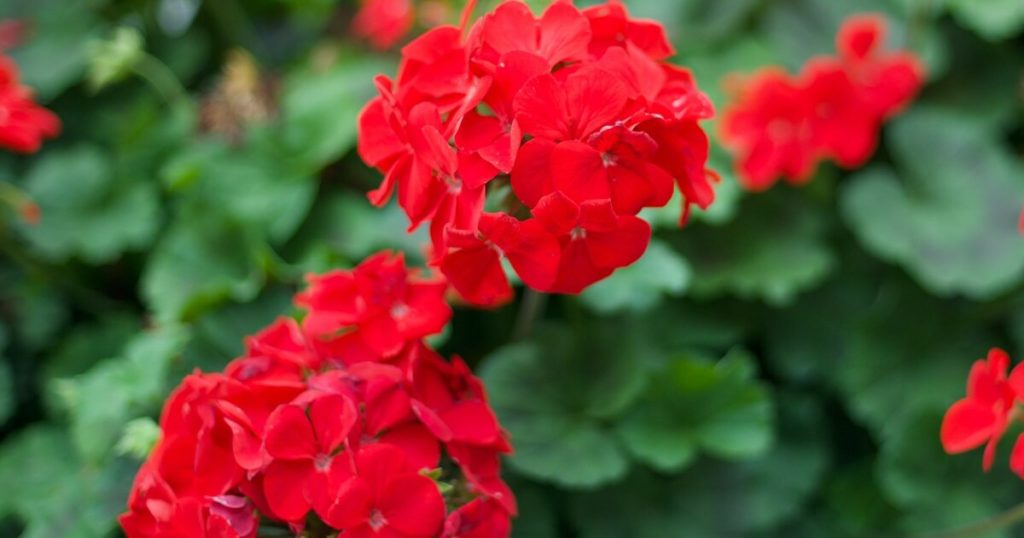
Geraniums, originally from South Africa, reign supreme in sunlit containers. ‘Scarlet’ and ‘Crimson’ varieties deliver bold red clusters that hummingbirds sip from, and their sturdy stems protect small native bees nesting in crevices below. They’re non-invasive in pots but can reseed sparingly in warm zones.
I deadhead spent umbels twice a week and water thoroughly before allowing the soil to dry. Feeding with a phosphorus-rich bloom booster every three weeks results in nonstop flower power!
Rhododendron ‘Red Queen’ (Azalea)
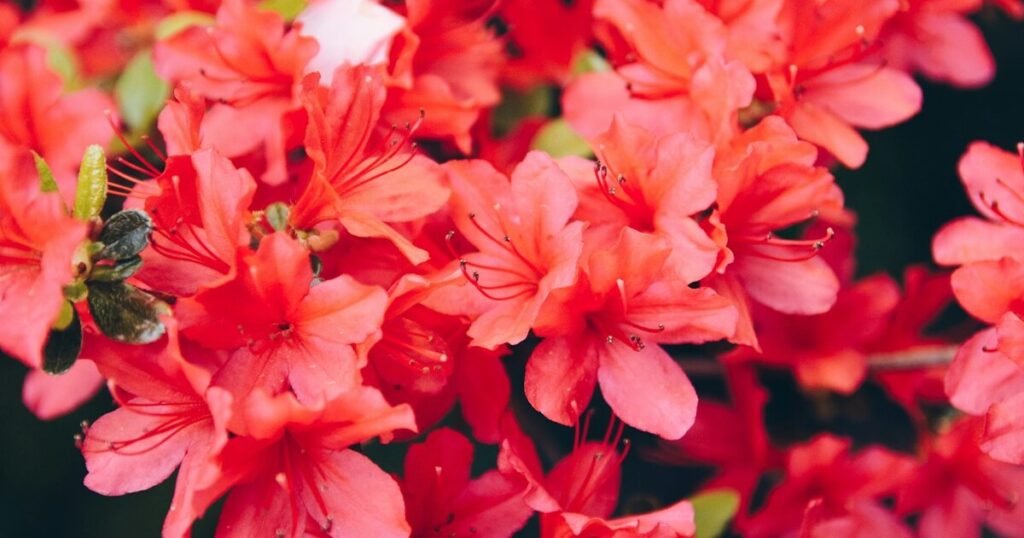
Red azaleas (Rhododendron spp.), native to Asia and North America, add spring drama with trumpet-shaped red blooms. They thrive in acidic, moist soil and partial shade—perfect for a porch under an overhang. Azalea branches provide shelter for hummingbird nests, turning your front entrance into an avian hideaway!
I surround mine with pine bark mulch and feed annually with ericaceous fertilizer. Pruning lightly after flowering encourages a second flush of bud set for the next season—keeping your entryway ablaze each spring!
Hibiscus Rosa-Sinensis
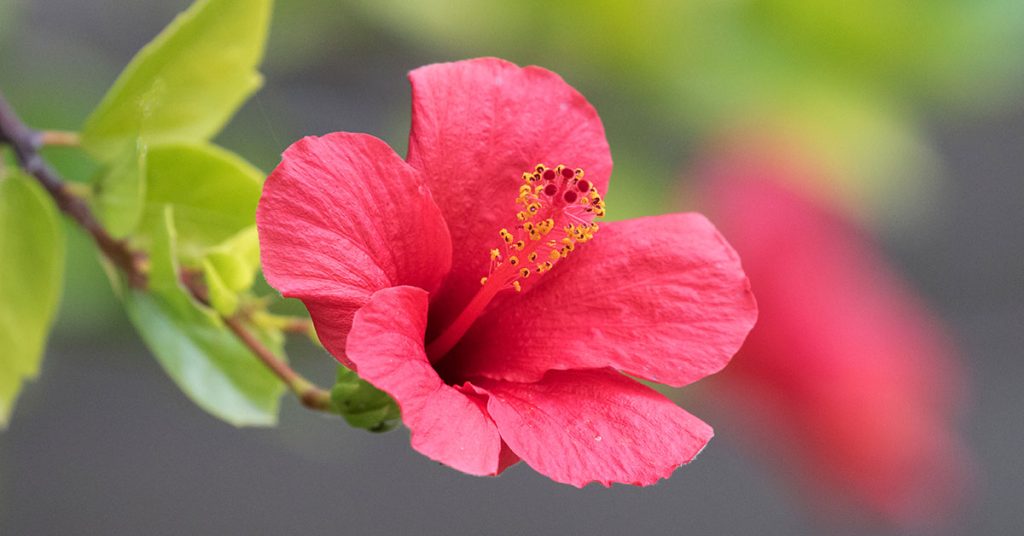
Tropical hibiscus, from East Asia, offers large, showy red flowers that open anew each morning. They’re ideal for warm-zone patios, attracting hummingbirds and butterflies that nest in nearby shrubs. Hibiscus aren’t invasive in containers but can naturalize in frost-free regions.
I grow mine in rich potting mix, water when the topsoil feels dry, and feed with high-potassium fertilizer monthly. Pruning leggy shoots back to a pair of leaves encourages branching and more blooms—plus the plant looks tidier by your door!
Miniature Red Roses (Rosa spp.)

Mini roses derive from Rosa chinensis (native to Southwest China) and pack full-size rose appeal into pint-sized pots. These repeat-bloomers produce clusters of red buds that attract bees and even small beetles nesting in the soil. They’re non-invasive when potted and scent your entry with that classic rose perfume!
I treat mine like divas: well-draining rose soil, consistent moisture, and regular deadheading. A spring feed with organic rose fertilizer sets the stage for months of red blossoms that pop against green foliage!
Mandevilla ‘Crimson’
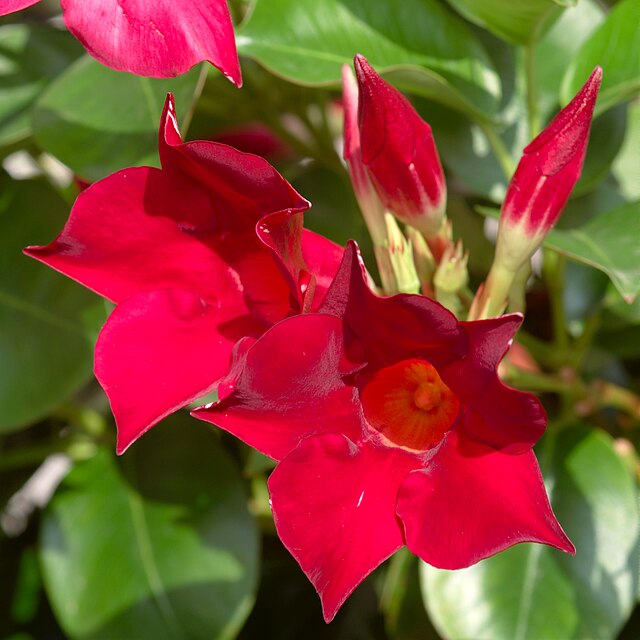
Mandevilla vines, native to South America, drape elegantly around trellises by your door, showcasing massive red trumpet flowers. Hummingbirds flock to their nectar, and the vine’s dense foliage offers nesting cover for small songbirds. In cooler zones, containers keep invasiveness in check.
I use a fragrant, well-drained mix and feed biweekly with a bloom-promoting formula. Training new shoots early ensures the plant climbs evenly, creating a living red archway that welcomes every guest!
Red Zinnia (Zinnia elegans)
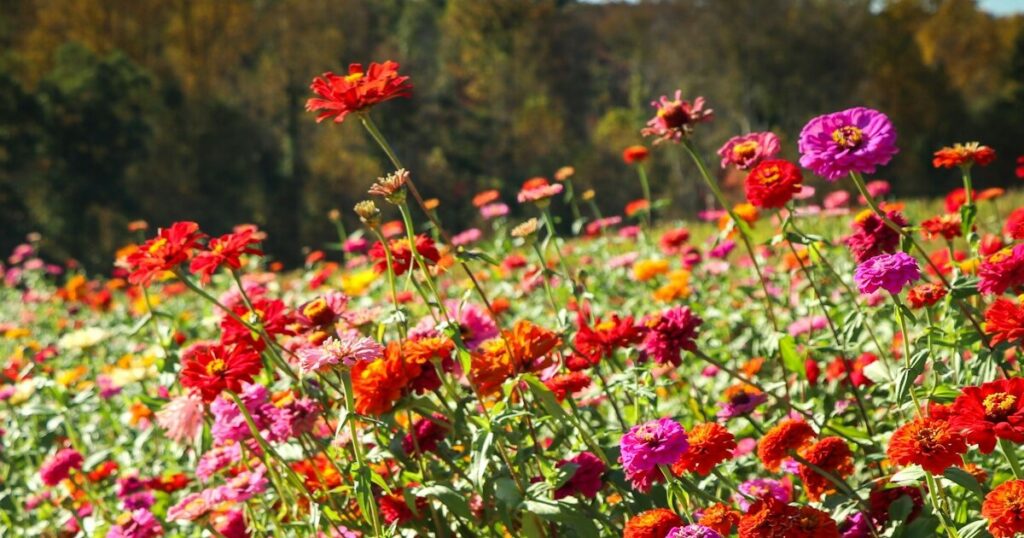
Zinnias, native to Mexico, bring bright, daisy-like red blooms that demand attention on sunny patios. They’re annuals, non-invasive, and magnets for butterflies that sometimes lay eggs on lower leaves, encouraging beneficial ladybugs to patrol the area. Their stiff stems make them perfect cut flowers!
I sow seeds directly into containers after the last frost and thin to one plant per pot for optimal air circulation. Consistent deadheading keeps those bold red petals unfurling non-stop from midsummer to frost!
Red Petunia (Petunia × atkinsiana)
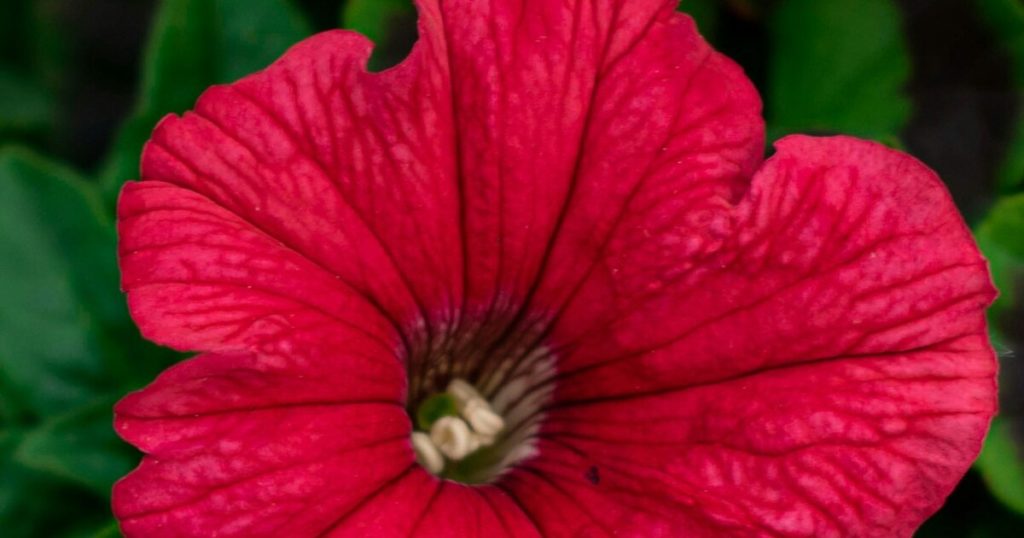
‘Red Cascade’ and ‘Cherry Red’ petunias, hybrids of South American species, spill over container edges with trumpet-shaped blooms that attract hummingbirds and nocturnal moths. They’re well-behaved in pots and rarely self-seed, keeping your porch neat and colorful!
Regular deadheading and feeding with a water-soluble fertilizer every ten days ensures a continuous carpet of red. In extreme heat, I give them a bit of afternoon shade—otherwise, those vibrant blooms can scorch in midday sun!