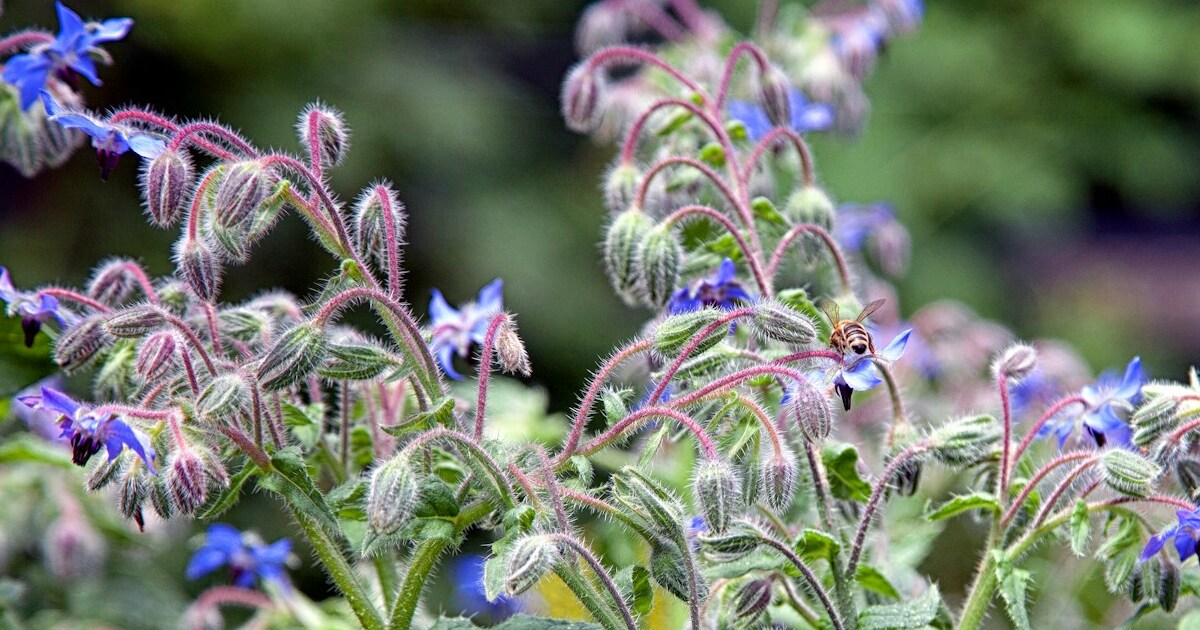

If there’s one plant I’ll always make room for near my entryway, it’s borage. There’s just something magical about those bright blue, star-shaped flowers popping up as you come and go—they give off an old-world cottage garden charm while quietly doing some serious work in the garden. Whether you’re looking for a pollinator magnet, a kitchen companion, or a low-maintenance plant with tons of personality, borage delivers every time. It’s hardy, generous, and just a little wild in the best way possible!
Native to the Mediterranean, borage (Borago officinalis) is not considered invasive, though it does self-seed freely—so once you plant it, expect it to reappear year after year in the loveliest of surprise locations. I always find new little borage volunteers peeking up in spring, often right where I need them most. If you’re wondering what plant deserves a spot right by your front door, let me make the case for borage. It’s a plant that greets you with charm and usefulness every single day!
It Attracts Pollinators All Day Long
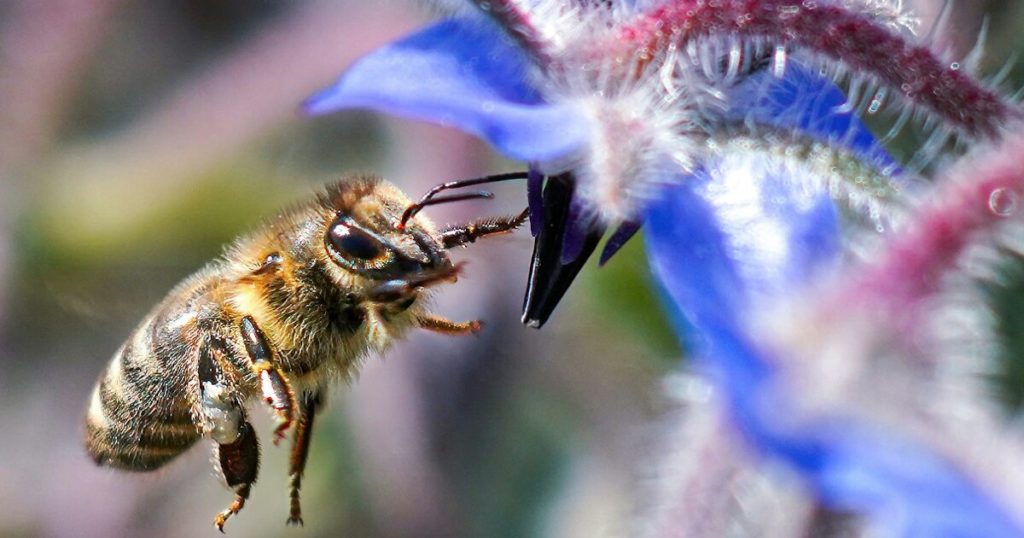
One of the biggest reasons to plant borage near your front door is the nonstop parade of pollinators it brings in. From early morning until dusk, bumblebees, honeybees, and native bees are constantly visiting those vibrant, starry blooms. Borage has a long flowering period and produces nectar continuously throughout the day, which makes it a reliable food source for all kinds of beneficial insects.
I love standing by the front step and watching the bees at work—it brings such a sense of calm and connection to nature. It also supports pollinators who will then move on to fertilize your vegetables and fruit trees. If you’re growing any other edible plants nearby, this little blue flower is doing them a huge favor just by being there!
The Flowers Are Edible and Beautiful

Borage blooms aren’t just gorgeous—they’re edible too! Those sapphire-blue petals add a gentle cucumber flavor to salads, drinks, and desserts. I’ve frozen them in ice cubes for summer lemonade or sprinkled them on top of shortbread for a truly charming touch. They look like they were made for fairy gardens but taste like a refreshing snack.
Having borage right by the door makes it easy to snip a flower or two on your way to the kitchen or as you head out to visit a neighbor. Plus, harvesting them regularly encourages the plant to keep blooming longer. It’s a subtle way to add a touch of elegance and whimsy to everyday meals without needing a whole herb garden.
It Self-Seeds Generously but Gently
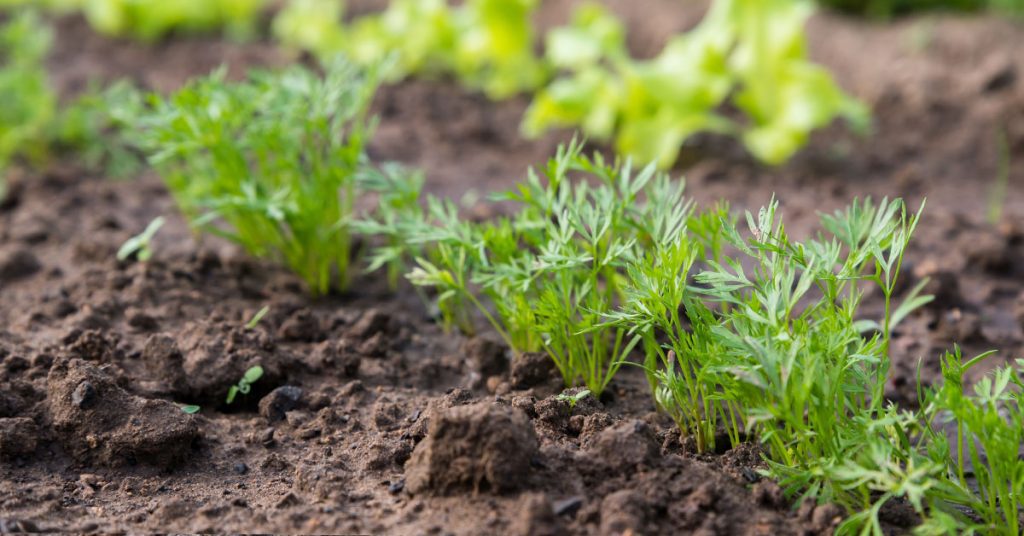
If you’ve ever planted borage once, you probably don’t need to plant it again! It reseeds freely, dropping seeds around the base of the plant that tend to sprout the following spring. But unlike more aggressive self-seeders, borage is easy to manage. You can pull seedlings you don’t want and let the rest thrive. It’s a very polite guest in the garden!
This makes borage one of the most low-maintenance plants I’ve grown. Once it’s established near your front door, you can count on it returning each year without much effort on your part. And honestly, there’s something wonderful about walking outside in early spring and spotting those fuzzy little seedlings popping up on their own, like nature’s welcome mat.
It Thrives in Less-Than-Perfect Soil

Borage isn’t fussy about soil quality, which makes it ideal for those tricky spots right by the porch or along a pathway where the soil might be compacted or sandy. It tolerates poor soil as long as it drains well, and it doesn’t need much in the way of fertilizer. In fact, too much nitrogen can make it flop a bit, so it’s perfect for that scrappy garden corner you’ve been meaning to deal with!
That makes it a dream for gardeners who don’t want to baby their front yard. I’ve grown borage next to concrete steps, gravel driveways, and packed entry beds—it still thrives. And those large, fuzzy leaves add a nice textural contrast to more manicured plants. It softens the space while standing tough in conditions that send pickier plants packing.
It’s a Companion Planting Powerhouse
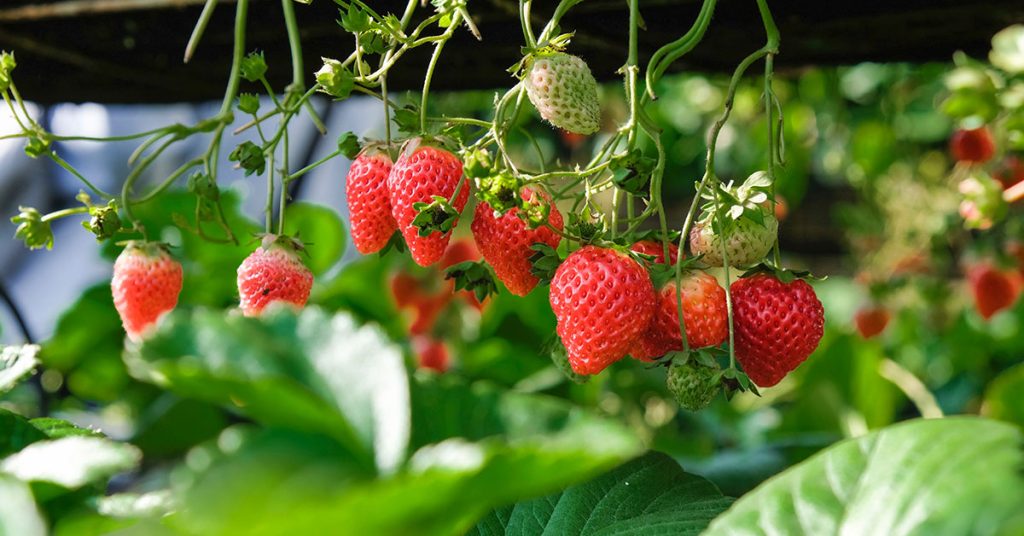
Borage is well known for being an excellent companion to a wide range of vegetables and herbs. It improves the growth and flavor of tomatoes, strawberries, and squash, and helps deter pests like tomato hornworms. Even if you don’t have a vegetable garden right by your front door, borage still brings those pest-repelling benefits to nearby ornamentals.
When planted near the front step, it’s like posting a sentry that keeps watch over your whole entry garden. I’ve even seen fewer aphids on nearby roses when borage is in bloom! It’s a quiet workhorse of a plant that never draws attention to the work it’s doing, but trust me—it’s always on the job.
It Makes a Gorgeous Cut Flower
It’s always nice to have a reliable source of blooms for a quick bouquet, and borage steps up beautifully. While the individual flowers are small, they cluster densely on upright stems and last several days in water. Their cool blue color pairs wonderfully with warm-toned flowers like calendula, coreopsis, or marigolds—so if you’re tucking a few cut flowers into a jar for the kitchen table, borage adds instant charm.
I find myself snipping a stem or two as I head inside, especially when unexpected guests arrive. It’s a lovely thing to have a vase of freshly cut flowers on the counter that came from just outside your door. And with borage blooming all summer, there’s always more where that came from!
It Deters Deer and Rabbits

The bristly, hairy leaves of borage are a natural deterrent to grazing animals like deer and rabbits. If you’ve had trouble with hungry visitors munching your porch plants, tucking a few borage plants around your entry beds can serve as a barrier. While it’s not a guaranteed fix, it certainly helps reduce the appeal of nearby tasty plants.
This has been especially useful in my garden, where deer sometimes stroll by like they own the place! I’ve noticed that once I started planting borage near the porch, they were far less interested in nibbling the surrounding greenery. It’s one of those low-effort strategies that makes a visible difference.
It Improves the Soil

As it grows, borage sends down a deep taproot that pulls up nutrients from below the soil surface. When the plant dies back or is chopped and dropped as mulch, those nutrients return to the upper soil layers, enriching the area for future plantings. It’s like a living compost pile—adding fertility without you having to turn a shovel!
That’s especially helpful near front porches where soil might be dry, tired, or neglected. I like to let borage grow full-size and then chop it down at the end of the season, letting the leaves break down in place. The soil always feels richer the next year, and I don’t have to bring in any extra inputs.