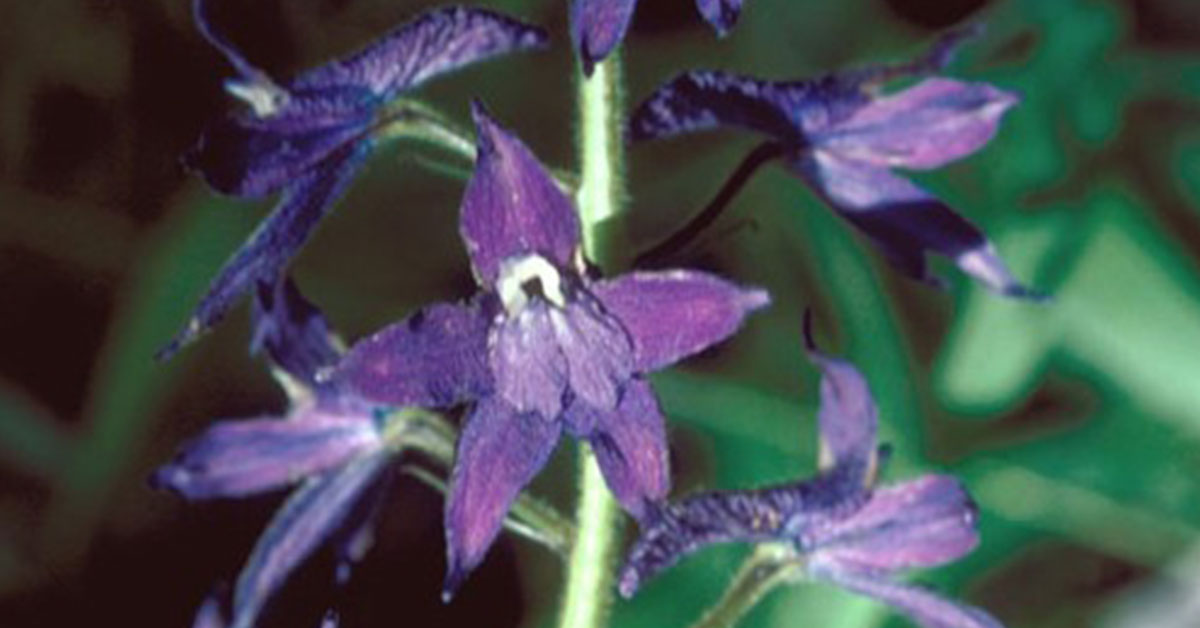

One of the interior western United States’ best-kept secrets is the Subalpine Larkspur. Delphinium barbeyi is an amazingly beautiful native wildflower that sends up beautiful, cone-like bunches of star-shaped purple flowers up to 5 feet high and is a great source of food for local pollinators, like bees and hummingbirds. If you’re looking to add a native wildflower to your property that will support the local ecosystem and stun the neighbors, you don’t have to look much farther than this stunning flower.
Bear in mind that there are a number of Delphinium species native to North America. For western states, you specifically want to find Delphinium barbeyi seeds if you want a native Delphinium.
Growing Subalpine Larkspur
Subalpine Larkspur is a great addition to your native wildflower landscape, but its care is unique to other Delphiniums. Here are some basic facts you should know before planting.
- Latin name: Delphinium barbeyi
- Other names: Tall larkspur, Barbey’s larkspur
- Native to: Arizona, Colorado, New Mexico, Utah, and Wyoming
- Invasiveness: No
- Tenderness: Perennial, long-lived
- Sun: Morning sun, afternoon shade
- Water: Moist soil
- Soil: Neutral, well-drained soil
- Hardiness zone: 5b-7b
- When to plant: Sow seeds in fall
- Spacing: 12 inches
- Plant height: 5 feet
- Bloom period: Early summer and again in late summer
- Time to maturity: 2 years
- Container friendly: No
- Fertilizer: 10-10-10
- Toxicity: Yes
- Drought Resistant: Yes
- Deer resistant: Yes
- Pest resistant: Yes
Subalpine Larkspur, Delphinium barbeyi, also known as Barbey’s larkspur and Tall larkspur, is a wildflower native to the interior west of the United States. It can be found growing in Arizona, Colorado, New Mexico, Utah, and Wyoming. Inside of its native range, it is not known to be invasive or spread in a problematic way. Outside of its native range, it is unlikely to be invasive.
This flower is a perennial, and a long-living one at that. Subalpine Larkspur is said to be able to live for 75 years or more. It grows well in Moist, neutral, well-draining soil, but can be a little bit picky about its sunlight and temperatures. It doesn’t appreciate wildly different temperature shifts. If you live in a very hot climate, positioning it to receive morning sun and afternoon shade is best. It grows well in a fairly narrow band of hardiness zones, 5b to 7b.
When planting, you can sow seeds directly into the soil in fall spaced about 12 inches apart. Expect your Subalpine Larkspur to grow to 5 feet tall and flower in early summer and again in later summer to early fall. It will take about 2 years to reach full maturity, but expect it to last for the rest of your life.
Some claim this wildflower can be grown in containers, but most gardeners won’t have much luck doing so. If grown in a container, it will need to be dug up and separated every few years to prevent crowding and brought indoors during winter. Your Subalpine Larkspur is much better off being planted directly outside in the soil.
Water
Subalpine Larkspur is fairly drought tolerant, and once established doesn’t need a lot of water, but especially when young, it prefers fairly most soil. Note: not soggy, waterlogged soil. Watering every few days during the hottest parts of summer should be sufficient.
Sunlight
This wildflower can be a little bit picky about its sunlight and temperatures. It doesn’t appreciate wildly different temperature shifts. If you live in a very hot climate, positioning it to receive morning sun and afternoon shade is best.
Soil
Subalpine Larkspur is fond of neutral or slightly alkaline, well-drained, most soil. Mulching in some good, organic compost before you sow seeds in the fall will get your plants off to a good start.
Fertilizing
If your Subalpine Larkspur appears stunted in growth and has yellowing leaves, it’s a strong indication that the plant could use an application of granular 10-10-10 fertilizer. Organic compost worked into the soil before planting will help provide adequate nutrients.
Invasiveness
Inside of its native range, it is not known to be invasive or spread in a problematic way. Outside of its native range, it is unlikely to be invasive. If unwanted seeds germinate or spread occurs, simply remove them from the ground.
Growing Subalpine Larkspur in containers
This wildflower can be grown in containers, but most gardeners won’t have much luck doing so. If grown in a container, it will need to be dug up and separated every few years to prevent crowding and brought indoors during winter. Your Subalpine Larkspur is much better off being planted directly outside in the soil.
Common problems
Inside of its native range, this wildflower is deer, rabbit, disease, and pest resistant. You won’t likely have any problems with that. If the soil is nutrient-poor, the plant may not thrive. Signs of failure to thrive include yellowing foliage and poor growth. Providing organic compost or a granular 10-10-10 fertilizer will help your plant thrive.
Propagating Subalpine Larkspur
This wildflower can be propagated through seeds or by separating the plant at its roots. Sow seeds in the fall with a bit of organic compost. You can also dig the plant up and separate it at the root ball in fall and replant approximately one foot apart from one another.
Wildlife attracted by Subalpine Larkspur
Subalpine Larkspur flowers are an excellent source of nutritious nectar for numerous pollinators native to the interior west, including bees and hummingbirds.
Uses for Subalpine Larkspur
Subalpine Larkspur is extremely toxic to humans, pets, and livestock. It makes it very resistant to deer and rabbits, but can make you or your pets extremely ill. It contains alkaloids in its tissues that are toxic to animals. These alkaloids are at higher concentrations when the plants are young, but Larkspur should never be consumed at any age.