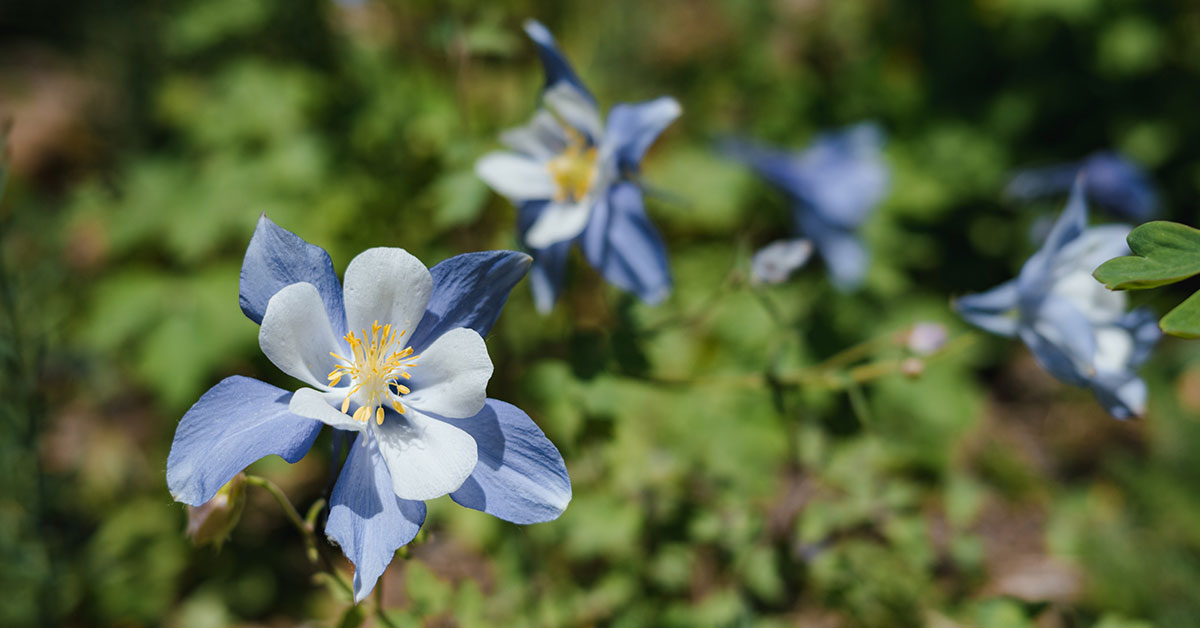

One of my favorite flowers to grow is, in fact, the state flower of the great state of Colorado: the Colorado Blue Columbine. This plant produces stunning, blue, star-like flower petals with a series of 5 smaller, white flower petals cupped inside of it. It is a wonderful plant native to Colorado and is absolutely worth adding to your native flower garden. The pollinators will love it and so will your neighbors.
Growing Colorado Blue Columbine
Before we rush out and buy seeds or starts, let’s talk about the basic facts of the Colorado Blue Columbine. If you don’t know anything about it, how can you grow it?
- Latin name: Aquilegia coerulea
- Other names: Rocky Mountain Columbine, Blue Columbine
- Native to: The Rocky Mountains, 6,000-10,000 feet
- Invasiveness: Not invasive
- Tenderness: Perennial
- Sun: Full sun
- Water: Medium
- Soil: Loose soil
- Hardiness zone: 3-9
- When to plant: Varies
- Spacing: 9-12 inches
- Plant height: 1-3 feet
- Bloom period: June through August
- Time to maturity: 2 full years
- Container friendly: Yes
- Fertilizer: Light application in early spring
- Toxicity: All parts are poisonous
- Deer resistant: Yes
- Drought tolerant: Yes
- Pest resistant: Somewhat
The Colorado Blue Columbine, Aquilegia coerulea, is a lovely blue flower native to the Rocky Mountains, between the elevations of 6,000 and 10,000 feet. It is not considered invasive outside of its native range. It’s a short-lived perennial at higher elevations that prefers full sun, medium watering, and loose, loamy soil.
Plant the Colorado Blue Columbine in hardiness zones 3-9. Sow seeds outside or divide mature plants in late summer to early fall. New plants can be planted in the spring. Space your Colorado Blue Columbines 8-12 inches apart and give them 2 years to reach their full height of 1-3 feet.
Colorado Blue Columbines are container friendly, but the native Rocky Mountain pollinators who enjoy them tend to be solitary and flighty, so place your Columbines in an inconspicuous spot they’ll enjoy.
Water
Colorado Blue Columbines are drought resistant and don’t need a great deal of water. Medium or moderate amounts of water will suit the plants well. Watch for wilting, and otherwise don’t overwater.
Sunlight
Your Colorado Blue Columbines will appreciate being placed in a full sun location but can tolerate a few extra hours of shade if necessary. The closer to full sun it gets, the better off it is.
Soil
This Rocky Mountain flower doesn’t need the highest quality potting soil in order to thrive. It will do fine in rocky, well-draining, slightly acidic soil.
Fertilizing
Generally, your Colorado Blue Columbines won’t need a great deal of fertilizer. You can give your plants a bit of general flower fertilizer in early spring, but don’t provide any other fertilizer. You likely don’t even have to do that.
Invasiveness
The Colorado Blue Columbine is not at all invasive inside or outside of its range, but take care to consider what growing conditions the flower is adapted to. It likes the semi-arid climate of the high-elevation Rockies. It may not thrive all that well in other climates.
Growing Colorado Blue Columbines in containers
Colorado Blue Columbines do just fine when grown in pots. No special considerations here are necessary. You may want to provide slightly more water than you would for a plant growing in the ground, as potted plants can dry out faster. Otherwise, stick to the general recommendations listed above: full sun and spring fertilizing.
Common problems
The most common problem for the Colorado Blue Columbine is mildew and mold. Plants that are in soggy, compacted soil may be susceptible to powdery mildew and rot at the root level. They are generally pretty resistant to pests, but hybrid columbines tend to be more susceptible to leafminers and sawfly pests.
Propagating Colorado Blue Columbines
Propagating Colorado Blue Columbines is pretty simple. You can sow their seeds in the ground in the late summer and early fall after they’ve gone to seed. You can also divide up the plants in the fall by digging them up and separating the root balls of the plant, then replanting 8-12 inches apart.
Wildlife attracted by the Colorado Blue Columbine
Choosing to plant Colorado Blue Columbine in its native range is a great act of kindness to native pollinators, like bees, flies, and hummingbirds. Your native pollinators have evolved with and adapted to the Colorado Blue Columbine. It’s an important, digestible food source for them. These wonderful insects and birds will keep visiting your yard time and time again, knowing it’s a great source of food.
Uses for the Colorado Blue Columbine
All parts of the Colorado Blue Columbine plant are known to be poisonous, including stems, leaves, and flowers. The seeds, however, are said to have been a remedy used by Native Americans to treat sickness and abdominal pain. It could also be used to get rid of lice in the hair. As with all home remedies, your mileage may vary.
The Colorado Blue Columbine was designated the state flower of Colorado on April 4th, 1899.