

Few pleasures in gardening rival the delight of discovering a plant whose leaves resemble perfect little hearts. These foliage lovelies add a romantic, whimsical touch to any indoor or outdoor space, inviting moments of joy and reflection. I know how frustrating it can be to choose a plant for its shape only to find it withering under neglect or besieged by pests—nothing deflates the spirit faster than a wilting centerpiece! That’s why I’ve selected ten reliably beautiful heart-leaved plants known for their resilience and charm.
Beyond their captivating shapes, each of these plants brings its own ecosystem benefits—from attracting pollinators and beneficial insects to providing nesting spots for tiny birds or shelter for ground-dwelling wildlife. You’ll learn where they’re native, whether they tend to spread invasively, and practical tips for keeping them thriving. Whether you’re crafting a lush indoor jungle or a cozy shade garden, these heart-shaped wonders will warm your gardener’s heart and delight every visitor!
Ceropegia woodii (String of Hearts)

String of Hearts hails from the dry woodlands of southern Africa, where its fine, trailing vines and delicate silver-patterned heart leaves cling to rocky outcrops. In cultivation, it prefers bright, indirect light and well-draining soil, making it perfect for hanging baskets or high shelves. This plant rarely becomes invasive in pots, though it self-propagates easily via fallen leaf nodes.
Its tiny, lantern-like purple flowers attract small flies and gnats seeking nectar, inadvertently encouraging a balanced micro-pollinator community indoors. Beneath its canopy, the airy structure deters pests like mealybugs, while still providing safe nooks for beneficial predatory mites. With its graceful drape and heart-shaped foliage, String of Hearts transforms any room into a serene oasis!
Philodendron hederaceum (Heartleaf Philodendron)
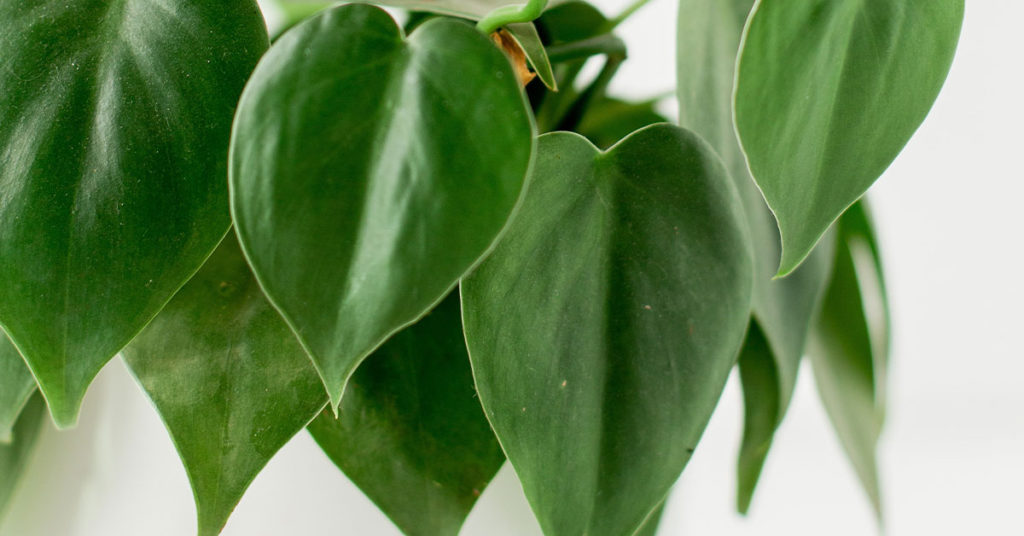
Native to the tropical rainforests of Central and South America, Heartleaf Philodendron is cherished for its glossy, deep-green heart leaves and vigorous, climbing habit. It thrives in bright, indirect light and tolerates lower-light conditions, making it one of the most forgiving indoor climbers. Fruiting philodendrons are non-invasive in pots—just train them up a moss pole or let them wander from a pedestal.
When in bloom, its small green spathes attract tiny fungus gnats, which in turn draw in predatory insects like rove beetles. This ecological interplay helps keep minor pest outbreaks in check. Heartleaf Philodendron’s lush foliage not only symbolizes affection but also supports a small, lively ecosystem within your home jungle!
Begonia rex (Rex Begonia)

Rex Begonias originate from the humid forests of northeastern India and adjacent regions, where their bold, heart-shaped leaves—often speckled or marbled—stand out in the understory. They flourish in bright, filtered light and high humidity, forming striking clumps that stay contained without aggressive spreading. Their rhizomatous roots prefer moist, well-aerated soil.
Though grown mainly for foliage, Rex Begonias produce delicate white flowers that attract tiny hoverflies and beneficial lacewings, which help fend off aphids. The dense leaf cover also offers shelter for springtails—harmless decomposers that keep the soil healthy. With their stunning patterns and supportive microfauna, Rex Begonias are a gardener’s delight!
Anthurium andraeanum (Flamingo Flower)
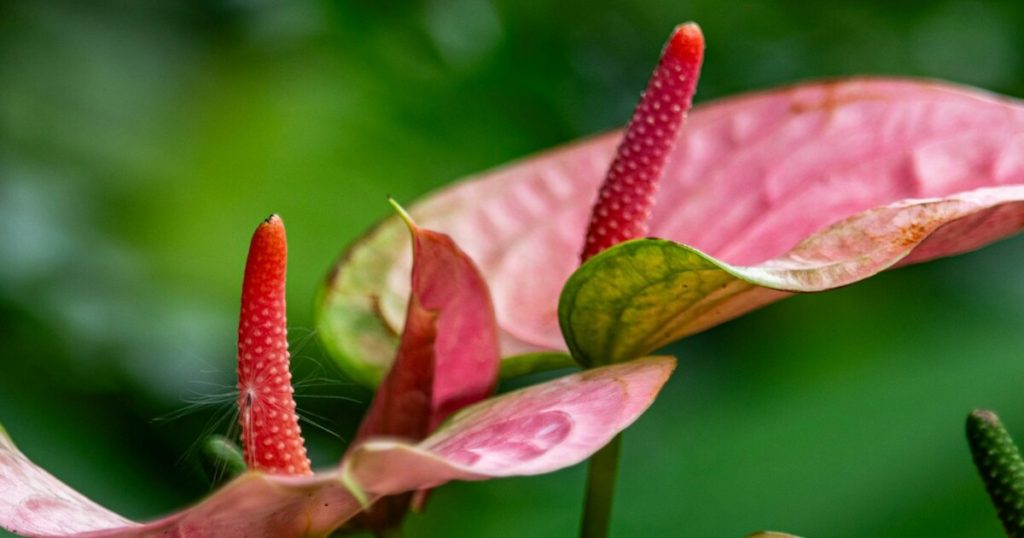
Anthurium andraeanum—native to the rainforests of Colombia and Ecuador—delights with its glossy, heart-shaped leaves and long-lasting red or pink spathes. It thrives in bright, indirect light and humid conditions, remaining well-behaved in pots without invasive roots. I once added one to a shady corner and watched it transform the space with its architectural form!
Its vibrant spathes attract hummingbirds and small butterflies if grown in a conservatory, while the lush foliage shelters predatory mites that patrol for pests. With proper watering and occasional misting, this showstopper lends tropical flair and a humming buzz of beneficial life to any indoor retreat.
Hoya kerrii (Sweetheart Hoya)

Hoya kerrii, often called the Sweetheart Hoya, is native to the rainforests of Southeast Asia. Known for its thick, succulent heart leaves, it thrives in bright, indirect light and porous, fast-draining soil. Though slow-growing, each leaf embeds in a trailing vine, creating a charming cascade from hanging planters.
When it blooms, its star-shaped clusters emit a faint, vanilla-like scent that draws in tiny pollinating flies. These miniature visitors signal a healthy environment and help reduce minor infestations of scale insects. Sweetheart Hoya’s sculptural leaves and gentle fragrance make it a sweet testament to lasting affection!
Epipremnum aureum ‘Neon’ (Neon Pothos)
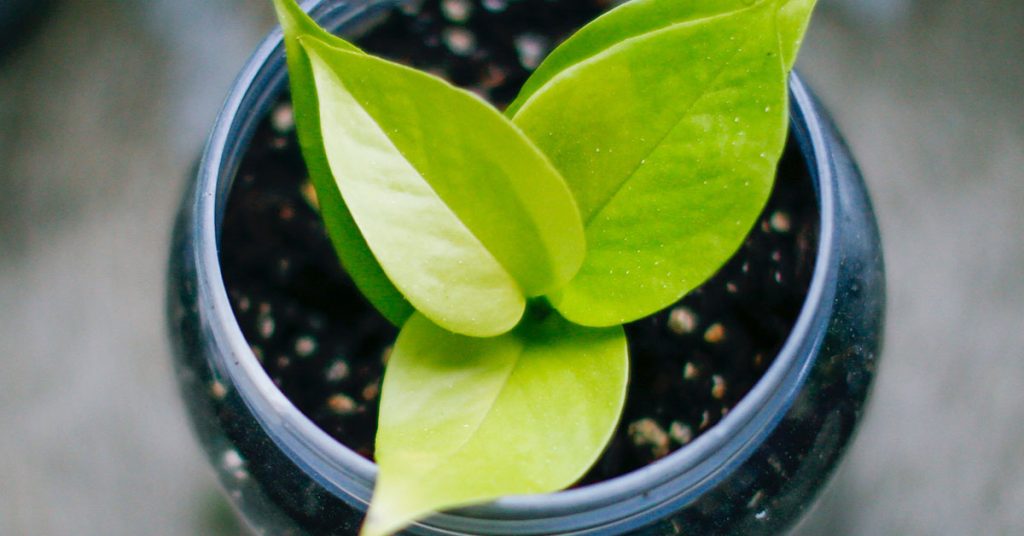
Native to Mo’orea in French Polynesia, Neon Pothos dazzles with its lime-green, heart-shaped leaves that brighten low-light corners. It grows rapidly up poles or trails from baskets, yet remains non-invasive in containers. Its aerial roots sprout from nodes, offering anchorage and moisture absorption in humid indoor settings.
Clusters of feathery white flowers—rare in cultivation—attract small hoverflies and tiny bees, which help keep airborne gnats at bay. Beneath its vines, predatory spiders and mites find shelter, contributing to a balanced micro-ecosystem. Neon Pothos’s vibrant hues and easy care make it a beloved choice for novice and veteran gardeners alike!
Caladium bicolor (Heart of Jesus)

Caladium bicolor, native to the rainforests of Brazil, is famed for its vibrant heart-shaped leaves splashed with red, green, and white. It thrives in partial shade and moist, well-drained soil, forming mounded clumps that stay neatly confined. These dramatic leaves bring instant impact to shaded beds or container groupings.
Though grown for foliage, Caladiums may host small snails or slugs in damp conditions. Beneficial ground beetles often arrive to feed on these pests, creating a natural balance. Planting Caladium bicolor adds a flash of tropical color that celebrates the heart of your garden’s brigade!
Cyclamen hederifolium (Hardy Ivy-leaved Cyclamen)

Cyclamen hederifolium, native to woodlands of the Mediterranean, features striking heart-shaped leaves adorned with silver marbling. Its autumn-blooming pink to white flowers emerge before foliage, thriving in partial shade and well-drained soil. Cyclamen spreads slowly by seed, rarely becoming invasive when managed.
The nodding blossoms attract small bumblebees and nocturnal moths, while the leaf litter beneath provides habitat for ground beetles and rove beetles that help control slugs. With its seasonal charm and dynamic wildlife interactions, Cyclamen hederifolium bridges autumn’s hush with garden vitality!
Syngonium podophyllum (Arrowhead Vine)
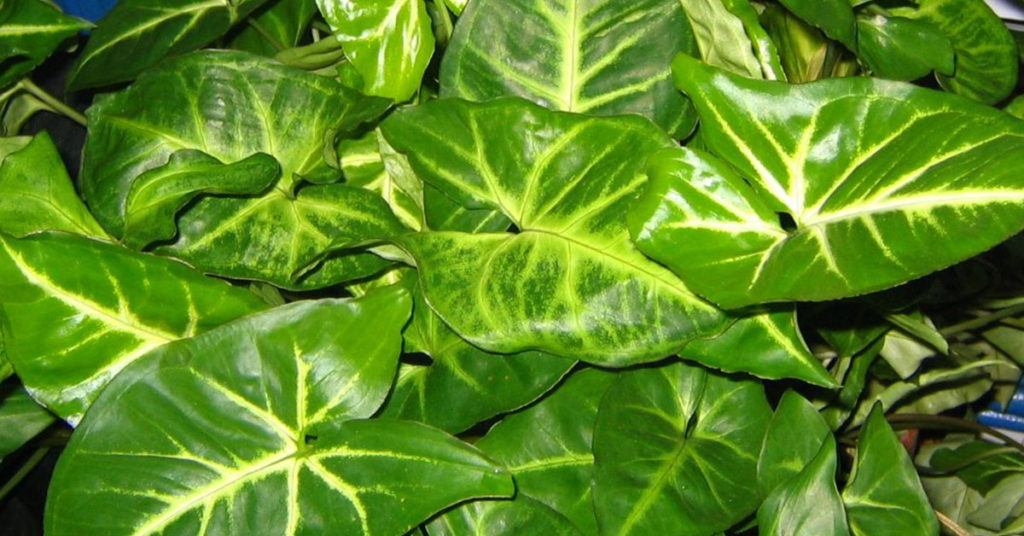
Syngonium podophyllum, the Arrowhead Vine from Central and South America, sports juvenile heart-shaped leaves that later evolve into arrow-shaped forms. It thrives in bright, indirect light and moist, well-drained soil, climbing or trailing gracefully from baskets without becoming invasive when pruned regularly.
Small white flowers—rare indoors—emit a mild fragrance that draws in tiny hoverflies. In the soil, predatory mites patrol for gnats and scale insects, keeping your care routine light. Growing Arrowhead Vine adds textural contrast and heart-shaped delight to any indoor living wall!