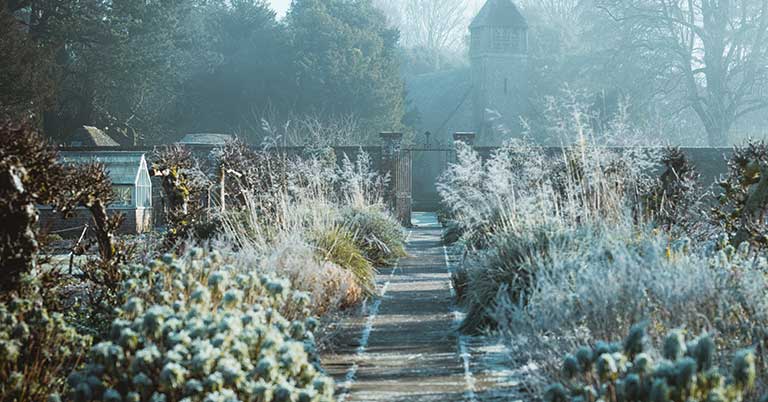

As the festive season approaches and the days grow shorter, many gardeners seek ways to infuse their outdoor spaces with color and life despite the chill in the air. Winter flowers are the perfect solution, offering vibrant hues and hardy resilience that can withstand colder temperatures. These blooms not only enhance the beauty of your garden but also add a touch of magic to your holiday decorations. Whether you’re planning a winter garden display or looking for stunning plants to complement your indoor holiday arrangements, these twelve winter flowers are sure to delight and inspire!
I know how disappointing it can be when your garden loses its vibrancy as the temperature drops and winter sets in. You might be wondering how to keep your garden lively and full of color during the holiday season. Don’t worry! With the right selection of winter blooms, you can create a stunning and festive atmosphere that brightens up your outdoor space. Let’s explore twelve winter flowers that are perfect for the holidays, each bringing its unique charm and beauty to your garden and home!
Poinsettia (Euphorbia pulcherrima)

Poinsettias are arguably the most iconic winter flowers, synonymous with holiday cheer and festive decorations. Native to Mexico, these vibrant plants are renowned for their striking red, pink, and white bracts that resemble petals, making them a popular choice for indoor and outdoor holiday displays. Poinsettias are not considered invasive, allowing you to enjoy their beauty without worrying about them spreading uncontrollably. Their bright colors add a warm and welcoming touch to any garden or home setting, enhancing the festive spirit during the winter months.
Beyond their visual appeal, poinsettias also play a role in attracting beneficial insects to your garden. Their bright bracts draw in pollinators such as bees and butterflies, which are essential for maintaining a healthy garden ecosystem. Additionally, poinsettias can serve as a natural deterrent for certain pests, thanks to their toxic sap that repels insects like aphids and mites. By incorporating poinsettias into your holiday decorations, you not only brighten your space but also support the overall health and balance of your garden!
Christmas Cactus (Schlumbergera bridgessii)

Christmas Cactus is a delightful winter-blooming succulent that brings vibrant colors to your holiday decor. Native to the rainforests of southeastern Brazil, these charming plants are known for their bright pink, red, or white tubular flowers that bloom in late winter, just in time for the holiday season. Christmas Cacti are not considered invasive, making them a safe and beautiful addition to both indoor and outdoor gardens. Their unique flower structure and festive colors make them a favorite for holiday arrangements and garden displays alike.
In addition to their striking appearance, Christmas Cacti are excellent for attracting pollinators like hummingbirds and butterflies to your garden. Their long, tubular flowers are specifically adapted to attract these creatures, providing them with a valuable nectar source during the colder months when other flowers are scarce. Furthermore, Christmas Cacti thrive in well-drained soil and partial shade, making them versatile plants that can be placed in various garden settings. By planting Christmas Cacti, you add both beauty and ecological value to your winter garden, supporting pollinators and enhancing the overall biodiversity of your outdoor space!
Amaryllis (Hippeastrum spp.)

Amaryllis are stunning winter flowers that add a touch of elegance and grandeur to holiday decorations. Native to South America, these bulbous plants are celebrated for their large, trumpet-shaped blooms that come in a range of colors, including red, pink, white, and orange. Amaryllis are not considered invasive, making them a safe and impressive choice for both indoor and outdoor displays. Their tall, sturdy stems and vibrant flowers make them perfect for centerpieces, wreaths, and garden accents during the winter season.
Beyond their ornamental beauty, Amaryllis plants attract beneficial insects such as bees and butterflies, which are drawn to their rich nectar. The robust structure of Amaryllis also provides support for climbing plants and can serve as a focal point in garden arrangements. Additionally, Amaryllis bulbs store well and can be replanted year after year, making them a sustainable choice for ongoing winter displays. By incorporating Amaryllis into your holiday decorations, you enhance both the visual appeal and the ecological health of your garden, creating a beautiful and resilient winter landscape!
Hellebores (Helleborus spp.)
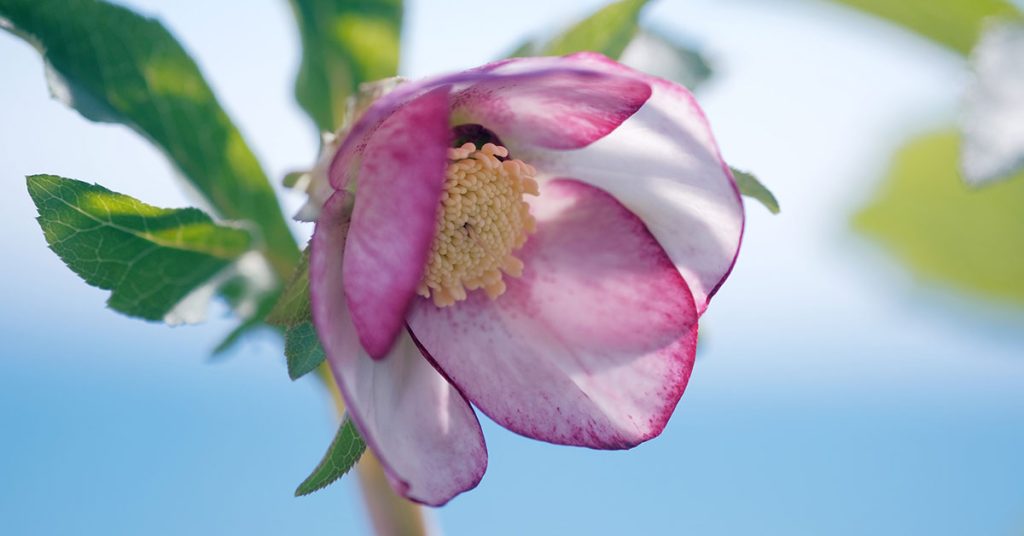
Hellebores, often known as the Christmas Rose or Lenten Rose, are exquisite winter-blooming flowers that bring understated elegance to your garden. Native to the mountainous regions of Europe and Asia, hellebores are perennials prized for their nodding, cup-shaped flowers that bloom in shades of white, pink, purple, and green during the winter months. These plants are not considered invasive, allowing you to enjoy their delicate beauty without disrupting your garden’s natural balance. Hellebores thrive in partial shade and well-drained soil, making them versatile additions to woodland gardens, borders, and shaded walkways.
In addition to their captivating blooms, hellebores play a vital role in attracting beneficial insects such as bees and butterflies, which are essential for pollination and maintaining a healthy garden ecosystem. The evergreen foliage of hellebores provides excellent cover and habitat for small birds and beneficial insects, offering them protection from the cold winter winds. Moreover, hellebores are known for their medicinal properties and have been used in traditional remedies for centuries. By planting hellebores, you not only enhance the beauty of your winter garden but also support the intricate web of life that keeps your garden thriving!
Snowdrops (Galanthus nivalis)
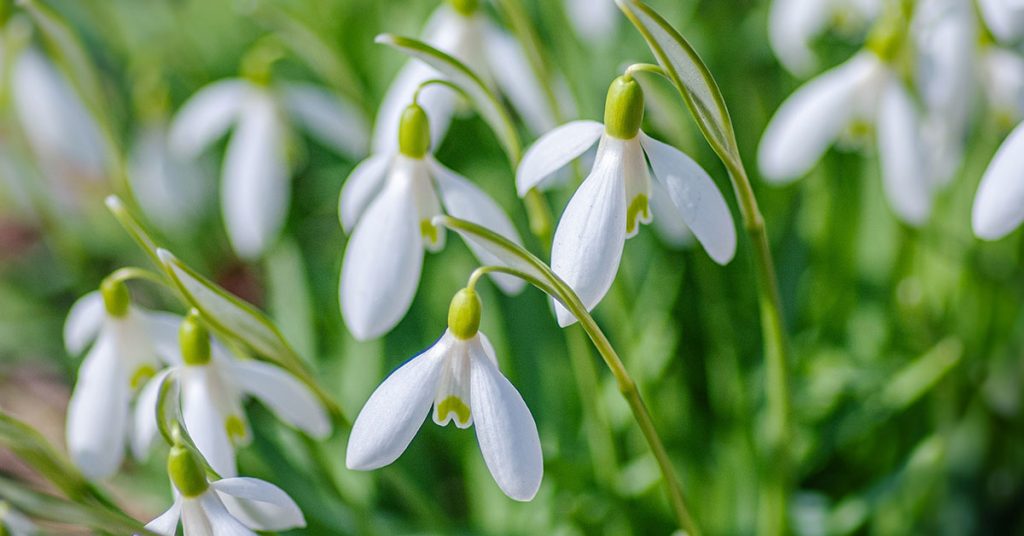
Snowdrops are enchanting winter flowers that bring a touch of magic to your garden when snow blankets the ground. Native to Europe and parts of Asia, Galanthus nivalis are small, delicate bulbs known for their pure white, nodding flowers that bloom in late winter, often before the first leaves appear. These charming flowers are not considered invasive, making them a lovely addition to woodland gardens, borders, and naturalized areas. Snowdrops thrive in well-drained soil and partial shade, making them perfect for adding subtle elegance to shaded garden spots.
Beyond their delicate beauty, snowdrops play a crucial role in supporting winter wildlife. The early blooming flowers provide an important nectar source for bees and other pollinators emerging from their winter dormancy, ensuring they have sustenance when other flowers are scarce. The dense foliage of snowdrops also offers shelter for small insects and provides ground cover that helps retain soil moisture and prevent erosion. Furthermore, snowdrops are excellent indicators of spring’s arrival, bringing hope and anticipation to the garden after the long winter months. By planting snowdrops, you enhance both the aesthetic and ecological value of your winter garden, creating a serene and supportive environment for a variety of wildlife!
Camellias (Camellia japonica)
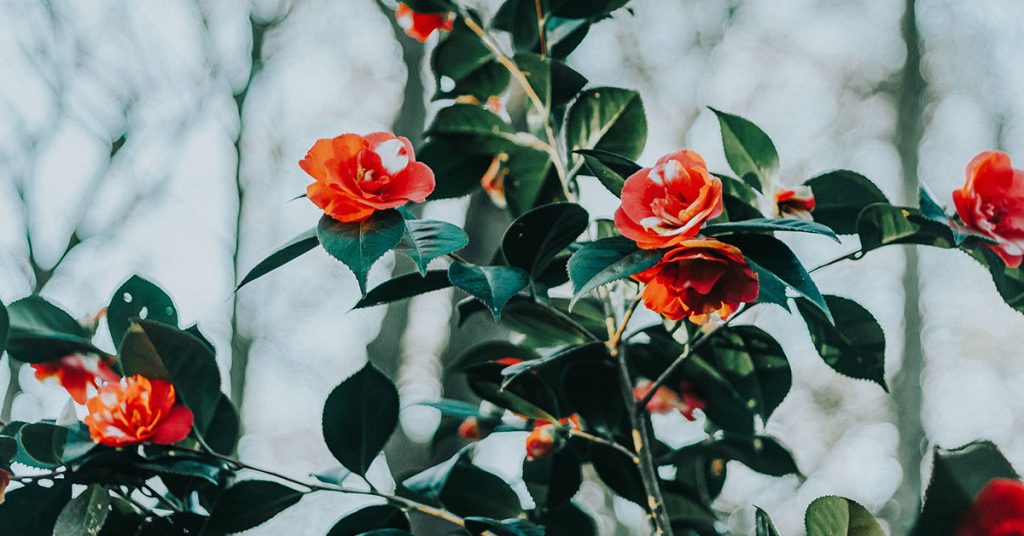
Camellias are exquisite winter-blooming shrubs that add vibrant color and lush greenery to your garden during the colder months. Native to East Asia, particularly Japan and Korea, Camellia japonica is celebrated for its large, rose-like flowers that bloom from late fall through early spring. These evergreen shrubs are not considered invasive, making them a beautiful and reliable addition to various garden settings. Camellias thrive in well-drained, acidic soil and partial shade, making them perfect for woodland gardens, shaded borders, and as feature plants in winter landscapes.
In addition to their stunning blooms, camellias attract a variety of beneficial insects and wildlife to your garden. Bees and butterflies are drawn to the rich nectar of camellia flowers, playing a crucial role in pollination and supporting the overall health of your garden ecosystem. The dense evergreen foliage provides excellent shelter for small birds and beneficial insects, offering a safe haven from predators and harsh winter conditions. Moreover, camellias help improve soil health by preventing erosion with their extensive root systems and adding organic matter as their leaves decompose. By incorporating camellias into your winter garden, you enhance both its aesthetic appeal and its ecological health, creating a vibrant and supportive environment for a diverse range of wildlife!
Cyclamen (Cyclamen hederifolium)

Cyclamen are charming winter-blooming flowers that bring intricate beauty and vibrant color to your garden during the colder months. Native to the Mediterranean region, particularly southern Europe and the Caucasus, Cyclamen hederifolium are hardy perennials known for their heart-shaped leaves and striking, upswept flowers that bloom in shades of pink, red, white, and purple. These plants are not considered invasive, making them a wonderful choice for adding delicate color to shaded areas of your garden. Cyclamen thrive in cool, moist conditions, making them perfect for winter gardens where other plants may struggle to survive.
Beyond their enchanting appearance, cyclamen contribute to a healthy garden ecosystem by attracting beneficial insects and providing habitat for small pollinators. Bees and butterflies are drawn to cyclamen flowers, offering them a valuable nectar source during the winter months when other flowers are scarce. The tuberous roots of cyclamen help improve soil structure and retain moisture, supporting the overall health of your garden beds. Additionally, cyclamen’s attractive foliage serves as ground cover, reducing weed growth and maintaining soil moisture levels. By planting cyclamen, you add both beauty and functionality to your winter garden, creating a thriving and balanced environment that supports diverse wildlife!
Paperwhites (Narcissus papyraceus)

Paperwhites are delightful winter-blooming bulbs that bring a splash of color and fragrance to your garden and home during the holiday season. Native to the Mediterranean region, Narcissus papyraceus are small, hardy bulbs known for their fragrant, white to pale pink flowers that resemble delicate paper flowers. These plants are not considered invasive, making them a wonderful addition to indoor arrangements, garden beds, and container displays. Paperwhites thrive in well-drained soil and partial shade, making them perfect for adding subtle elegance to shaded garden spots or brightening up indoor spaces with their lovely blooms.
In addition to their enchanting fragrance and beauty, paperwhites attract beneficial insects such as bees and butterflies, providing them with essential nectar sources during the winter months. Their robust stems and vibrant flowers also serve as excellent supports for climbing plants and decorative elements, enhancing the overall aesthetic of your garden. Furthermore, paperwhites are easy to propagate, allowing you to enjoy their blooms year after year with minimal effort. By planting paperwhites, you add both charm and ecological value to your winter garden, creating a vibrant and supportive environment that thrives even in the colder months!
Winter Jasmine (Jasminum nudiflorum)
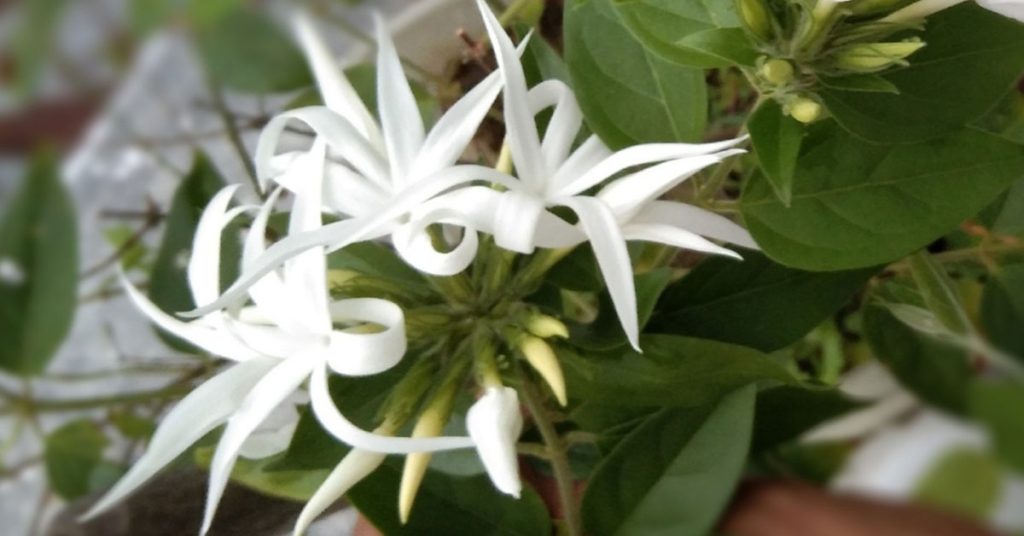
Winter Jasmine is a charming vine that brings bright, cheerful color to winter gardens when most other plants are dormant. Native to China, Winter Jasmine is known for its vivid yellow, star-shaped flowers that bloom in late winter, often before the first leaves appear. This deciduous vine is not considered invasive, making it a safe and delightful addition to trellises, fences, and garden walls. The bright yellow blooms provide a stunning contrast against the bare branches and snow, adding a pop of color that enlivens the winter landscape.
Beyond its visual appeal, Winter Jasmine plays a vital role in attracting beneficial wildlife to your garden. The flowers attract pollinators such as bees and butterflies, ensuring they have access to nectar and pollen when other sources are scarce. The vine’s dense growth also provides excellent cover for small birds and insects, offering protection from predators and harsh winter winds. Additionally, Winter Jasmine can help improve soil health by preventing erosion and maintaining moisture levels around its roots. By planting Winter Jasmine, you enhance both the beauty and the ecological health of your winter garden, creating a vibrant and supportive environment that thrives even in the depths of winter!
Conclusion

Incorporating winter-blooming flowers into your garden is a fantastic way to maintain year-round color and vibrancy, especially during the festive holiday season. By selecting a diverse range of resilient plants like poinsettias, Christmas cacti, amaryllis, hellebores, snowdrops, camellias, cyclamen, snowdrops, winter jasmine, and paperwhites, you ensure that your garden remains lively and visually appealing even in the coldest months. Each of these flowers not only enhances the aesthetic appeal of your garden but also plays a vital role in supporting beneficial wildlife and maintaining a healthy garden ecosystem.