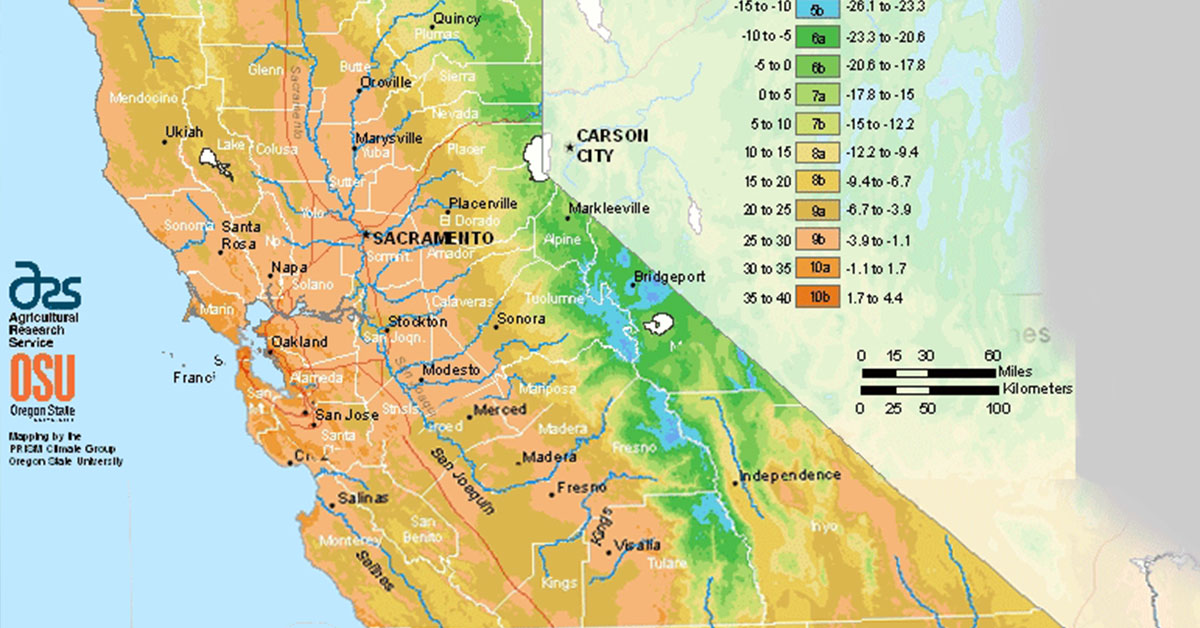

Welcome to the vibrant world of gardening in Stockton, California! Nestled in the heart of the San Joaquin Valley, Stockton offers a unique and favorable climate for gardeners of all levels of expertise. One of the key factors that sets Stockton apart is its USDA hardiness zone, which plays a crucial role in determining what plants will thrive in this region. Stockton falls within USDA hardiness zone 9b, characterized by mild winters and long, hot summers.
This designation opens up a wide range of possibilities for gardeners, allowing for the cultivation of a diverse array of plants, from colorful flowers to bountiful fruits and vegetables. Whether you are a seasoned gardener or just starting out, understanding the USDA hardiness zone in Stockton will be your guiding compass as you embark on your gardening journey in this beautiful city.
What is Stockton’s USDA hardiness zone?
The USDA hardiness zone is a system developed by the United States Department of Agriculture (USDA) to categorize regions based on their average annual minimum temperatures. This system helps gardeners and plant enthusiasts determine which plants are most likely to thrive in a particular area. In the case of Stockton, California, it falls under USDA hardiness zone 9b. This means that the average annual minimum temperature in Stockton ranges from 25 to 30 degrees Fahrenheit (-3.9 to -1.1 degrees Celsius).
It is important to note that this zone classification is based on historical weather data and provides a general guideline for plant selection. Understanding the hardiness zone is crucial because it helps gardeners choose plants that can withstand the local climate conditions. Plants that are not suited to the zone’s temperature range may struggle to survive or may require extra care and protection during extreme weather events.
In Stockton’s zone 9b, gardeners have the advantage of a relatively mild climate with warm summers and mild winters. This allows for a wide variety of plants to be grown successfully. Some popular choices for this zone include citrus trees, such as oranges and lemons, as well as various types of palms, succulents, and Mediterranean herbs like rosemary and lavender.
However, it is important to consider other factors besides temperature when selecting plants for your garden. Soil type, sunlight exposure, rainfall patterns, and wind conditions are all important factors to take into account.
It is recommended to research specific plant requirements and consult local gardening resources, such as county extension offices or nurseries, for more detailed information on suitable plants for Stockton’s specific microclimate. By understanding the USDA hardiness zone and considering other environmental factors, gardeners in Stockton can make informed decisions about plant selection and create thriving gardens in their area.
When can you plant your garden in Stockton?
In Stockton, the ideal planting times for various plants can be determined by considering its USDA hardiness zone. Stockton falls under USDA hardiness zone 9b, which means it experiences mild winters and hot summers. Here are the ideal planting times for different types of plants in Stockton:
- Annual flowers and vegetables: In Stockton, the last frost date typically occurs around mid-March. Therefore, it is safe to start planting annual flowers and vegetables outdoors after the last frost date. Some popular annual flowers to plant in Stockton include marigolds, petunias, zinnias, and sunflowers. For vegetables, you can start planting warm-season crops like tomatoes, peppers, beans, and corn after the last frost date.
- Perennial flowers: Perennial flowers are plants that come back year after year. In Stockton’s mild climate, you can plant perennial flowers throughout the year. However, the best time to plant them is in early spring or early fall when the temperatures are cooler. This allows the plants to establish their roots before the hot summer or cold winter arrives. Some popular perennial flowers for Stockton include lavender, salvia, daylilies, and coneflowers.
- Trees and shrubs: Trees and shrubs can be planted in Stockton during the cooler months of the year, preferably in late fall or early spring. This gives them time to establish their root systems before the extreme temperatures of summer or winter. Some suitable trees and shrubs for Stockton include citrus trees, crape myrtles, roses, and oleanders.
- Bulbs: Bulbs like tulips, daffodils, and hyacinths can be planted in Stockton in late fall or early winter. This allows them to go through a period of dormancy during the colder months and bloom beautifully in spring.
It’s important to note that these are general guidelines, and specific planting times may vary depending on the weather conditions and individual plant requirements. Always check the specific planting instructions for each plant variety and consider local climate patterns for the most accurate planting times in Stockton.
What grows well in Stockton?
Given that Stockton, California falls within USDA hardiness zone 9b, which is characterized by mild winters and hot summers, here is a comprehensive list of plants that generally grow well in this climate:
- Citrus trees (lemons, oranges, grapefruits)
- Avocado trees
- Fig trees
- Olive trees
- Pomegranate trees
- Apricot trees
- Peach trees
- Plum trees
- Nectarine trees
- Apple trees (select varieties suitable for warmer climates)
- Pear trees (select varieties suitable for warmer climates)
- Persimmon trees
- Loquat trees
- Guava trees
- Kiwi vines
- Grapes (select varieties suitable for warmer climates)
- Blackberries
- Raspberries
- Strawberries
- Blueberries (select varieties suitable for warmer climates)
- Tomatoes (select heat-tolerant varieties)
- Peppers (bell peppers, chili peppers)
- Eggplant
- Zucchini
- Cucumbers
- Squash (summer and winter varieties)
- Beans (bush beans, pole beans)
- Corn (select heat-tolerant varieties)
- Lettuce (select heat-tolerant varieties)
- Spinach (select heat-tolerant varieties)
- Swiss chard
- Kale
- Herbs (basil, rosemary, thyme, oregano, mint, parsley, cilantro)
- Succulents (agave, aloe vera, echeveria, sedum)
- Cacti
- Lavender
- Bougainvillea
- Lantana
- Geraniums
- Hibiscus
- Roses (select heat-tolerant varieties)
- Daylilies
- Marigolds
- Sunflowers
- California poppies
- Salvia
- Mexican sage
- Butterfly bush
- Jasmine
- Wisteria
Remember to consider factors such as sun exposure, soil type, and water requirements when selecting and planting these plants in your garden.
What won’t grow in Stockton?
In Stockton, which falls under USDA hardiness zone 9b, there are certain plants that may not thrive due to the local climate conditions. Here are some examples:
Blueberries: Stockton’s hot and dry summers may not provide the ideal conditions for blueberry plants, which prefer cooler temperatures and consistent moisture.
Lilacs: Lilacs require a period of winter chill to bloom properly, and Stockton’s mild winters may not provide enough cold for them to thrive.
Peonies: Peonies also require a period of winter chill to produce abundant blooms, making them less suitable for Stockton’s climate.
Rhododendrons: While some varieties of rhododendrons can tolerate warmer climates, many prefer cooler temperatures and higher humidity, which may be challenging to maintain in Stockton.
Hydrangeas: Certain hydrangea varieties, such as the bigleaf hydrangea (Hydrangea macrophylla), may struggle in Stockton’s hot and dry summers. However, some other varieties, like the panicle hydrangea (Hydrangea paniculata), may be more adaptable.
Delphiniums: Delphiniums prefer cooler temperatures and may struggle in Stockton’s hot summers.
Tulips: Tulips require a period of winter chill and a distinct spring season, which may be challenging to replicate in Stockton’s climate.
It’s important to note that while these plants may not thrive in Stockton, it doesn’t mean they cannot be grown at all. With proper care, microclimates, and additional measures like shade, watering, and soil amendments, it may still be possible to grow these plants in the area.