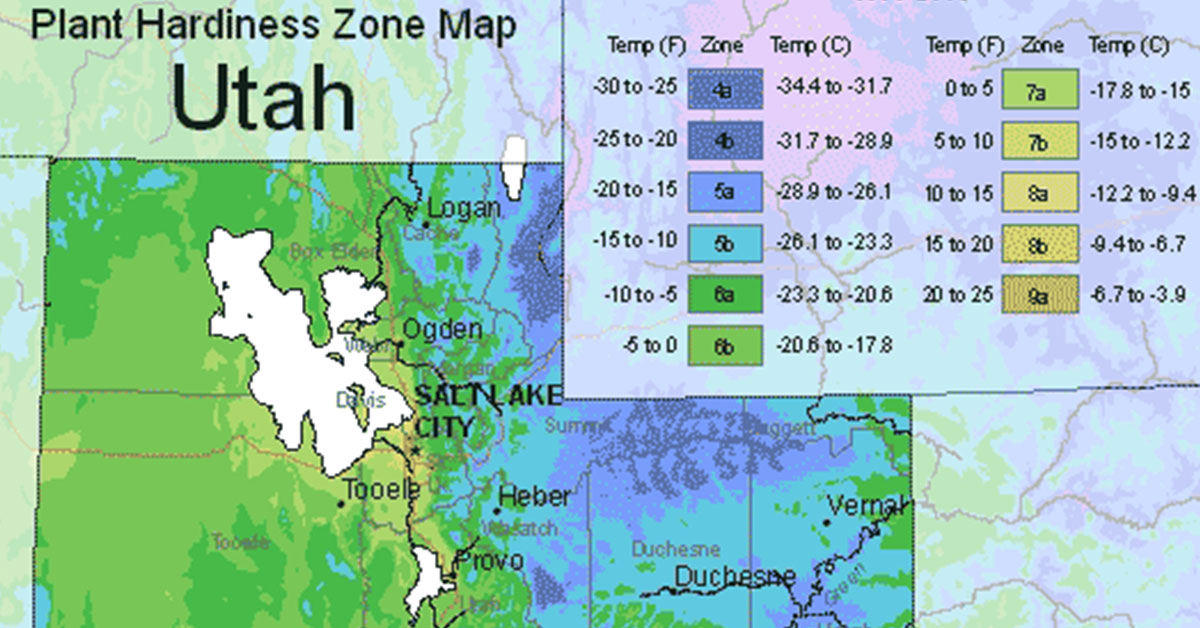

Welcome to the beautiful city of Salt Lake City, where gardening enthusiasts can immerse themselves in the joys of cultivating plants amidst the stunning backdrop of the Wasatch Mountains. Situated in the Intermountain West region of the United States, Salt Lake City experiences a unique climate that poses both challenges and opportunities for gardeners. Understanding the USDA hardiness zone is crucial for successful gardening in this area.
Salt Lake City falls within USDA hardiness zone 7a, which means that gardeners must carefully select plants that can withstand the region’s cold winters, hot summers, and occasional temperature fluctuations. In this article, we will explore the specific considerations and strategies for gardening in Salt Lake City, helping you create a thriving garden that can withstand the unique climate of this remarkable city.
What is Salt Lake City’s USDA hardiness zone?
The USDA hardiness zone is a system used to determine the suitability of plants for specific geographic regions based on their ability to withstand the average annual minimum temperature. In the case of Salt Lake City, it falls within USDA hardiness zone 7a. Salt Lake City experiences a semi-arid climate with hot, dry summers and cold, snowy winters.
The average annual minimum temperature in this zone ranges from 0 to 5 degrees Fahrenheit (-18 to -15 degrees Celsius). This information is crucial for gardeners and plant enthusiasts as it helps them choose plants that can survive and thrive in the local conditions. In zone 7a, gardeners have a wide range of plant options available to them.
Many popular plants, such as roses, lavender, and lilacs, are well-suited to this zone. However, it is important to note that microclimates within the city can vary, so it is essential to consider factors such as elevation, exposure to wind, and proximity to bodies of water when selecting plants. When planning a garden in Salt Lake City’s hardiness zone, it is advisable to choose plants that are hardy to zone 7a or lower. This ensures that they can withstand the cold winter temperatures without suffering damage or death.
It is also important to consider the length of the growing season, as the last frost typically occurs around mid-May, and the first frost can happen as early as mid-September. To determine the specific hardiness of a plant, it is recommended to consult the USDA Plant Hardiness Zone Map or seek advice from local nurseries, gardening experts, or the Utah State University Extension. These resources can provide detailed information on specific plant varieties that are best suited for Salt Lake City’s climate.
In addition to selecting appropriate plants, it is crucial to provide proper care and maintenance. This includes providing adequate water, mulching to conserve moisture, and protecting plants from extreme temperature fluctuations. It is also beneficial to choose native or drought-tolerant plants that are well-adapted to the local conditions, as they require less water and are generally more resilient. By understanding the USDA hardiness zone in Salt Lake City and selecting plants accordingly, gardeners can create beautiful and thriving gardens that can withstand the unique climate of the region.
When can you plant your garden in Salt Lake City?
In Salt Lake City, the ideal planting times for various plants can be determined by considering its USDA hardiness zone, which is typically zone 7a. This zone indicates the average minimum winter temperature range of 0 to 5 degrees Fahrenheit (-17.8 to -15 degrees Celsius).
For cool-season crops such as lettuce, spinach, peas, and radishes, the ideal planting time is in early spring, around mid-March to early April, when the soil temperature reaches around 40 to 50 degrees Fahrenheit (4.4 to 10 degrees Celsius). These crops can also be planted in late summer for a fall harvest, typically around mid-August to early September.
Warm-season crops like tomatoes, peppers, cucumbers, and beans require warmer soil temperatures, generally around 60 degrees Fahrenheit (15.6 degrees Celsius) or higher. Therefore, it is recommended to wait until after the last frost date, which is typically around mid-May in Salt Lake City, before planting these crops. This ensures that the risk of frost damage is minimal.
Perennial plants, such as trees, shrubs, and flowers, can be planted in Salt Lake City throughout the growing season, from spring to fall. However, it is often best to plant them in early spring or early fall, allowing them to establish their root systems before the extreme temperatures of summer or winter.
It is important to note that these planting times are general guidelines, and local weather conditions can vary from year to year. It is always a good idea to monitor the weather forecast and adjust planting times accordingly. Additionally, some plants may have specific requirements or preferences, so it is advisable to consult plant-specific information or seek advice from local nurseries or gardening experts for optimal results.
What grows well in Salt Lake City?
Salt Lake City falls within USDA hardiness zone 7a, which means it has an average minimum winter temperature of 0 to 5 degrees Fahrenheit (-17 to -15 degrees Celsius). Here is a comprehensive list of plants that generally grow well in Salt Lake City:
- Japanese maple (Acer palmatum)
- Honeylocust (Gleditsia triacanthos)
- Crabapple (Malus spp.)
- Eastern redbud (Cercis canadensis)
- Colorado blue spruce (Picea pungens)
- Austrian pine (Pinus nigra)
- Norway maple (Acer platanoides)
- Russian olive (Elaeagnus angustifolia)
- Lilac (Syringa spp.)
- Forsythia (Forsythia spp.)
- Spirea (Spiraea spp.)
- Mock orange (Philadelphus spp.)
- Potentilla (Potentilla spp.)
- Barberry (Berberis spp.)
- Boxwood (Buxus spp.)
- Euonymus (Euonymus spp.)
- Daylilies (Hemerocallis spp.)
- Coneflowers (Echinacea spp.)
- Black-eyed Susans (Rudbeckia spp.)
- Hostas (Hosta spp.)
- Russian sage (Perovskia atriplicifolia)
- Salvia (Salvia spp.)
- Penstemon (Penstemon spp.)
- Sedum (Sedum spp.)
- Marigolds (Tagetes spp.)
- Petunias (Petunia spp.)
- Zinnias (Zinnia spp.)
- Impatiens (Impatiens spp.)
- Geraniums (Pelargonium spp.)
- Snapdragons (Antirrhinum spp.)
- Cosmos (Cosmos spp.)
- Alyssum (Lobularia maritima)
- Tomatoes (Solanum lycopersicum)
- Peppers (Capsicum spp.)
- Zucchini (Cucurbita pepo)
- Carrots (Daucus carota)
- Lettuce (Lactuca sativa)
- Basil (Ocimum basilicum)
- Thyme (Thymus spp.)
- Parsley (Petroselinum crispum)
Remember to consider factors such as soil type, sun exposure, and water requirements when selecting plants for your specific garden.
What won’t grow?
Salt Lake City is located in USDA hardiness zone 7a, which means it experiences cold winters with average minimum temperatures ranging from 0 to 5 degrees Fahrenheit (-18 to -15 degrees Celsius). In addition to the cold temperatures, Salt Lake City also has unique soil and environmental conditions, including high elevation and low humidity. Here are some plants that may struggle to thrive in Salt Lake City:
- Tropical Plants: Most tropical plants, such as orchids, hibiscus, and palm trees, require warm and humid conditions that are not typically found in Salt Lake City. The cold winters and dry climate can be challenging for these plants.
- Citrus Trees: Citrus trees, including oranges, lemons, and limes, are not well-suited for Salt Lake City due to the cold winters. These trees are frost-sensitive and may not survive the freezing temperatures.
- Camellias: Camellias are beautiful flowering shrubs that prefer mild climates with consistent moisture. Salt Lake City’s cold winters and low humidity can make it difficult for camellias to thrive.
- Azaleas and Rhododendrons: These flowering shrubs prefer acidic soil, which is not typically found in Salt Lake City. The alkaline soil in the area can make it challenging for azaleas and rhododendrons to absorb essential nutrients.
- Blueberries: Blueberries require acidic soil conditions, similar to azaleas and rhododendrons. The alkaline soil in Salt Lake City may make it difficult for blueberries to grow and produce fruit.
- Ferns: Most ferns prefer moist and shady environments, which can be challenging to provide in Salt Lake City’s dry climate. Additionally, ferns may struggle with the cold winters and low humidity.
- Certain Succulents: While many succulents are known for their ability to tolerate dry conditions, some may struggle in Salt Lake City’s climate. The combination of cold winters and low humidity can be challenging for certain succulent varieties.
It’s important to note that while these plants may not thrive in Salt Lake City, it doesn’t mean they are impossible to grow. With proper care, microclimates, and protective measures, some gardeners may still be successful in cultivating these plants.