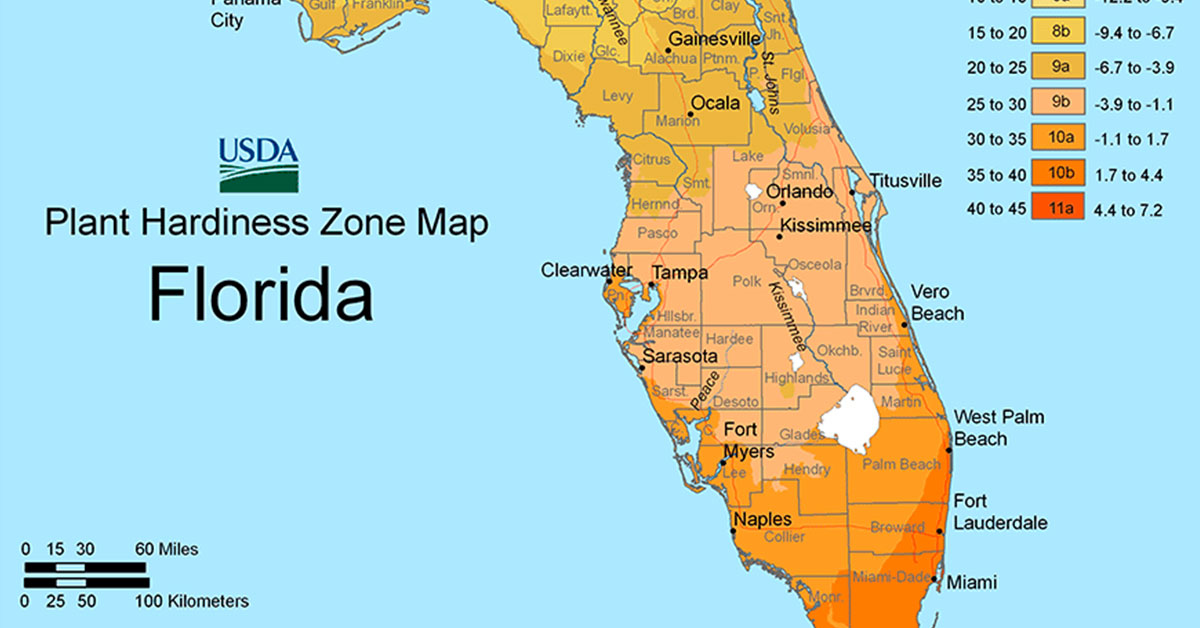

Welcome to the vibrant world of gardening in Miami, where the tropical climate and abundant sunshine create a paradise for plant enthusiasts. Miami is located in USDA hardiness zone 10b, which means that it experiences mild winters and hot, humid summers. This unique climate allows for a wide variety of plants to thrive, from exotic tropical species to hardy perennials.
Whether you have a spacious backyard or a small balcony, gardening in Miami offers endless possibilities to create stunning landscapes and enjoy the beauty of nature year-round. In this article, we will explore the best practices, plant selection, and tips for successful gardening in Miami’s USDA hardiness zone. So grab your gardening tools and let’s dive into the lush world of Miami gardening!
What is Miami’s USDA hardiness zone?
The USDA hardiness zone is a classification system used to determine the suitability of plants for specific regions based on their ability to withstand the average minimum winter temperatures. In the case of Miami, Florida, it falls within USDA hardiness zone 10-11. Miami’s hardiness zone is primarily influenced by its tropical climate, with mild winters and hot, humid summers.
The average minimum winter temperature in zone 10 ranges from 30 to 40 degrees Fahrenheit (-1 to 4 degrees Celsius), while in zone 11, it can be as high as 40 to 50 degrees Fahrenheit (4 to 10 degrees Celsius). The warm temperatures and minimal frost risk in Miami’s hardiness zone make it ideal for growing a wide range of tropical and subtropical plants.
Some popular choices for this region include palm trees, hibiscus, bougainvillea, orchids, bromeliads, and various fruit trees like mango, avocado, and citrus. However, it’s important to note that even within the same hardiness zone, microclimates can exist due to variations in factors such as elevation, proximity to water bodies, and urban heat island effect.
These microclimates can create slightly different growing conditions, so it’s advisable to consider these factors when selecting plants for your specific location within Miami. Additionally, while Miami’s hardiness zone indicates the average minimum winter temperatures, it doesn’t provide information about other important factors like humidity, rainfall, or heat tolerance. Therefore, it’s essential to consider these factors as well when choosing plants for your garden in Miami.
Overall, Miami’s USDA hardiness zone 10-11 offers gardeners a wide range of possibilities for growing tropical and subtropical plants, but it’s always recommended to research and select plants that are well-suited to the specific conditions of your garden.
When can you plant your garden in Miami?
In Miami, the ideal planting times for various plants can be determined by referring to the USDA hardiness zone. Miami falls under USDA hardiness zone 10a, which means it experiences mild winters and hot summers. Here are some general guidelines for planting in Miami:
Annuals and Vegetables: In Miami’s mild climate, you can plant a wide range of annual flowers and vegetables throughout the year. However, it’s best to avoid planting during the hottest months of June, July, and August. Spring and fall are excellent seasons for planting annuals and vegetables, as the temperatures are more moderate.
Perennials: Perennials can be planted in Miami throughout the year, but it’s advisable to avoid planting during the peak summer months. Spring and fall are ideal for planting perennials, as the temperatures are cooler and provide a better environment for root establishment.
Trees and Shrubs: Trees and shrubs can be planted in Miami year-round, but it’s recommended to avoid planting during the hottest and driest months. Spring and fall are the best seasons for planting trees and shrubs, as they allow for better root development before the extreme summer heat.
Bulbs: Bulbs like lilies, gladiolus, and amaryllis can be planted in Miami during the fall and winter months. This allows them to establish roots before the warmer spring and summer seasons.
Herbs: Most herbs thrive in Miami’s warm climate. They can be planted throughout the year, but it’s best to avoid planting during the hottest months. Spring and fall are ideal for planting herbs as they prefer moderate temperatures.
Remember, these are general guidelines, and specific plant requirements may vary. It’s always a good idea to research the specific needs of the plants you intend to grow and adjust your planting schedule accordingly. Additionally, factors like soil conditions, sunlight exposure, and watering requirements should also be considered for successful gardening in Miami.
What grows well in Miami?
Miami falls into USDA hardiness zone 10a, which means it has a tropical climate with mild winters and hot, humid summers. Here is a comprehensive list of plants that generally grow well in Miami:
- Bougainvillea (Bougainvillea spp.): Vibrant flowering vine with thorny branches.
- Hibiscus (Hibiscus rosa-sinensis): Large, showy flowers in various colors.
- Croton (Codiaeum variegatum): Colorful foliage plant with various leaf patterns.
- Bird of Paradise (Strelitzia reginae): Striking orange and blue flowers.
- Plumeria (Plumeria spp.): Fragrant flowers in various colors.
- Bromeliads (Bromeliaceae family): Colorful, low-maintenance plants with unique foliage.
- Orchids (Orchidaceae family): Beautiful and diverse flowering plants.
- Adonidia Palm (Adonidia merrillii): Small palm tree with feathery leaves.
- Foxtail Palm (Wodyetia bifurcata): Graceful palm with bushy, feathery fronds.
- Areca Palm (Dypsis lutescens): Tall palm with feathery, arching fronds.
- Ficus Trees (Ficus spp.): Large, evergreen trees with glossy leaves.
- Agave (Agave spp.): Succulent plants with striking rosette-shaped leaves.
- Aloe Vera (Aloe vera): Succulent with medicinal properties and fleshy leaves.
- Pothos (Epipremnum aureum): Easy-to-grow trailing vine with heart-shaped leaves.
- Peace Lily (Spathiphyllum spp.): Low-light tolerant plant with white flowers.
- Spider Plant (Chlorophytum comosum): Hardy plant with arching, variegated leaves.
- ZZ Plant (Zamioculcas zamiifolia): Low-maintenance plant with glossy, dark green leaves.
- Philodendron (Philodendron spp.): Vining or upright plants with large, glossy leaves.
- Snake Plant (Sansevieria spp.): Hardy, low-light tolerant plant with upright, sword-like leaves.
- Golden Pothos (Epipremnum aureum): Trailing vine with heart-shaped, variegated leaves.
Remember to consider the specific growing conditions of your garden, such as sunlight exposure and soil type, when selecting plants.
What won’t grow in Miami?
In Miami, which falls under USDA hardiness zone 10-11, there are certain plants that may struggle to thrive due to the region’s specific climate and conditions. Here are some plants that typically do not perform well in Miami:
- Cool-season vegetables: Plants like broccoli, Brussels sprouts, cabbage, and peas, which prefer cooler temperatures, may struggle in Miami’s warm and humid climate.
- Temperate fruit trees: Fruit trees that require a significant amount of winter chilling hours, such as apples, cherries, and peaches, may not produce well or may not survive in Miami’s mild winters.
- Cool-season annual flowers: Flowers like pansies, snapdragons, and sweet peas, which thrive in cooler temperatures, may not perform as well in Miami’s warm climate.
- Cool-season herbs: Herbs such as cilantro, dill, and parsley, which prefer cooler temperatures, may bolt quickly or struggle to grow in Miami’s heat.
- Certain grass varieties: Cool-season grasses like Kentucky bluegrass and fescue may struggle to survive in Miami’s warm and humid climate. Warm-season grasses like Bermuda grass and St. Augustine grass are better suited for this region.
- Alpine and cold-climate perennials: Plants that are adapted to colder climates, such as alpine flowers and certain types of peonies, may not thrive in Miami’s warm and tropical conditions.
- Certain coniferous trees: Conifers that prefer cooler and more temperate climates, such as spruces and firs, may not grow well in Miami’s warm and humid environment.
It’s important to note that while these plants may not thrive in Miami, there are still plenty of beautiful and suitable options available for gardening in this region. It’s always recommended to choose plants that are native or well-adapted to the local climate for the best chances of success.