
Welcome to the vibrant world of gardening in Lubbock, Texas! Nestled in the heart of the Southern High Plains, Lubbock offers a unique and challenging environment for gardeners. One of the key factors to consider when planning your garden in this region is the USDA hardiness zone.
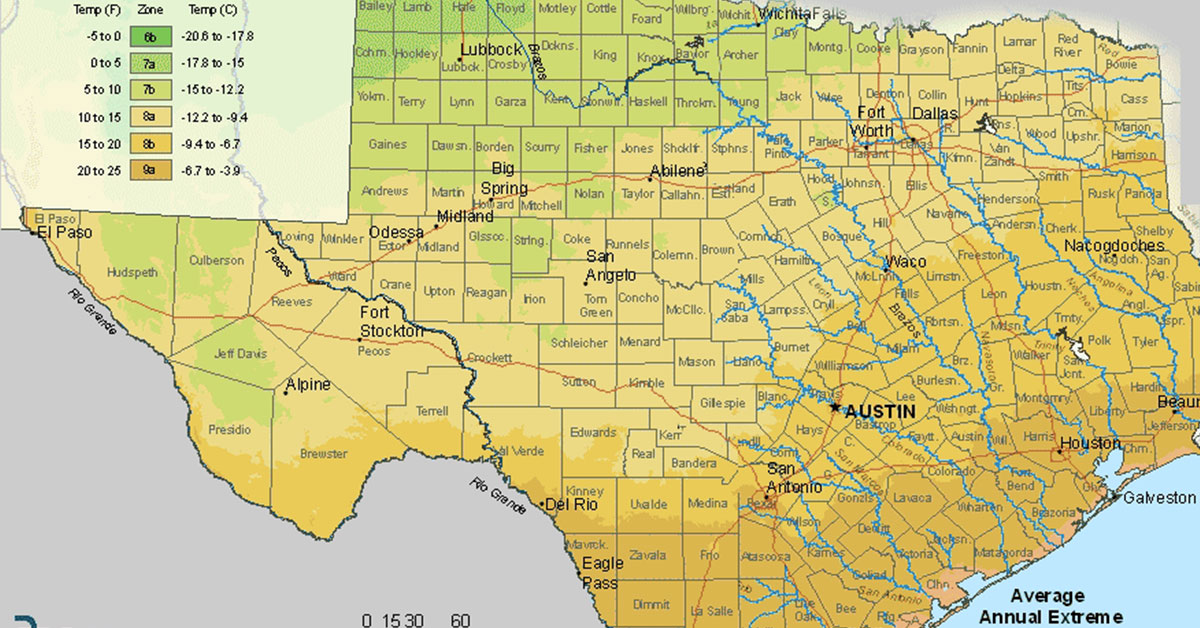
Lubbock falls within the USDA hardiness zone 7b, which means it experiences cold winters with temperatures dropping as low as 5 to 10°F (-12 to -14°C). This zone classification plays a crucial role in determining which plants will thrive in our area, as it indicates the average minimum winter temperature.
Understanding the hardiness zone is essential for selecting the right plants, ensuring their survival, and achieving a flourishing garden in Lubbock. So, let’s dive into the fascinating world of gardening in our unique hardiness zone and discover the possibilities that await us!
What is Lubbock’s USDA hardiness zone?
The USDA hardiness zone is a system developed by the United States Department of Agriculture (USDA) to categorize regions based on their average annual minimum temperatures. This system helps gardeners and plant enthusiasts determine which plants are most likely to thrive in a particular area. Lubbock, Texas, falls under USDA hardiness zone 7b. This means that the average annual minimum temperature in Lubbock ranges from 5 to 10 degrees Fahrenheit (-15 to -12 degrees Celsius).
It is important to note that this is just an average, and extreme weather events can sometimes cause temperatures to drop even lower. Understanding the hardiness zone is crucial for successful gardening because it helps determine which plants can withstand the local climate conditions. In zone 7b, gardeners should look for plants that are tolerant of cold temperatures and can survive occasional frosts and freezes. Some common plants that thrive in Lubbock’s hardiness zone include:
Perennials: Daylilies, Russian sage, Black-eyed Susans, Coneflowers, and Salvia.
Shrubs: Rosemary, Butterfly bush, Texas sage, and Dwarf Yaupon Holly.
Trees: Chinese pistache, Desert willow, Texas redbud, and Bur oak.
Vegetables: Cool-season crops like lettuce, spinach, broccoli, and carrots can be grown in early spring and fall. Warm-season crops such as tomatoes, peppers, and squash can be planted after the last frost date.
It is important to consider other factors besides hardiness zone when selecting plants for your garden. Soil type, sunlight exposure, and water availability are also crucial factors to consider. Additionally, microclimates within your garden, such as areas protected from wind or with increased sun exposure, can create slightly different growing conditions. By understanding the USDA hardiness zone in Lubbock and considering other important factors, you can select plants that are well-suited to the local climate and create a thriving garden.
When can you plant your garden in Lubbock?
In Lubbock, Texas, the ideal planting times can be determined by considering its USDA hardiness zone. Lubbock falls under USDA hardiness zone 7b, which means it experiences an average minimum winter temperature range of 5 to 10 degrees Fahrenheit (-12 to -14 degrees Celsius). Based on this information, the following planting times are recommended:
- Spring Planting: In Lubbock, the ideal time to start planting in spring is around mid-March to early April. By this time, the soil has warmed up sufficiently, and the risk of frost has significantly decreased. This is a good time to plant cool-season crops like lettuce, spinach, peas, and radishes.
- Summer Planting: Lubbock has hot summers, so it is important to consider heat-tolerant plants for summer planting. The best time to plant warm-season crops like tomatoes, peppers, cucumbers, and melons is from late April to early May. This allows the plants to establish before the intense summer heat arrives.
- Fall Planting: Fall is an excellent time for planting in Lubbock, as the temperatures start to cool down. The ideal time for fall planting is from mid-September to early October. This is the perfect time to plant cool-season crops again, such as broccoli, cauliflower, carrots, and beets. Additionally, it is a good time to plant perennial flowers, shrubs, and trees, as they can establish their root systems before winter.
It is important to note that these planting times are general guidelines, and it is always advisable to check local weather conditions and forecasts before planting. Additionally, individual plant varieties may have specific planting requirements, so it is recommended to refer to seed packets or consult with local gardening experts for more precise information.
What grows well in Lubbock?
Lubbock, Texas falls under USDA hardiness zone 7b. This means that the average minimum winter temperature ranges from 5 to 10 degrees Fahrenheit (-12 to -14 degrees Celsius). Here is a comprehensive list of plants that generally grow well in Lubbock’s climate:
- Marigold (Tagetes)
- Zinnia (Zinnia elegans)
- Petunia (Petunia x hybrida)
- Sunflower (Helianthus annuus)
- Cosmos (Cosmos bipinnatus)
- Portulaca (Portulaca grandiflora)
- Dusty Miller (Senecio cineraria)
- Celosia (Celosia argentea)
- Black-eyed Susan (Rudbeckia hirta)
- Purple Coneflower (Echinacea purpurea)
- Daylily (Hemerocallis)
- Russian Sage (Perovskia atriplicifolia)
- Salvia (Salvia spp.)
- Blanket Flower (Gaillardia)
- Lamb’s Ear (Stachys byzantina)
- Yarrow (Achillea millefolium)
- Texas Sage (Leucophyllum frutescens)
- Rosemary (Rosmarinus officinalis)
- Butterfly Bush (Buddleja davidii)
- Indian Hawthorn (Rhaphiolepis indica)
- Dwarf Yaupon Holly (Ilex vomitoria ‘Nana’)
- Crape Myrtle (Lagerstroemia indica)
- Barberry (Berberis spp.)
- Texas Lantana (Lantana urticoides)
- Live Oak (Quercus virginiana)
- Chinese Pistache (Pistacia chinensis)
- Desert Willow (Chilopsis linearis)
- Texas Redbud (Cercis canadensis var. texensis)
- Cedar Elm (Ulmus crassifolia)
- Texas Ash (Fraxinus texensis)
- Pecan (Carya illinoinensis)
- Mexican Plum (Prunus mexicana)
- Tomatoes (Solanum lycopersicum)
- Peppers (Capsicum spp.)
- Squash (Cucurbita spp.)
- Cucumbers (Cucumis sativus)
- Green Beans (Phaseolus vulgaris)
- Basil (Ocimum basilicum)
- Rosemary (Rosmarinus officinalis)
- Thyme (Thymus spp.)
Remember to consider factors like soil conditions, sunlight exposure, and water requirements when selecting plants for your specific location in Lubbock. It’s also a good idea to consult with local nurseries or gardening experts for more specific recommendations based on your garden’s unique characteristics.
What won’t grow in Lubbock?
In Lubbock, Texas, the USDA hardiness zone is typically Zone 7b, which means the average minimum winter temperature ranges from 5 to 10 degrees Fahrenheit (-12 to -14 degrees Celsius). While many plants can thrive in this zone, there are some that may struggle due to the region’s hot, dry climate and occasional winter freezes. Here are a few plants that may not thrive in Lubbock:
- Tropical plants: Most tropical plants, such as banana trees (Musa spp.), hibiscus (Hibiscus spp.), and orchids (Orchidaceae), are not well-suited for Lubbock’s climate. They require consistently warm temperatures and high humidity, which are difficult to maintain in this region.
- Cold-sensitive plants: Some plants that are not cold-hardy and cannot tolerate freezing temperatures may struggle in Lubbock. Examples include citrus trees (Citrus spp.), bougainvillea (Bougainvillea spp.), and certain types of palm trees (e.g., coconut palm).
- Water-loving plants: Lubbock has a semi-arid climate with low rainfall, so plants that require consistently moist soil or high water availability may struggle. This includes water lilies (Nymphaea spp.), certain ferns (e.g., Boston fern), and plants that thrive in boggy conditions.
- Acid-loving plants: Lubbock’s soil tends to be alkaline, so plants that prefer acidic soil conditions may not thrive. Examples include azaleas (Rhododendron spp.), blueberries (Vaccinium spp.), and camellias (Camellia spp.).
- Shade-loving plants: Lubbock receives abundant sunshine, so plants that require shade or cannot tolerate intense sunlight may struggle. This includes some hostas (Hosta spp.), ferns that prefer deep shade, and certain woodland plants.
It’s important to note that while these plants may not thrive in Lubbock, there are still many beautiful and resilient options available. It’s always a good idea to choose plants that are native or well-adapted to the region’s climate and soil conditions for the best chances of success.