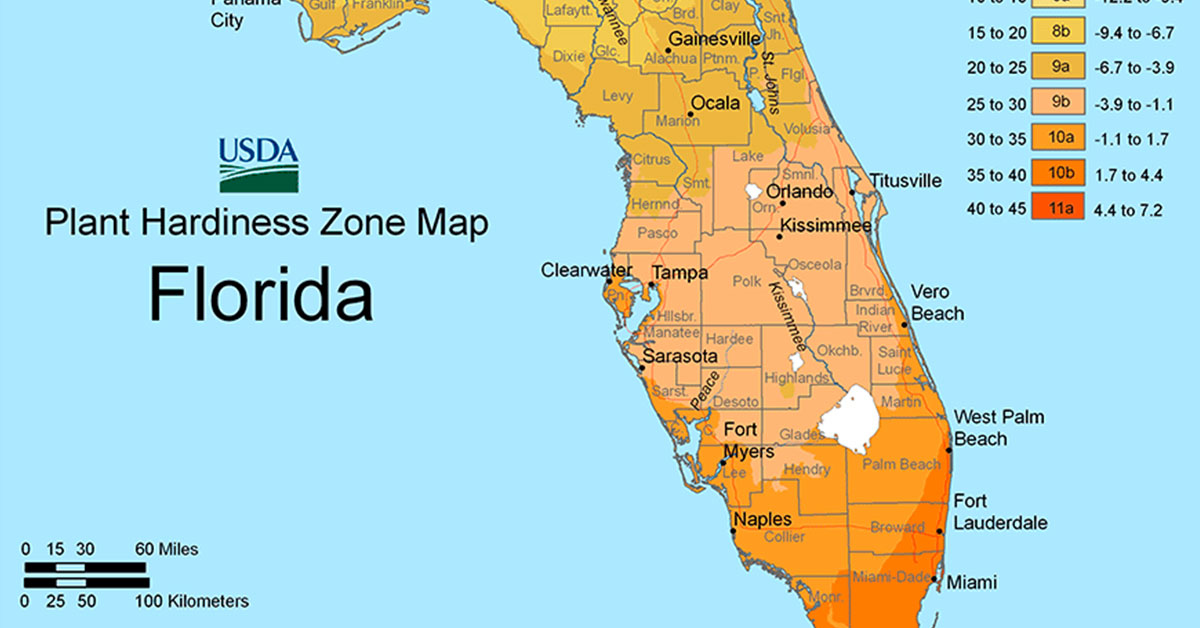

Welcome to the lush and vibrant gardening world in Hialeah, a city nestled in the heart of sunny South Florida. With its tropical climate and abundant sunshine, Hialeah offers a unique and favorable environment for cultivating various plants. One key factor to consider when embarking on your gardening journey in this region is the USDA hardiness zone.
Hialeah falls within the USDA hardiness zone 10a, which indicates the average annual minimum temperature range of 30 to 35 degrees Fahrenheit. Understanding this zone is crucial as it provides valuable insights into the types of plants that thrive in Hialeah’s warm and humid climate.
So, whether you are a seasoned gardener or just starting out, this article will serve as your comprehensive guide to gardening success in Hialeah, focusing on the specific needs and recommendations for this unique hardiness zone.
What is Hialeah’s USDA hardiness zone?
The USDA hardiness zone is a system used to classify and determine the suitability of plants for specific geographic regions based on their ability to withstand the average annual minimum temperatures. In the case of Hialeah, Florida, the USDA hardiness zone is 10a. The USDA hardiness zone map divides the United States into 13 zones, ranging from 1 (coldest) to 13 (warmest).
Each zone is further divided into subzones a and b, with “a” being the colder end of the spectrum. Hialeah falls into zone 10a, which means it has an average annual minimum temperature range of 30 to 35 degrees Fahrenheit (-1.1 to 1.7 degrees Celsius).
Being in zone 10a, Hialeah experiences a warm and tropical climate, characterized by long, hot summers and mild winters. The relatively mild winter temperatures in this zone allow for a wide range of plants that cannot survive in colder regions. However, it is essential to consider other factors such as humidity, rainfall, and soil conditions when selecting plants for your garden in Hialeah.
In this zone, gardeners have the advantage of being able to grow a variety of tropical and subtropical plants, including palms, hibiscus, bougainvillea, bromeliads, orchids, and many more. Hialeah’s climate is also suitable for growing vegetables and herbs year-round, with popular choices being tomatoes, peppers, beans, basil, and mint.
It is important to note that while Hialeah is in zone 10a, microclimates can exist within the city due to variations in elevation, proximity to water bodies, and urban heat island effects. These microclimates can slightly alter the temperature range and affect plant growth. Therefore, observing and monitoring your specific location’s conditions is recommended to make the best plant choices for your garden.
Overall, Hialeah’s USDA hardiness zone 10a offers gardeners a wide range of possibilities for growing various plants, including tropical and subtropical species, as well as year-round vegetable and herb gardens. By selecting plants that are well-suited to this zone and considering the specific conditions of your garden, you can create a thriving and beautiful landscape in Hialeah.
When can you plant your garden in Hialeah?
In Hialeah, which is located in USDA hardiness zone 10a, the ideal planting times can vary slightly depending on the specific plants you are looking to grow. However, generally speaking, the ideal planting times in Hialeah are as follows:
- Cool-season vegetables: In Hialeah, the cool season typically occurs from November to February. This is the best time to plant cool-season vegetables such as lettuce, spinach, broccoli, carrots, and radishes.
- Warm-season vegetables: The warm season in Hialeah lasts from March to October. This is the ideal time to plant warm-season vegetables such as tomatoes, peppers, cucumbers, squash, and beans.
- Annual flowers: Annual flowers can be planted in Hialeah throughout the year, but the best time to plant them is during the cooler months, from November to February. This includes flowers like petunias, marigolds, zinnias, and impatiens.
- Perennial flowers: Perennial flowers can be planted in Hialeah at any time of the year, but the cooler months are generally preferred for planting. This allows the plants to establish their root systems before the hot summer months. Some popular perennial flowers for Hialeah include hibiscus, bougainvillea, plumbago, and pentas.
- Trees and shrubs: Trees and shrubs can be planted in Hialeah throughout the year, but the best time is during the cooler months, from November to February. This allows them to establish their roots before the heat of summer. Some suitable trees and shrubs for Hialeah include royal poinciana, mahogany, silver buttonwood, and firebush.
It’s important to note that these are general guidelines, and specific planting times may vary depending on the specific plant species and the weather conditions in a given year. It’s always a good idea to consult local gardening resources or nurseries for more specific information on planting times in Hialeah.
What grows well in Hialeah?
Hialeah, Florida falls within USDA hardiness zone 10a, which means it has a tropical climate with mild winters and hot, humid summers. Here is a comprehensive list of plants that generally thrive in Hialeah:
- Bougainvillea (Bougainvillea spp.)
- Hibiscus (Hibiscus rosa-sinensis)
- Bird of Paradise (Strelitzia reginae)
- Croton (Codiaeum variegatum)
- Plumeria (Plumeria spp.)
- Bromeliads (Bromeliaceae family)
- Agapanthus (Agapanthus spp.)
- Ixora (Ixora spp.)
- Crown of Thorns (Euphorbia milii)
- Firebush (Hamelia patens)
- Lantana (Lantana camara)
- Pentas (Pentas lanceolata)
- Mexican Petunia (Ruellia simplex)
- Allamanda (Allamanda cathartica)
- Golden Dewdrop (Duranta erecta)
- Jatropha (Jatropha spp.)
- Poinsettia (Euphorbia pulcherrima)
- Plumbago (Plumbago auriculata)
- Firecracker Plant (Russelia equisetiformis)
- Alocasia (Alocasia spp.)
These plants are well-suited to Hialeah’s tropical climate and can thrive in warm temperatures and high humidity. However, it’s important to consider specific growing conditions, such as sunlight exposure and soil type, when selecting plants for your garden.
What won’t grow in Hialeah?
In Hialeah, which is located in USDA hardiness zone 10a, there are certain plants that may not thrive due to the specific climate conditions. Here are some plants that may struggle in Hialeah:
- Cool-season plants: Hialeah has a tropical climate, which means it doesn’t experience cold winters. Cool-season plants like cabbage, broccoli, and lettuce may struggle to grow in the warm temperatures.
- Temperate fruit trees: Fruit trees that require a certain number of chill hours to produce fruit, such as apples, cherries, and peaches, may not thrive in Hialeah’s warm climate.
- Cold-sensitive tropical plants: While Hialeah has a tropical climate, it can still experience occasional cold snaps during the winter months. Cold-sensitive tropical plants like hibiscus, bougainvillea, and certain varieties of palms may suffer damage or struggle to survive during these colder periods.
- Plants requiring a dormant period: Some plants, like certain bulbs and perennials, require a dormant period during the winter to rest and rejuvenate. In Hialeah’s mild climate, these plants may not receive the necessary cold period to go dormant and may struggle to thrive.
- Alpine plants: Hialeah’s warm and humid climate is not suitable for alpine plants that typically grow in cooler, mountainous regions. These plants require cooler temperatures and well-drained soil, which may be challenging to replicate in Hialeah.
It’s important to note that while these plants may not thrive in Hialeah, there are still plenty of beautiful and suitable plant options for the area. It’s always best to choose plants that are native or well-adapted to the local climate for the best chances of success.