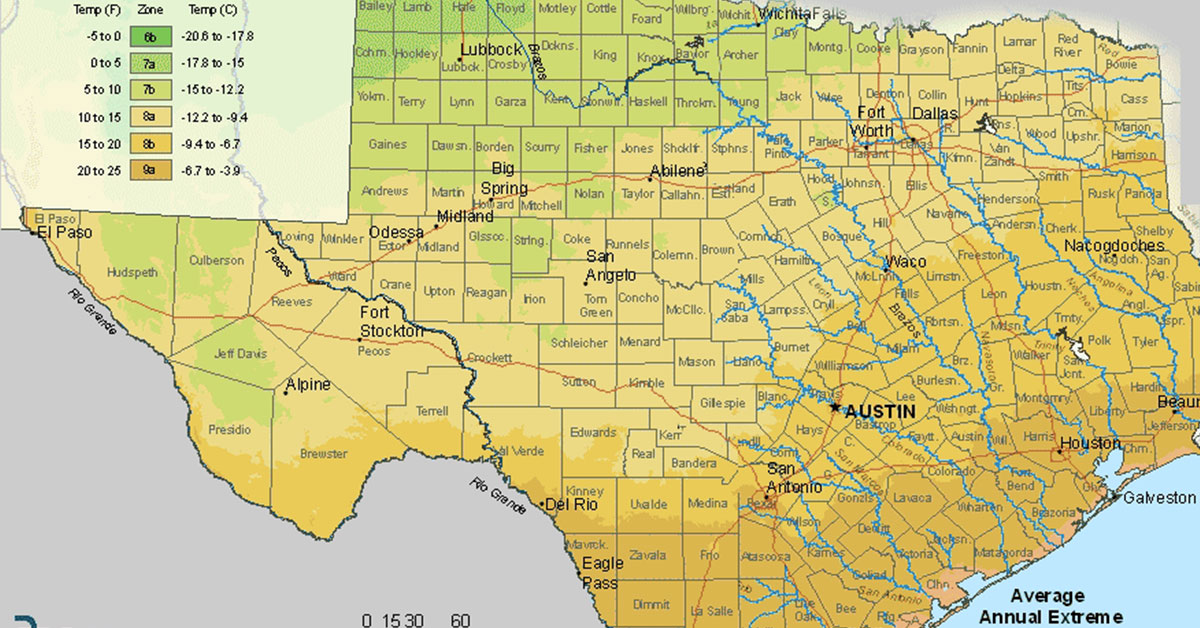

Welcome to the vibrant world of gardening in Garland, Texas! Located in the heart of the Lone Star State, Garland offers a unique and diverse environment for plant enthusiasts. One of the key factors to consider when embarking on your gardening journey here is the USDA hardiness zone.
Garland falls within Zone 8a, which means that the average annual minimum temperature ranges from 10 to 15 degrees Fahrenheit (-12 to -9 degrees Celsius). This information is crucial for selecting the right plants and ensuring their survival in our region’s climate.
Whether you’re a seasoned gardener or just starting out, understanding the USDA hardiness zone will guide you in creating a thriving and beautiful garden in Garland.
What is Garland’s USDA hardiness zone?
The USDA hardiness zone is a system developed by the United States Department of Agriculture (USDA) to categorize regions based on their average annual minimum temperatures. This system helps gardeners and plant enthusiasts determine which plants are most likely to thrive in a particular area.
In the case of Garland, Texas, the city falls within USDA hardiness zone 8a. This means that the average annual minimum temperature in Garland ranges from 10 to 15 degrees Fahrenheit (-12 to -9 degrees Celsius). Understanding the hardiness zone is crucial for successful gardening because it provides valuable information about the types of plants that can withstand the local climate conditions.
Plants that are not suitable for a specific hardiness zone may struggle to survive or even die due to extreme temperatures. In zone 8a, gardeners in Garland can expect mild winters with occasional cold snaps.
Frost and freezing temperatures can occur, but they are generally not severe or long-lasting. The growing season in this zone typically lasts from early spring to late fall, allowing for a wide range of plants to be cultivated. Some popular plant choices for zone 8a in Garland include:
- Perennials: Plants like daylilies, coneflowers, black-eyed Susans, and salvias are well-suited to the zone’s temperature range. These plants can survive the occasional winter chill and thrive during the warmer months.
- Shrubs: Many shrubs, such as butterfly bush, rosemary, abelia, and camellia, are suitable for zone 8a. These plants provide year-round interest and can tolerate the occasional frost.
- Trees: Several tree species can thrive in zone 8a, including live oak, cedar elm, southern magnolia, and crape myrtle. These trees offer shade, beauty, and can withstand the mild winters in Garland.
- Vegetables and herbs: Zone 8a allows for a long growing season, making it ideal for growing a variety of vegetables and herbs. Popular choices include tomatoes, peppers, cucumbers, basil, rosemary, and parsley.
It’s important to note that while the USDA hardiness zone provides a useful guideline, other factors such as soil type, sun exposure, and local microclimates can also influence plant success. It’s always recommended to research specific plant requirements and consult with local gardening experts or nurseries for the best results in Garland.
When can you plant your garden in Garland?
In Garland, Texas, the ideal planting times for various plants can be determined by considering the USDA hardiness zone. Garland falls under USDA hardiness zone 8a, which means it experiences an average annual minimum temperature range of 10 to 15 degrees Fahrenheit (-12 to -9 degrees Celsius).
For cool-season vegetables and annuals, the ideal planting time in Garland is typically in late winter or early spring, around February or March. This includes crops like lettuce, spinach, broccoli, and peas. These plants thrive in cooler temperatures and can withstand light frosts.
Warm-season vegetables and annuals, such as tomatoes, peppers, cucumbers, and zinnias, should be planted after the last frost date, which usually occurs in mid to late March in Garland. It’s important to wait until the soil has warmed up and the threat of frost has passed to ensure successful growth.
Perennial plants, including flowers, shrubs, and trees, can be planted throughout the year in Garland. However, it’s generally recommended to plant them in the fall or early spring when the weather is cooler and there is ample time for root establishment before the heat of summer.
It’s important to note that these planting times are general guidelines, and specific plant varieties may have slightly different requirements. Always check the specific planting recommendations for each plant you intend to grow to ensure the best results in Garland’s climate.
What grows well in Garland?
Garland, Texas falls under USDA hardiness zone 8a, which means it experiences an average minimum temperature range of 10-15°F (-9 to -12°C). Here is a comprehensive list of plants that generally grow well in this zone:
- Marigolds (Tagetes)
- Zinnias (Zinnia elegans)
- Petunias (Petunia)
- Cosmos (Cosmos bipinnatus)
- Sunflowers (Helianthus annuus)
- Geraniums (Pelargonium)
- Black-eyed Susans (Rudbeckia hirta)
- Coneflowers (Echinacea)
- Daylilies (Hemerocallis)
- Salvias (Salvia)
- Coreopsis (Coreopsis grandiflora)
- Shasta Daisies (Leucanthemum x superbum)
- Indian Hawthorn (Rhaphiolepis indica)
- Dwarf Yaupon Holly (Ilex vomitoria ‘Nana’)
- Texas Sage (Leucophyllum frutescens)
- Rosemary (Rosmarinus officinalis)
- Crape Myrtle (Lagerstroemia indica)
- Dwarf Burford Holly (Ilex cornuta ‘Burfordii Nana’)
- Live Oak (Quercus virginiana)
- Red Maple (Acer rubrum)
- Southern Magnolia (Magnolia grandiflora)
- Bald Cypress (Taxodium distichum)
- Chinese Pistache (Pistacia chinensis)
- Texas Redbud (Cercis canadensis var. texensis)
- Tomatoes (Solanum lycopersicum)
- Peppers (Capsicum annuum)
- Squash (Cucurbita pepo)
- Okra (Abelmoschus esculentus)
- Blackberries (Rubus spp.)
- Peaches (Prunus persica)
- Basil (Ocimum basilicum)
- Thyme (Thymus vulgaris)
- Oregano (Origanum vulgare)
- Rosemary (Rosmarinus officinalis)
- Mint (Mentha spp.)
- Parsley (Petroselinum crispum)
Remember to consider factors like soil type, sunlight exposure, and water requirements when selecting plants for your specific garden. It’s always a good idea to consult with local nurseries or gardening experts for more specific recommendations based on your garden’s conditions.
What won’t grow in Garland?
In Garland, Texas, which falls under USDA hardiness zone 8a, there are certain plants that may not thrive due to the climate conditions. Here are some plants that may struggle in this zone:
- Blueberries (Vaccinium spp.): Blueberries require a colder climate with a longer chilling period than what Garland offers.
- Lilacs (Syringa spp.): Lilacs prefer a colder climate with a significant winter chill, which is not typically found in Garland.
- Rhododendrons (Rhododendron spp.): Rhododendrons prefer cooler temperatures and higher humidity levels than what Garland provides.
- Hydrangeas (Hydrangea spp.): While some hydrangea varieties can tolerate the climate in Garland, others may struggle due to the heat and lack of humidity.
- Japanese Maples (Acer palmatum): Japanese maples may struggle in the hot and dry summers of Garland, as they prefer cooler and more shaded conditions.
- Peonies (Paeonia spp.): Peonies require a longer period of winter dormancy and a colder climate than what Garland offers.
- Delphiniums (Delphinium spp.): Delphiniums prefer cooler temperatures and may struggle with the heat and humidity in Garland.
- Tulips (Tulipa spp.): Tulips require a period of cold dormancy during winter, which may not be sufficient in Garland.
It’s important to note that while these plants may not thrive in Garland’s climate, it is still possible to grow them with extra care, such as providing shade, regular watering, and soil amendments.