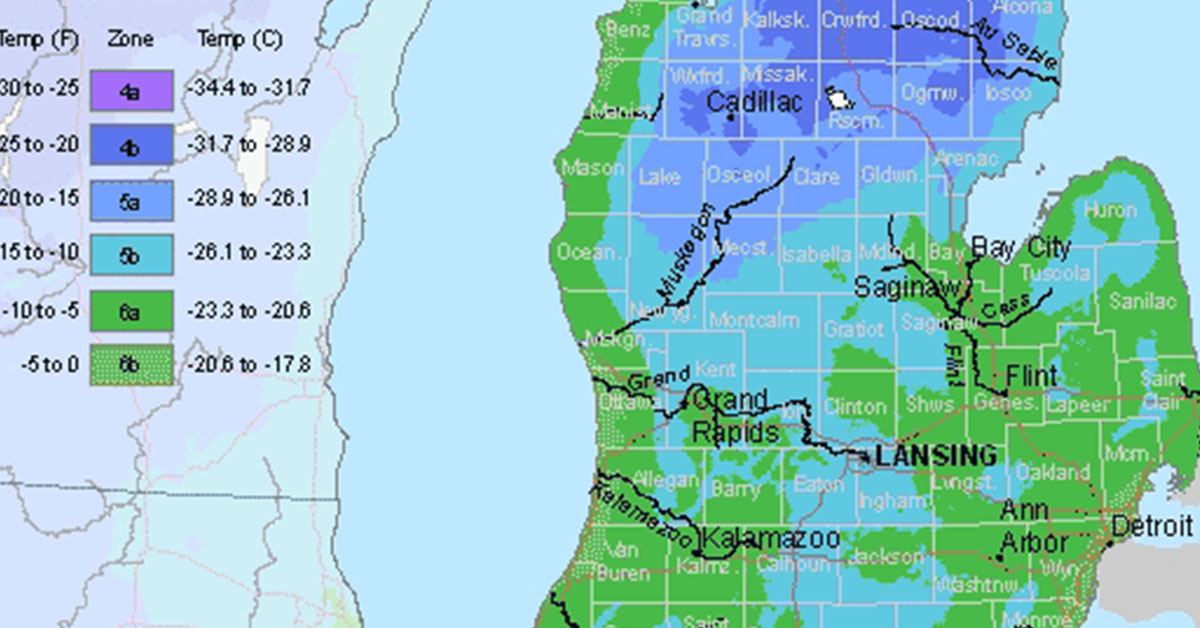

Welcome to the lush world of gardening in Grand Rapids, Michigan! Nestled in the heart of the Great Lakes region, this vibrant city boasts a unique climate that presents both opportunities and challenges for gardeners. One of the key factors to consider when planning your garden in Grand Rapids is the USDA hardiness zone.
With its location in Zone 6a, Grand Rapids experiences cold winters and warm summers, making it ideal for a wide range of plant species. In this article, we will explore the intricacies of gardening in this zone, providing valuable insights and tips to help you create a thriving garden in the beautiful city of Grand Rapids.
What is Grand Rapids’s USDA hardiness zone?
The USDA hardiness zone is a system developed by the United States Department of Agriculture (USDA) to categorize regions based on their average annual minimum temperature. This system helps gardeners and plant enthusiasts determine which plants are most likely to thrive in a particular area.
In the case of Grand Rapids, Michigan, the city falls under USDA hardiness zone 6a. This means that the average annual minimum temperature in this region ranges from -10°F to -5°F (-23°C to -21°C). It is important to note that this is just an average, and extreme weather events can occasionally cause temperatures to fall below these ranges.
Understanding the hardiness zone is crucial for successful gardening because it helps determine which plants are suitable for a specific area. Plants have different temperature tolerances, and selecting species that can withstand the lowest temperatures of the region ensures their survival during winter months. In Grand Rapids’ zone 6a, gardeners can choose from a wide variety of plants that are adapted to this climate. Some popular options include:
- Perennials: Coneflowers (Echinacea), Black-eyed Susans (Rudbeckia), Daylilies (Hemerocallis), and Hostas (Hosta) are all well-suited for zone 6a. These plants come back year after year, adding color and beauty to gardens.
- Shrubs: Lilacs (Syringa), Spireas (Spiraea), and Hydrangeas (Hydrangea) are excellent choices for zone 6a. These shrubs offer beautiful blooms and can withstand the winter temperatures.
- Trees: Some tree species that thrive in zone 6a include Red Maple (Acer rubrum), Sugar Maple (Acer saccharum), White Oak (Quercus alba), and Eastern Redbud (Cercis canadensis). These trees provide shade, beauty, and habitat for wildlife.
- Vegetables: Zone 6a allows for a variety of vegetables to be grown. Cool-season crops like lettuce, spinach, peas, and broccoli can be planted in early spring, while warm-season crops like tomatoes, peppers, and beans can be planted after the last frost.
It is important to note that while hardiness zones provide a general guideline, other factors such as soil type, sunlight exposure, and moisture levels also influence plant success. Therefore, it is advisable to consider these factors when selecting plants for your garden in Grand Rapids. Additionally, microclimates within the city, such as urban heat islands or areas near bodies of water, may have slightly different temperature ranges, so it’s always beneficial to observe local conditions and consult with local gardening experts.
When can you plant your garden in Grand Rapids?
In Grand Rapids, the ideal planting times for various plants can be determined by considering its USDA hardiness zone. Grand Rapids falls under USDA hardiness zone 6a, which means it experiences cold winters and relatively mild summers. Here are the ideal planting times for different types of plants in this region:
- Spring-flowering bulbs: Plant bulbs like tulips, daffodils, and hyacinths in the fall, around September or October, before the ground freezes. This allows them to establish roots before the winter and bloom in the spring.
- Cool-season vegetables: Vegetables like lettuce, spinach, peas, and radishes prefer cooler temperatures. Plant them in early spring, as soon as the soil can be worked, which is typically around mid-April in Grand Rapids.
- Warm-season vegetables: Plants like tomatoes, peppers, cucumbers, and beans thrive in warmer temperatures. Wait until after the last frost date, which is around mid-May in Grand Rapids, to plant them outdoors.
- Perennials: Perennial flowers can be planted in spring or fall. Spring is an ideal time to plant perennials in Grand Rapids, allowing them to establish roots before the summer heat. Fall planting can also be done, typically in September, to give them a head start for the following spring.
- Annual flowers: Annual flowers can be planted after the last frost date, usually in mid-May. This ensures they won’t be damaged by any late spring frosts.
- Trees and shrubs: Spring and fall are both suitable for planting trees and shrubs in Grand Rapids. However, fall planting is generally preferred as it allows them to establish roots before the next growing season.
It’s important to note that these are general guidelines, and specific plant varieties may have different planting requirements. Always refer to the specific plant’s instructions or consult with a local nursery for the best planting times in your area.
What grows well in Grand Rapids?
Grand Rapids, Michigan falls under USDA hardiness zone 6a. This means that the average minimum winter temperature in this area ranges from -10 to -5 degrees Fahrenheit (-23 to -21 degrees Celsius). Here is a comprehensive list of plants that generally grow well in Grand Rapids:
- Coneflowers (Echinacea spp.)
- Black-eyed Susans (Rudbeckia spp.)
- Daylilies (Hemerocallis spp.)
- Hostas (Hosta spp.)
- Russian Sage (Perovskia atriplicifolia)
- Sedum (Sedum spp.)
- Astilbe (Astilbe spp.)
- Bee Balm (Monarda spp.)
- Phlox (Phlox spp.)
- Salvia (Salvia spp.)
- Lilacs (Syringa spp.)
- Hydrangeas (Hydrangea spp.)
- Spirea (Spiraea spp.)
- Ninebark (Physocarpus spp.)
- Viburnum (Viburnum spp.)
- Weigela (Weigela spp.)
- Potentilla (Potentilla spp.)
- Forsythia (Forsythia spp.)
- Winterberry Holly (Ilex verticillata)
- Burning Bush (Euonymus alatus)
- Red Maple (Acer rubrum)
- Sugar Maple (Acer saccharum)
- White Oak (Quercus alba)
- Red Oak (Quercus rubra)
- River Birch (Betula nigra)
- Crabapple (Malus spp.)
- Serviceberry (Amelanchier spp.)
- Eastern Redbud (Cercis canadensis)
- American Hornbeam (Carpinus caroliniana)
- Kentucky Coffeetree (Gymnocladus dioicus)
- Clematis (Clematis spp.)
- Honeysuckle (Lonicera spp.)
- Virginia Creeper (Parthenocissus quinquefolia)
- Trumpet Vine (Campsis radicans)
- Climbing Hydrangea (Hydrangea anomala subsp. petiolaris)
- Marigolds (Tagetes spp.)
- Zinnias (Zinnia spp.)
- Petunias (Petunia spp.)
- Tomatoes (Solanum lycopersicum)
- Peppers (Capsicum spp.)
- Beans (Phaseolus spp.)
- Lettuce (Lactuca sativa)
- Cabbage (Brassica oleracea)
- Carrots (Daucus carota)
- Radishes (Raphanus sativus)
Remember to consider the specific growing conditions of your garden, such as sunlight exposure, soil type, and moisture levels, when selecting plants. Additionally, it’s always a good idea to consult with local nurseries or gardening experts for more specific recommendations based on your unique gardening situation.
What won’t grow in Grand Rapids?
In Grand Rapids, which falls under USDA hardiness zone 6a, there are certain plants that may struggle to thrive due to the region’s specific climate conditions. Here are some plants that may not perform well in Grand Rapids:
- Tropical Plants: Most tropical plants, such as hibiscus, bougainvillea, and banana trees, are not well-suited for Grand Rapids’ colder winters and shorter growing season. These plants require warmer temperatures and longer periods of sunlight.
- Citrus Trees: Citrus trees, including oranges, lemons, and limes, are not suitable for Grand Rapids due to their sensitivity to cold temperatures. They require a more subtropical or Mediterranean climate to thrive.
- Palm Trees: Most palm tree species, like coconut palms and date palms, are not cold-hardy enough to survive the winters in Grand Rapids. They prefer warmer climates with milder winters.
- Cacti and Desert Succulents: While some cold-hardy cacti and succulents can survive in Grand Rapids, many desert species may struggle due to the region’s higher humidity levels and colder winters. It’s best to choose cold-hardy varieties specifically adapted to the area.
- Tender Perennials: Some tender perennials, like certain varieties of lavender, rosemary, and geraniums, may struggle to survive the colder winters in Grand Rapids. It’s important to choose cold-hardy cultivars or treat them as annuals.
- Subtropical and Tropical Vines: Vines like passionflower, bougainvillea, and some varieties of jasmine may struggle to thrive in Grand Rapids due to the colder temperatures and shorter growing season. Consider choosing cold-hardy vine species instead.
Remember, while these plants may not thrive in Grand Rapids, there are still plenty of beautiful and hardy plants that can grow successfully in this region. It’s always best to choose plants that are well-suited to your specific climate and growing conditions.