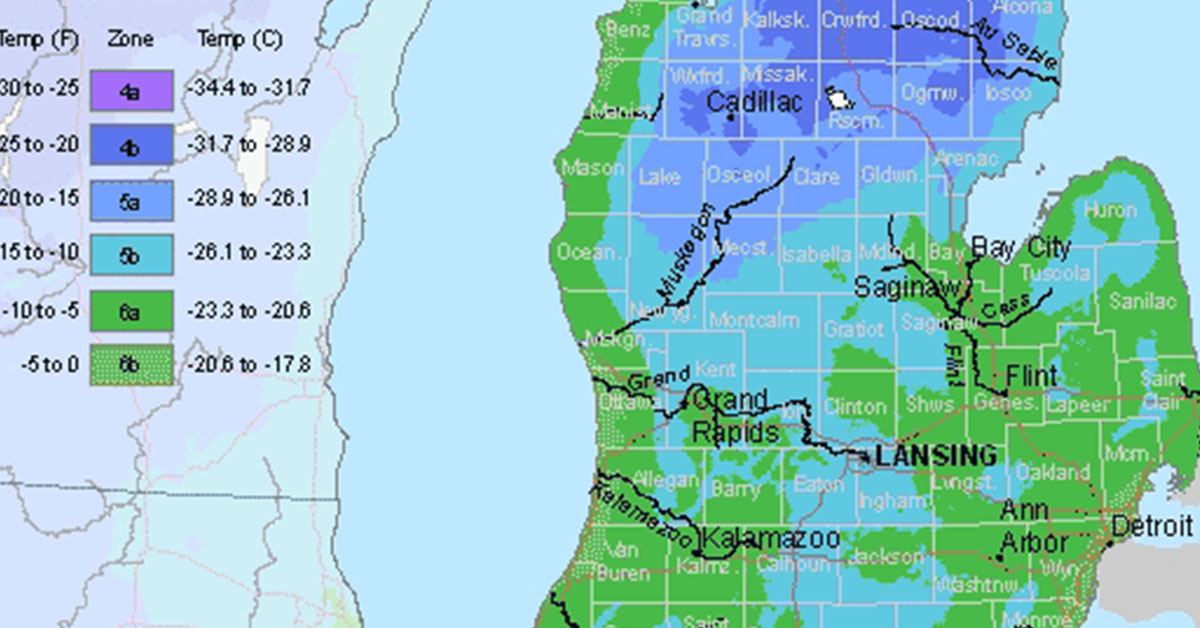

Welcome to the vibrant world of gardening in Detroit, where the city’s rich history and diverse community come together to create a unique and thriving gardening scene. Situated in the Great Lakes region of the United States, Detroit experiences a continental climate with distinct seasons, making it an ideal location for a wide variety of plants. Understanding the USDA hardiness zone for Detroit is crucial for successful gardening, as it helps determine which plants can withstand the city’s specific climate conditions.
With its hardiness zone of 6a, Detroit offers a range of possibilities for both experienced gardeners and beginners alike. Whether you have a small backyard, a community garden plot, or even a balcony, Detroit’s gardening scene has something for everyone. So, grab your gardening tools and let’s explore the world of gardening in the Motor City!
What is Detroit’s USDA hardiness zone?
The USDA hardiness zone is a classification system used to determine the suitability of plants for specific regions based on their ability to withstand the average annual minimum temperature. In the case of Detroit, Michigan, it falls under USDA hardiness zone 6a. Zone 6a is characterized by an average annual minimum temperature range of -10°F to -5°F (-23°C to -20°C).
This means that plants recommended for this zone should be able to survive winter temperatures within this range. It is important to note that this classification is based on historical weather data and does not take into account other factors such as snow cover or wind chill. In Detroit, gardeners should choose plants that are hardy to zone 6a or lower to ensure their survival through the winter. Some examples of plants suitable for this zone include:
- Perennials: Coneflowers (Echinacea), Black-eyed Susans (Rudbeckia), Daylilies (Hemerocallis), Hostas, and Peonies (Paeonia).
- Shrubs: Lilacs (Syringa), Spireas (Spiraea), Hydrangeas, and Forsythias.
- Trees: Maples (Acer), Oaks (Quercus), Crabapples (Malus), and Dogwoods (Cornus).
It is important to note that while these plants are generally suitable for zone 6a, individual microclimates within Detroit may vary. Factors such as proximity to large bodies of water, urban heat island effect, and exposure to wind can influence the local climate and potentially affect plant hardiness. Therefore, it is always a good idea to consider these factors and consult with local gardening resources or experts for more specific recommendations.
Additionally, it is crucial to provide proper winter care for plants in zone 6a. This may include mulching around the base of plants to protect their roots, providing windbreaks or shelters, and avoiding excessive pruning in late summer or fall, as it can stimulate new growth that is vulnerable to winter damage. By understanding the USDA hardiness zone and selecting appropriate plants, Detroit gardeners can create beautiful and thriving gardens that can withstand the winter conditions of the region.
When can you plant your garden in Detroit?
In Detroit, the ideal planting times for various plants can be determined based on the USDA hardiness zone. Detroit falls under USDA hardiness zone 6a, which means the average annual minimum temperature ranges from -10 to -5 degrees Fahrenheit (-23.3 to -20.6 degrees Celsius).
For cool-season vegetables such as lettuce, spinach, peas, and radishes, the ideal planting time is in early spring, around mid-April, when the soil has thawed and temperatures consistently reach above freezing. These crops can also be planted again in late summer or early fall, around mid-August, for a second harvest.
Warm-season vegetables like tomatoes, peppers, cucumbers, and beans require warmer soil and air temperatures. It is recommended to start seeds indoors around mid-March to early April, about 6-8 weeks before the last expected frost date, which is typically around mid-May in Detroit. Transplanting these seedlings outdoors should be done after the last frost date when the soil has warmed up.
Perennial flowers and plants, such as daylilies, hostas, and peonies, can be planted in Detroit in early spring or early fall. This allows them to establish their root systems before the extreme temperatures of summer or winter.
Annual flowers, such as marigolds, petunias, and zinnias, can be planted after the last frost date, typically in mid-May. These plants prefer warmer temperatures and will continue to bloom until the first frost in the fall.
It’s important to note that these planting times are general guidelines, and local weather conditions can vary from year to year. Monitoring the local weather forecast and soil temperature can help determine the best time to plant in Detroit.
What grows well in Detroit?
Detroit is located in USDA hardiness zone 6a, which means it experiences cold winters with average minimum temperatures of -10 to -5 degrees Fahrenheit (-23 to -20 degrees Celsius). Here is a comprehensive list of plants that generally grow well in Detroit’s climate:
- Coneflowers (Echinacea spp.)
- Black-eyed Susans (Rudbeckia spp.)
- Daylilies (Hemerocallis spp.)
- Hostas (Hosta spp.)
- Sedums (Sedum spp.)
- Russian sage (Perovskia atriplicifolia)
- Astilbes (Astilbe spp.)
- Bee balm (Monarda spp.)
- Peonies (Paeonia spp.)
- Liatris (Liatris spp.)
- Marigolds (Tagetes spp.)
- Zinnias (Zinnia spp.)
- Petunias (Petunia spp.)
- Snapdragons (Antirrhinum majus)
- Impatiens (Impatiens spp.)
- Geraniums (Pelargonium spp.)
- Cosmos (Cosmos bipinnatus)
- Sunflowers (Helianthus spp.)
- Salvia (Salvia spp.)
- Coleus (Solenostemon scutellarioides)
- Tulips (Tulipa spp.)
- Daffodils (Narcissus spp.)
- Crocuses (Crocus spp.)
- Hyacinths (Hyacinthus spp.)
- Alliums (Allium spp.)
- Irises (Iris spp.)
- Lilies (Lilium spp.)
- Lilacs (Syringa spp.)
- Hydrangeas (Hydrangea spp.)
- Spireas (Spiraea spp.)
- Forsythias (Forsythia spp.)
- Weigelas (Weigela spp.)
- Ninebarks (Physocarpus spp.)
- Mock oranges (Philadelphus spp.)
- Viburnums (Viburnum spp.)
- Potentillas (Potentilla spp.)
- Witch hazels (Hamamelis spp.)
- Maples (Acer spp.)
- Oaks (Quercus spp.)
- Crabapples (Malus spp.)
- Dogwoods (Cornus spp.)
- Serviceberries (Amelanchier spp.)
- Redbuds (Cercis spp.)
- Hawthorns (Crataegus spp.)
- Ginkgos (Ginkgo biloba)
- Honey locusts (Gleditsia spp.)
- Kentucky coffeetrees (Gymnocladus dioicus)
Remember to consider factors like soil type, sunlight exposure, and water requirements when selecting plants for your specific garden. It’s always a good idea to consult with local nurseries or gardening experts for more specific recommendations based on your garden’s conditions.
What won’t grow in Detroit?
In Detroit, which falls under USDA hardiness zone 6a, there are certain plants that may struggle to thrive due to the region’s climate conditions. Here are some examples:
- Tropical Plants: Plants that require a consistently warm climate, such as banana trees (Musa spp.), palm trees (e.g., Phoenix spp.), and orchids (Orchidaceae family), may struggle to survive in Detroit’s colder winters.
- Warm-Season Vegetables: Certain warm-season vegetables, including tomatoes (Solanum lycopersicum), peppers (Capsicum spp.), and eggplants (Solanum melongena), may have a shorter growing season in Detroit due to the cooler temperatures.
- Citrus Trees: Citrus trees, such as oranges (Citrus sinensis), lemons (Citrus limon), and limes (Citrus aurantifolia), are not well-suited for Detroit’s climate as they require a longer and warmer growing season.
- Tender Perennials: Some tender perennials like hibiscus (Hibiscus spp.), bougainvillea (Bougainvillea spp.), and certain types of lavender (Lavandula spp.) may struggle to survive the colder winters in Detroit.
- Subtropical Plants: Plants that thrive in subtropical regions, such as certain varieties of ferns (e.g., tree ferns), bamboo (Bambusoideae family), and certain types of palms (e.g., windmill palm, Trachycarpus fortunei), may not be suitable for Detroit’s climate.
It’s important to note that while these plants may not thrive in Detroit’s climate, it doesn’t mean they cannot be grown at all. With proper care, including protection during colder months, some of these plants can still be cultivated as annuals or in containers that can be moved indoors during winter.