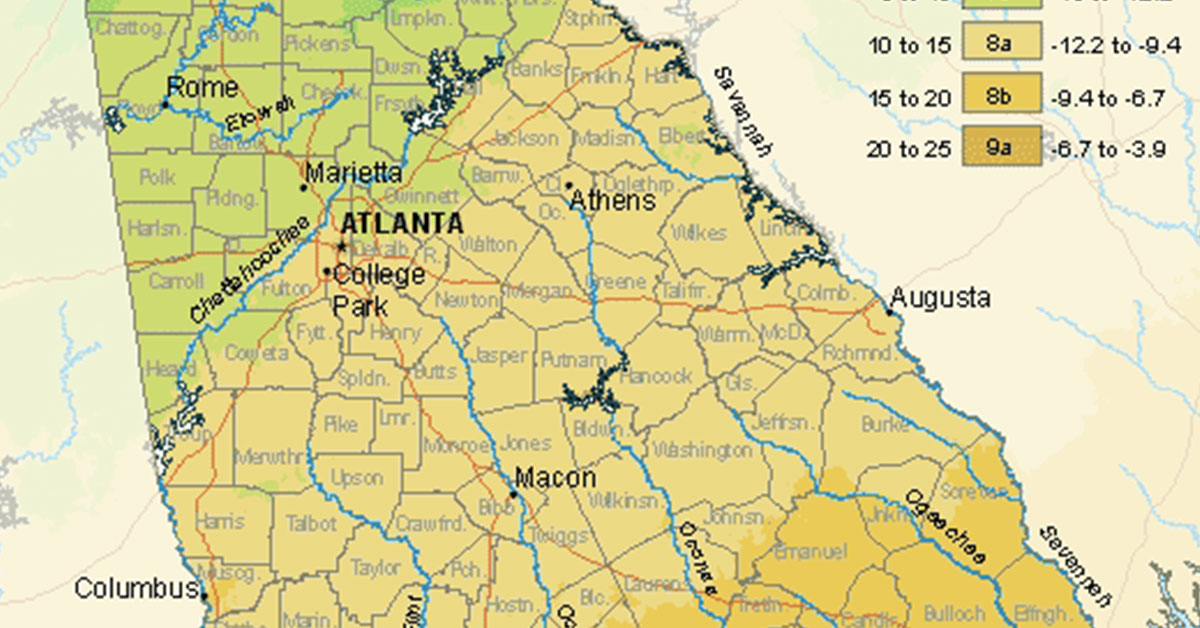

Welcome to the vibrant world of gardening in Atlanta, Georgia! Nestled in the heart of the southeastern United States, Atlanta offers a unique and diverse gardening experience. One of the most crucial factors to consider when embarking on your gardening journey here is the USDA hardiness zone.
The USDA hardiness zone map divides the country into different zones based on average annual minimum temperatures, helping gardeners determine which plants are most likely to thrive in their specific region. In Atlanta, we fall into USDA hardiness zone 7b, which means we can enjoy a wide range of plant options that can withstand our mild winters and hot, humid summers.
Whether you are a seasoned gardener or just starting out, understanding the USDA hardiness zone is essential for successful gardening in Atlanta. So, grab your gardening gloves and let’s explore the wonderful world of plants that thrive in our zone!
What is Atlanta’s USDA hardiness zone?
The USDA hardiness zone is a classification system that helps gardeners determine which plants are most likely to thrive in a particular region based on its average annual minimum temperature. In the case of Atlanta, it falls under USDA hardiness zone 7b. Atlanta’s hardiness zone is primarily influenced by its location in the southeastern United States, where it experiences a humid subtropical climate.
This means that Atlanta has hot, humid summers and mild winters. However, it is important to note that Atlanta’s elevation and proximity to the Appalachian Mountains can also have an impact on its microclimate, resulting in slightly cooler temperatures in some areas.
In terms of temperature, Atlanta’s hardiness zone 7b indicates an average annual minimum temperature range of 5 to 10 degrees Fahrenheit (-15 to -12 degrees Celsius). This means that plants recommended for zone 7b should be able to tolerate occasional winter temperatures within this range. Gardeners in Atlanta can take advantage of the relatively mild winters to grow a wide range of plants. Some popular options for zone 7b include:
- Trees: Southern magnolia (Magnolia grandiflora), crepe myrtle (Lagerstroemia indica), dogwood (Cornus florida), and Japanese maple (Acer palmatum).
- Shrubs: Azaleas (Rhododendron spp.), camellias (Camellia spp.), hydrangeas (Hydrangea spp.), and butterfly bush (Buddleja davidii).
- Perennials: Daylilies (Hemerocallis spp.), hostas (Hosta spp.), black-eyed Susans (Rudbeckia hirta), and coneflowers (Echinacea spp.).
- Vegetables: Tomatoes, peppers, beans, cucumbers, and squash can all be successfully grown in Atlanta’s zone 7b.
It is important to note that while Atlanta’s hardiness zone provides a general guideline for plant selection, other factors such as soil type, sunlight exposure, and moisture levels also play a crucial role in determining a plant’s success. Therefore, it is always recommended to consider these factors and consult local gardening resources or experts for specific plant recommendations and care instructions.
When can you plant your garden in Atlanta?
In Atlanta, the ideal planting times for various plants can be determined by considering its USDA hardiness zone, which is Zone 7b. This zone indicates the average minimum winter temperature range of 5 to 10 degrees Fahrenheit (-12 to -14 degrees Celsius). Here are some guidelines for planting based on this hardiness zone:
- Spring Planting: In Atlanta, the last frost date typically occurs around mid-April. Therefore, it is generally safe to start planting frost-tolerant vegetables, such as lettuce, spinach, broccoli, and cabbage, in early to mid-March. Warm-season crops like tomatoes, peppers, cucumbers, and beans can be planted after the last frost date, usually from late April to early May.
- Fall Planting: Fall is an excellent time to plant cool-season crops in Atlanta. As the first frost date usually falls around mid-November, it is recommended to start planting in late August or early September. This includes vegetables like carrots, beets, radishes, kale, and lettuce, which thrive in cooler temperatures.
- Perennials and Trees: Perennials and trees can be planted in Atlanta throughout the year, but it is best to avoid extreme weather conditions. Spring and fall are generally favorable for planting perennials, as the mild temperatures and increased rainfall provide optimal conditions for root establishment. However, it is important to ensure that perennials have enough time to establish roots before the first frost in fall.
- Bulbs: Spring-flowering bulbs like tulips, daffodils, and hyacinths should be planted in the fall, around September or October, before the ground freezes. This allows them to undergo a period of dormancy and bloom beautifully in the following spring.
- Annuals and Herbs: Annual flowers and herbs can be planted in Atlanta after the last frost date, typically from late April to early May. However, some cold-tolerant annuals like pansies and violas can be planted in the fall for winter color.
Remember, these are general guidelines, and it’s always beneficial to consult local gardening resources or contact your local cooperative extension office for specific recommendations based on your microclimate and the specific plants you intend to grow.
What grows well in Atlanta?
Atlanta is located in USDA hardiness zone 7b, which means it experiences an average minimum temperature range of 5 to 10 degrees Fahrenheit (-12 to -14 degrees Celsius). Here is a comprehensive list of plants that generally grow well in Atlanta’s climate:
- Azaleas (Rhododendron spp.)
- Camellias (Camellia spp.)
- Dogwoods (Cornus florida)
- Japanese maples (Acer palmatum)
- Crape myrtles (Lagerstroemia indica)
- Southern magnolias (Magnolia grandiflora)
- Hydrangeas (Hydrangea spp.)
- Roses (Rosa spp.)
- Daylilies (Hemerocallis spp.)
- Hostas (Hosta spp.)
- Ferns (various species)
- Lenten roses (Helleborus spp.)
- Black-eyed Susans (Rudbeckia spp.)
- Coneflowers (Echinacea spp.)
- Bee balm (Monarda spp.)
- Salvia (Salvia spp.)
- Lantana (Lantana camara)
- Coreopsis (Coreopsis spp.)
- Phlox (Phlox spp.)
- Sedums (Sedum spp.)
These plants are known to thrive in Atlanta’s climate and are commonly found in gardens throughout the area. However, it’s important to note that individual microclimates within Atlanta may vary, so it’s always a good idea to consider factors like sun exposure, soil type, and moisture levels when selecting plants for your specific garden.
What won’t grow in Atlanta?
In Atlanta, which falls within USDA hardiness zone 7b, there are certain plants that may struggle to thrive due to the region’s climate and environmental conditions. Here are some examples:
- Tropical plants: Many tropical plants, such as banana trees (Musa spp.), coconut palms (Cocos nucifera), and hibiscus (Hibiscus spp.), are not well-suited for Atlanta’s colder winters and may require extensive protection or indoor care.
- Cold-sensitive citrus trees: While some cold-hardy citrus varieties can survive in Atlanta, more tender citrus trees like oranges (Citrus sinensis) and lemons (Citrus limon) may struggle due to the occasional freezing temperatures.
- Mediterranean herbs: Herbs like rosemary (Rosmarinus officinalis), lavender (Lavandula spp.), and thyme (Thymus spp.) are typically more adapted to Mediterranean climates and may struggle in Atlanta’s hot and humid summers, as well as its occasional cold snaps.
- Some cacti and succulents: While there are cold-hardy cacti and succulents that can survive in Atlanta, certain species that are native to desert regions may struggle with the region’s higher humidity levels and occasional winter moisture.
- Some flowering plants: Certain flowering plants, like peonies (Paeonia spp.) and lilacs (Syringa spp.), require a prolonged period of winter chill to bloom successfully. Atlanta’s milder winters may not provide the necessary conditions for these plants to thrive.
It’s important to note that while these plants may not thrive in Atlanta’s climate, it doesn’t mean they can’t be grown at all. With proper care, protection, and microclimate adjustments, it is possible to cultivate these plants in Atlanta, but they may require more effort and attention compared to plants that are better suited to the region.