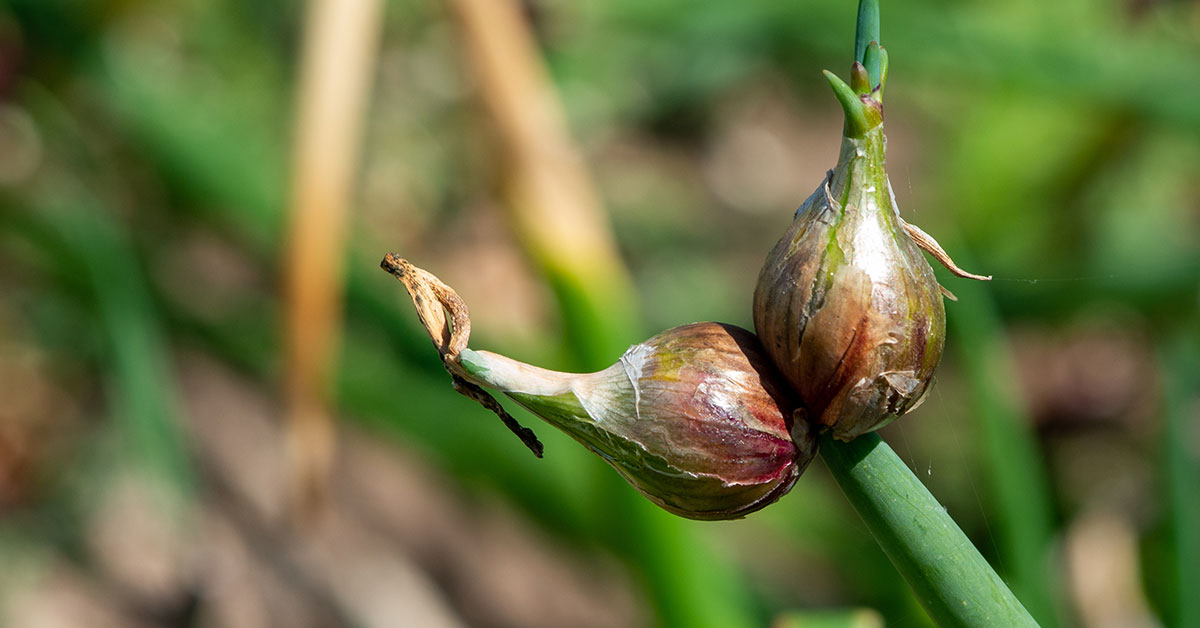

Egyptian onions, also known as walking onions or tree onions, are a unique and versatile variety of onion that have been cultivated for centuries. Unlike traditional onions, these plants produce bulbs at the top of long, slender stems, which can then be replanted to produce even more onions.
This unique growth pattern makes them an ideal choice for home gardeners who want a low-maintenance crop that can be easily propagated year after year. In addition to their practical benefits, Egyptian onions also have a rich cultural history and are a beloved ingredient in many regional cuisines.
What are Egyptian Onions?
Egyptian onions, also known as walking onions, tree onions, and top-set onions, are a unique type of onion that produces small, onion-like bulbs on the top of the plant’s stem instead of underground. These bulbs, which are about the size of a shallot, can be used in cooking just like any other onion.
The plant itself is very hardy and can survive in a variety of growing conditions. It is a perennial plant, which means it will continue to grow year after year and is very easy to propagate. This makes it a great option for home gardeners who want to grow their own onions without having to replant each year.
Egyptian onions are believed to have originated in the Middle East and have been cultivated for thousands of years. They were highly valued by ancient Egyptians for their medicinal properties and were even used in mummification rituals. Today, they are still a popular crop in many parts of the world, including the United States, where they are grown primarily in home gardens.
These onions are a unique and versatile plant that offers a great alternative to traditional onions. They are easy to grow, easy to maintain, and can add a delicious and distinctive flavor to a variety of dishes.
What do Egyptian Onions taste like?
Egyptian onions, also known as tree onions, top onions, or walking onions, are a unique variety of onion that is famous for its distinctive taste. These onions are not only delicious but also have a complex flavor profile that is difficult to replicate with other types of onions.
When it comes to taste, Egyptian onions are milder than regular onions, but they are still pungent enough to add a robust flavor to any dish. The flavor of Egyptian onions is more akin to garlic than regular onions, with a slightly sweet and spicy taste. The bulbs have a crunchy texture and a sweet, sharp taste that can be enjoyed raw or cooked.
The leaves of Egyptian onions are also edible and have a milder onion flavor, making them a versatile ingredient in many recipes. They can be used in soups, stews, stir-fries, and even salads, adding a unique flavor profile to any dish.
Egyptian onions are often used in traditional Egyptian cuisine, where they are a common ingredient in dishes such as ful medames, a traditional breakfast dish made of fava beans, and ta’meya, a popular street food that is similar to falafel.
These onions have a unique and delicious taste that adds a special touch to any dish. Whether you enjoy them raw or cooked, their sweet and spicy flavor makes them a versatile ingredient in any kitchen.
How to start Egyptian Onions from seeds
Egyptian onions, also known as walking onions or top-set onions, are a unique type of onion that is easy to grow from seed. Growing Egyptian onions from seed require a little bit of patience, but the results are well worth the effort. In this section, we’ll walk you through the steps to start Egyptian onions from seed.
Choose Your Seeds: The first step in growing Egyptian onions from seed is to choose your seeds. You can purchase seeds online or at your local garden center. Look for seeds that are labeled as Egyptian onions or walking onions.
Prepare Your Soil: Egyptian onions prefer well-draining soil that is rich in organic matter. Before planting your seeds, prepare the soil by removing any weeds and adding compost or other organic matter.
Plant Your Seeds: Plant your Egyptian onion seeds in early spring, after the last frost. Sow the seeds about ¼ inch deep and 1 inch apart. Water the seeds well after planting.
Care for Your Seedlings: Keep the soil moist but not waterlogged. Egyptian onion seeds require consistent moisture to germinate, so be sure to water them regularly. Once your seedlings have emerged, thin them to about 4-6 inches apart.
How to grow Egyptian Onions
Egyptian onions, also known as walking onions or tree onions, are a unique type of onion that grows in clusters. These onions are easy to grow and require minimal maintenance, making them a perfect addition to any garden. Here are some steps to help you grow Egyptian onions:
- Choose a sunny location: Egyptian onions require full sun to grow and should be planted in a spot that receives at least six hours of direct sunlight each day.
- Prepare the soil: Egyptian onions prefer well-draining soil rich in organic matter. Before planting, amend the soil with compost or aged manure to improve its fertility and drainage.
- Plant the bulbs: Egyptian onions can be planted in either the spring or fall. Plant the bulbs about 1-2 inches deep with the pointed end facing upwards. Space the bulbs about 6-8 inches apart to allow room for growth.
- Water regularly: Egyptian onions require consistent moisture to grow properly. Water the onions regularly, making sure the soil is consistently moist but not waterlogged.
- Fertilize: Egyptian onions benefit from regular applications of a balanced fertilizer. Apply fertilizer every four to six weeks during the growing season.
- Harvest: They can be harvested throughout the growing season as needed. To harvest, pull up the entire plant, including the bulblets at the base. The bulblets can be used for cooking or replanted for future harvests.
When To Harvest
Egyptian onions, also known as walking onions or tree onions, are a unique variety of onion that can be harvested at different stages of growth. Knowing when and how to harvest Egyptian onions is crucial to ensure that you get the best yield.
Harvesting is relatively easy, and you can do it in different ways depending on your preference. You can harvest the onions at different stages of growth, from the spring onion stage to the mature bulb stage.
If you prefer to harvest the onions at the spring onion stage, you can do so when the onion stems have reached a height of about 8-10 inches. At this stage, the onions are tender and mild, making them perfect for use in salads and other dishes that require a milder flavor.
If you prefer to harvest the onions at the mature bulb stage, you can do so when the stems have reached a height of about 2-3 feet. At this stage, the onions have formed mature bulbs that are suitable for use in cooking and other culinary uses.
To harvest the onions, you can either pull them out of the ground or cut them at the base using a pair of scissors. If you plan to harvest the onions at the spring onion stage, you can simply pull the onions out of the ground, taking care not to damage the bulbs.
If you plan to harvest the onions at the mature bulb stage, you can cut the stems at the base using a pair of scissors. Once you have cut the stems, you can remove the bulbs from the ground using a garden fork or a trowel.
Harvesting is a simple process that can be done in different ways depending on your preference. Whether you prefer to harvest the onions at the spring onion stage or the mature bulb stage, knowing when and how to harvest the onions is crucial to ensure that you get the best yield.