

1. Dried Corn Stalk Bundles
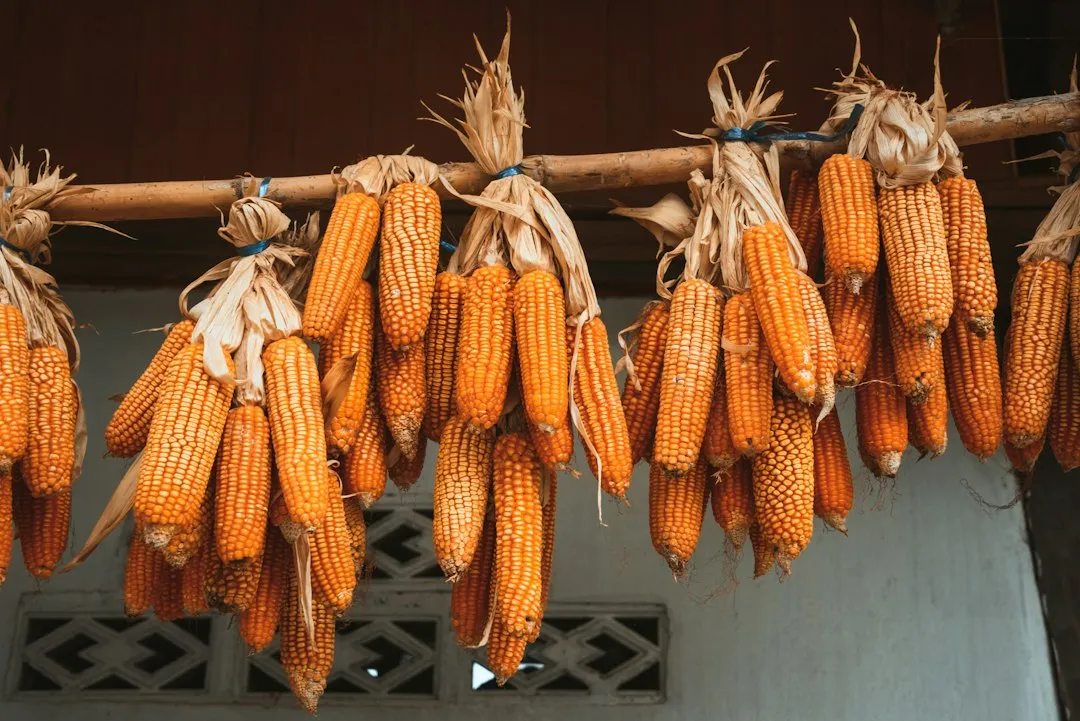
If you grow sweetcorn or ornamental corn, the stalks left standing after harvest are already a decoration waiting to happen. Tall corn stalks draw the eye upward, creating a dramatic backdrop that makes an entry feel grander – which is exactly what you want flanking a front door or porch post.
Dried plants offer a unique way to enhance the creepy atmosphere of your Halloween yard, as their withered, lifeless appearance gives off a ghostly, abandoned vibe. Simply cut stalks at the base once they’ve dried out, bind three or four together with garden twine, and lean them against posts or fences. No paint, no hardware, no craft store run needed.
A compact cornfield display works well by surrounding a single figure with bundles of dried corn stalks, tall ornamental grasses, pumpkins, and straw. Mix in a couple of mini pumpkins at the base and the whole arrangement looks completely intentional.
2. Gourd Ghosts

White or pale yellow gourds left over from a summer or autumn planting can become some of the simplest and most effective Halloween decorations you’ll make. Gourdy ghosts turn ordinary gourds into charming Halloween spirits, and small white gourds become eerie characters with just a few clever paint strokes and creative details.
Use a black permanent marker or a dab of acrylic paint to draw two oval eyes and a simple open mouth on each gourd. Hang them from tree branches with garden twine at varying heights so they drift and twist in the breeze. The organic irregularity of real gourds makes every ghost slightly different, which is part of their charm.
In the U.S., 1.91 billion pounds of pumpkins are grown each year, and roughly four in five are purchased solely for decoration – yet gourds from your own patch cost nothing extra and tend to last far longer on display than shop-bought alternatives.
3. Twig Wreaths

Autumn pruning always leaves a pile of thin branches and woody stems that usually end up in the green bin. Before they go, set some aside. Using a raffia wreath form, you can create a simple wreath with branches from your yard by arranging the branches around the perimeter with hot glue and finishing with a black ribbon at the bottom for a simple Halloween decoration.
The more tangled and gnarled the twigs look, the better the effect. Wild roses, hawthorn, or any thorny hedge trimmings add genuine texture that no manufactured product can replicate. Tuck in a few dried seed heads, dark berry clusters, or faded hydrangea blooms if you have them.
Hang the finished wreath on the front door or prop it against a planter. It holds up well through October weather and, when the season ends, it composts without leaving anything behind.
4. Stuffed Leaf Bag Figures

Fallen leaves pile up fast once October arrives, and you can turn ordinary leaf collection bags into Halloween decorations by filling large black trash bags with leaves and shaping them into a human form with duct tape, then leaving them lying around or hanging them from trees for spooky outdoor decor.
The trick is in the shaping. Twist and bind the bag at the “neck” and “waist” with twine to give it a body silhouette, then prop it sitting up against a tree or lying flat on the lawn as if something has fallen. Scatter a few loose leaves around it for effect. It takes about ten minutes and costs nothing.
When Halloween is over, simply empty the leaves into your compost bin and fold the bag away for next year. Reuse is the primary method of disposal for Halloween decorations, with many storing items for future use – though with this one, the filling itself returns to the garden cycle.
5. Pumpkin Planter Displays

A pumpkin that’s too soft to carve or too small to merit the effort doesn’t need to be thrown away. Pumpkin planters can be created by hollowing out a pumpkin, saving the seeds, filling it with soil, planting seasonal flowers or plants inside, and placing the arrangement on a porch or walkway.
Dark-leaved plants work especially well here. Purple ornamental kale, deep-toned heuchera, or trailing ivy pulled from a garden corner all lean naturally into a Halloween aesthetic without a single spray can in sight. You can turn a plain garden urn into Halloween stoop decor with the help of a few skeleton parts, dark plants, and dried seed pods – the same layering logic applies to pumpkin planters.
When the pumpkin eventually softens, the whole thing goes straight to the compost pile. The majority of discarded pumpkins end up in a landfill, producing methane, a greenhouse gas more potent than carbon dioxide, so composting is a genuinely worthwhile step.
6. Straw and Leaf Scarecrows

The classic scarecrow never really went out of fashion, and a good one built entirely from garden materials looks far more authentic than anything bought in a shop. A pumpkin-headed figure combines two classic autumn decorations in one striking display, built from a simple wooden or bamboo frame, dressed in an oversized shirt and worn trousers, with plenty of straw around the cuffs and collar.
Dried cornstalks, hay bales, and pumpkins tie a garden display together beautifully when grouped around a scarecrow figure. The stuffing itself comes entirely from the garden: dried leaves, loose hay from a dismantled bale, or spent straw mulch cleared from vegetable beds all work perfectly inside old clothes.
A witchy variation starts with a tall frame dressed in layers of torn dark fabric, adding twig hands, a battered pointed hat, and an old broom propped against one arm. The twig hands are the finishing touch that makes it feel genuinely handmade rather than prefab.
7. Garden Pathway Luminaries

Old glass jars sitting in the potting shed take on a different character when paired with a tea light and a few cuttings from the garden. Lights placed along garden paths using old jars or bags with Halloween designs cut out, then battery-powered tea light bulbs placed inside, can create glowing creatures that lead guests toward the house.
Stuff each jar loosely with dried flowers, seed heads, small twigs, or pressed leaves before dropping in the candle. The plant material catches and filters the light in a way that plain glass doesn’t, creating something genuinely atmospheric. Dried hydrangea heads work especially well because their papery texture glows rather than burns.
Line them up along a garden path at intervals of roughly half a metre for the most consistent effect. Around 1 billion pounds of pumpkins are sent to landfill every year, which is a reminder of how much organic material goes to waste that could just as easily go into something like this first.
8. Branch and Vine Wreaths With Seed Heads
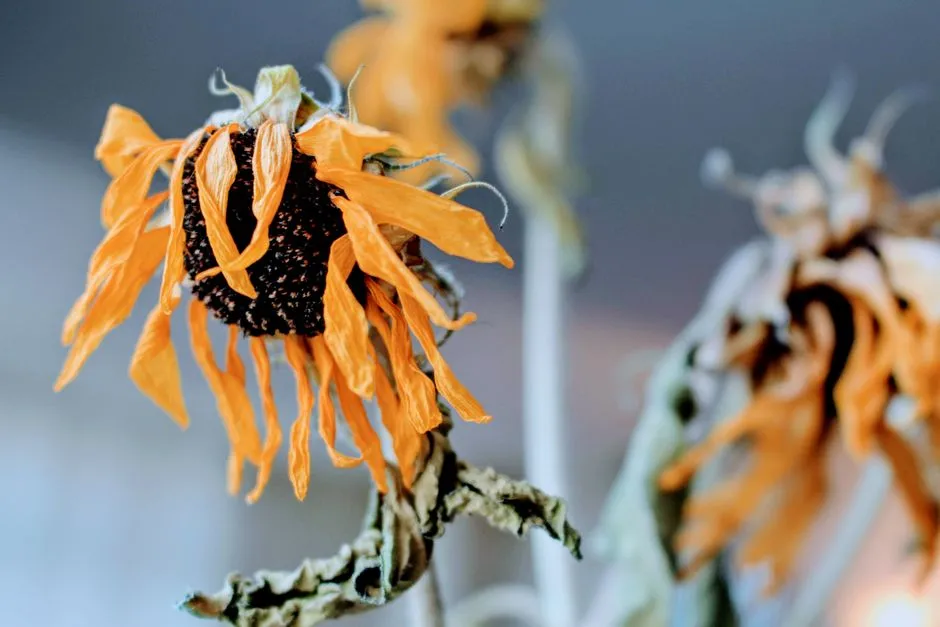
Late-season seed heads from sunflowers, teasel, alliums, echinacea, or globe thistles dry naturally on the plant and look genuinely striking once harvested. Paired with flexible vine cuttings from climbing plants like wisteria, clematis, or grape, they form the basis of a wreath that costs nothing but a bit of time.
Grapevines or ivy can be used to create a wreath base with small pumpkins, gourds, or dried leaves added for a festive Halloween look. Twisting the vines while they’re still slightly pliable makes shaping much easier. Once dry, the form holds itself without any wire or filler.
A flower arrangement made of dried sunflowers from the backyard mixed with spray-painted accents creates a spooky seasonal effect that works as well on a front door as it does as a table centrepiece. The combination of organic texture and dark tones hits the Halloween mood without leaning on plastic spider webs or synthetic skulls.
The Takeaway

Only about one in five consumers currently considers sustainability in their Halloween purchases, which means there’s still a significant gap between intention and habit. That gap is easiest to close when the alternative is already sitting in the garden bed waiting to be used.
None of the decorations above require a craft store trip, a budget, or any particular skill. They require time, a bit of imagination, and a willingness to look at the end-of-season garden as a resource rather than a cleanup problem. The results tend to look better anyway. Real dried stalks, genuine gourds, and actual twigs carry a texture and irregularity that store-bought items spend considerable effort trying to imitate.
October in the garden already looks a little haunted. Sometimes the best decoration is simply noticing that.
AI Disclaimer: This article was created with the assistance of AI tools and reviewed by a human editor.