

1. Small Candy Inside Eggs Is a Bigger Choking Risk Than Most Parents Realize

Data reveals that candy accounts for roughly 28 percent of all choking-related hospital visits in children ages one to four years old. That statistic puts candy squarely in the same category as other well-known hazards like coins and small toy parts. For a holiday built around stuffing small plastic eggs with sweets, that’s worth pausing on.
Hard candy alone accounts for roughly 15.5 percent of food-related choking emergency room visits for children under 14, making it the single most common food choking culprit. Jelly beans, hard caramels, and small chocolate eggs all fall into the same danger zone. Many traditional Easter treats are choking hazards for kids during the toddler years and up until age four, and small, hard, round foods like chocolate mini-eggs are particularly dangerous for young children.
Hollow chocolate bunnies and larger chocolate eggs that can be broken into smaller pieces are safer options for toddlers under four. From a choking hazard perspective, it’s also safer to fill plastic Easter eggs with low-risk options like soft dried fruit, yogurt melts, cereal puffs, and animal crackers. Age-coding the eggs by color before the hunt, so younger kids consistently find the right ones, is one of the simplest and most effective solutions.
2. Hard-Boiled Eggs Left Out Too Long Become a Food Safety Problem

Eggs can cause food poisoning because Salmonella is a common bacteria found in uncooked and even unbroken eggs, and it can be present on both the outside and inside of the shell. The concern doesn’t disappear just because an egg has been hard-boiled and decorated. Handling, ground contact, and temperature exposure all reintroduce risk.
The FDA recommends not eating Easter eggs after they have been hidden or played with, as bacteria and viruses on the shells can contaminate the edible part of the egg. That’s a guideline many families have never heard. The FDA also recommends tossing any eggs that were left unrefrigerated for more than two hours, and if outdoor temperatures exceed 90 degrees, that window shrinks to just one hour.
Eggs left out more than two hours present a high risk of foodborne illness. The simplest fix is to keep a separate set of hard-boiled eggs for eating and use plastic eggs exclusively for the hunt itself. It removes the ambiguity entirely.
3. The Hunt Area Hides More Hazards Than You’d Expect
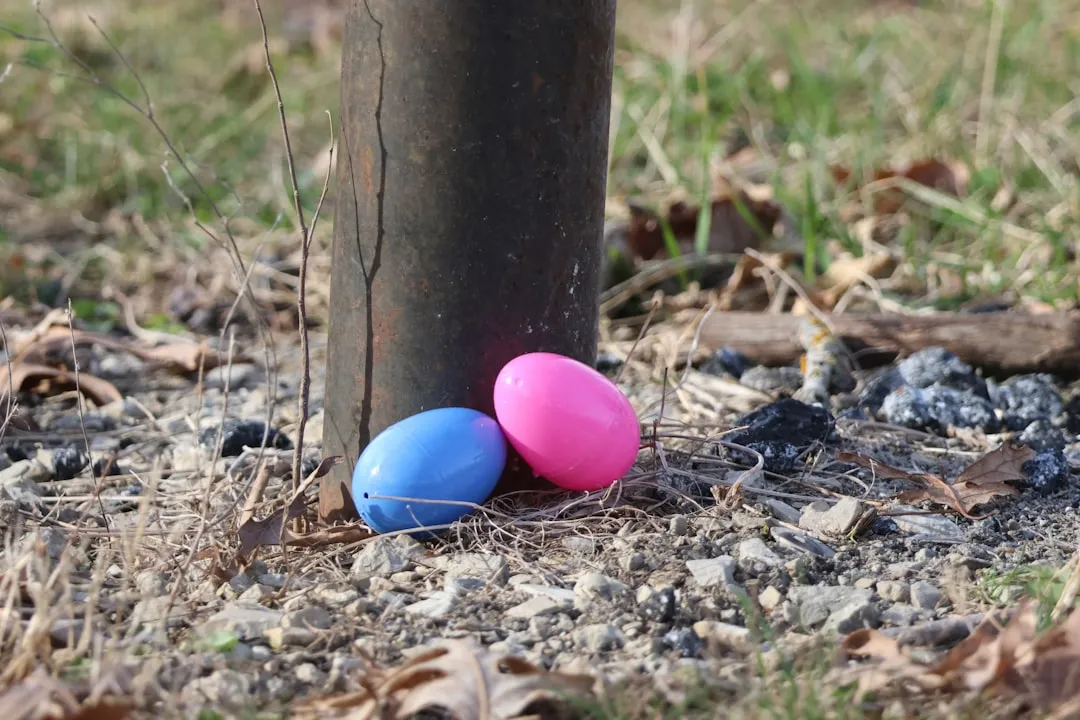
Before the hunt starts, take a walk through the area and make sure it’s safe for kids to run around, removing anything that could cause tripping, like garden tools, hoses, or sharp objects, and checking for uneven ground, animal holes, or anything that could cause a fall. This seems obvious, but it rarely gets done with any real rigor.
Holes in a yard could be animal habitats, and those animals could bite or sting children as they hunt for prizes. The foliage around a home could be poisonous or covered in pesticides, so placing eggs near that foliage or inside ground holes adds unnecessary risk. A five-minute walk-through before the kids come outside takes care of most of these issues before they become problems.
Over 5.6 million children have food allergies, and injuries during egg hunts can occur when children wear shoes with worn or no tread, or slip on wet grass or uneven pavement. Checking footwear before the hunt starts is one of the most overlooked small steps a parent can take.
4. Age Separation During the Hunt Matters More Than People Think

Activities like an egg hunt can quickly become chaotic. Separating kids by age group, clearly defining boundaries, and ensuring adequate supervision in each area helps prevent accidents and overcrowding. When a four-year-old and a nine-year-old are competing for the same eggs in the same space, the younger child rarely wins, and sometimes gets hurt in the rush.
When choosing candy and filling Easter eggs, being mindful of age groups and potential choking hazards is essential. Color-coding the eggs for age groups or conducting separate hunts for different age groups will help to reduce this risk. It also keeps the event feeling fair and fun for the littlest participants, who would otherwise get left behind.
Dividing the hunt by a simple time stagger, letting the youngest kids start a couple of minutes early, or designating separate search zones, requires almost no extra effort. The payoff in both safety and enjoyment is genuine.
5. Food Allergies Get Lost in the Excitement

The eight major food allergens include milk, egg, peanut, tree nuts, wheat, soy, fish, and crustacean shellfish. Easter candy is loaded with several of these, particularly peanuts, tree nuts, milk chocolate, and wheat. When a child with an allergy reaches into an egg and pops something in their mouth before an adult can react, the stakes get high fast.
Candy and snacks are everywhere during Easter celebrations, so being proactive by asking parents about allergies at check-in and clearly labeling children with dietary restrictions helps prevent accidental exposure. Even at small backyard hunts with familiar families, it’s worth asking ahead of time rather than assuming. Allergies aren’t always well-known outside the immediate family.
Making sure you know if any guests have food allergies, especially common ones like nuts, dairy, or gluten, and having options that are safe for everyone if you’re hosting an Easter egg hunt, protects everyone and avoids awkward or dangerous moments. Non-food fillers like stickers, coins, small toys, or crayons are a practical solution for mixed allergy groups.
6. Clear Boundaries and Supervision Are Easy to Assume, Hard to Actually Enforce

Setting boundaries to keep the kids in sight at all times and away from unsafe areas, including places that are too high or near streets and driveways, is a foundational step that often gets skipped when the event feels casual. Backyard hunts feel informal, and that informality is exactly where supervision tends to drift.
Kids will assume there are eggs hidden everywhere, so communicating search areas clearly is essential for children and parents alike. Roping off sensitive areas, like flower gardens, and properly securing equipment that kids could encounter helps define the space before the chaos begins. Without that, children tend to expand naturally into whatever territory looks unexplored.
Making sure all adults know emergency protocols, including how to respond to a missing child situation, is just as important at small private events as it is at larger gatherings. Assigning one adult per age group or zone, rather than assuming general oversight will cover it, keeps real eyes on real kids throughout the event.
The Takeaway

Easter egg hunts are one of those traditions that feel so wholesome they don’t seem like they could go wrong. Most of the time they don’t. Still, the risks that exist are specific and largely preventable: candy that’s too small for the age group, hard-boiled eggs left out in the sun, ground hazards no one checked, and boundaries that never got set.
None of these precautions require a significant time investment. A quick walk of the area, a color-coded egg system, a conversation with parents about allergies, and one designated adult per zone cover most of the bases. The goal isn’t to add anxiety to a joyful morning. It’s to make sure the memory stays a good one.
AI Disclaimer: This article was created with the assistance of AI tools and reviewed by a human editor.