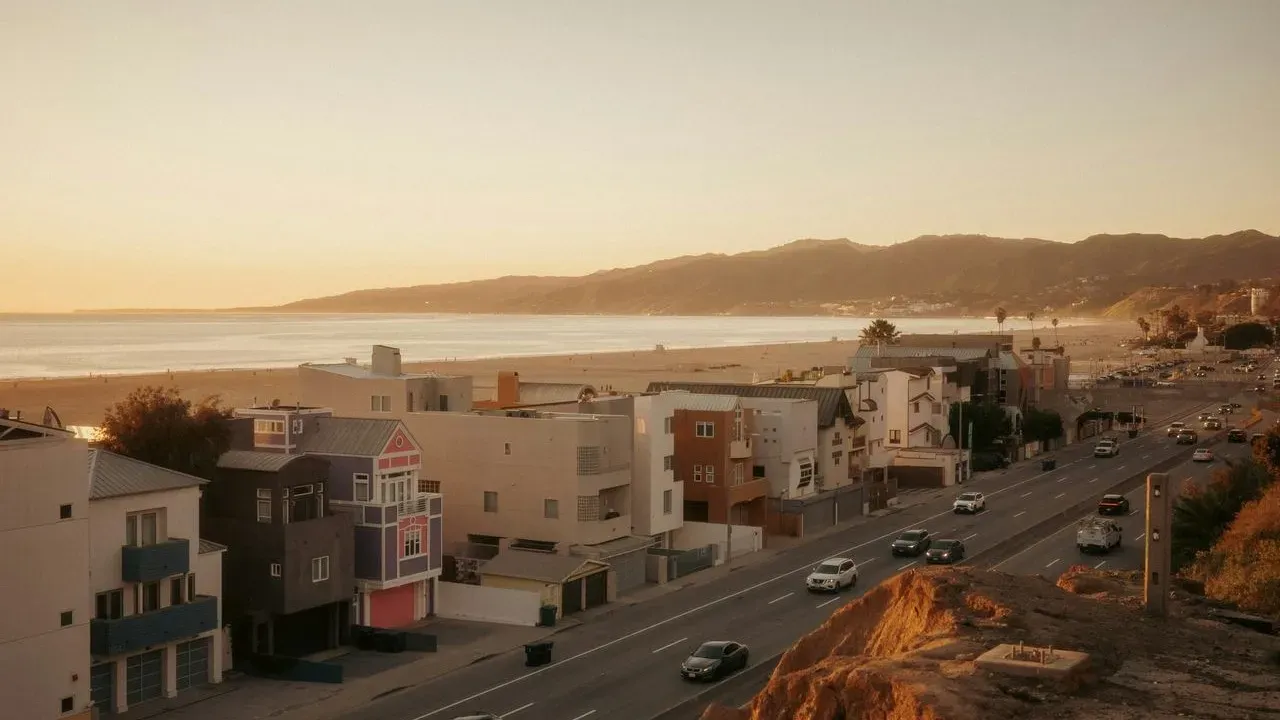

A magnitude 5.0 earthquake shook Southern California on Saturday morning, and the ground stayed restless for hours afterward. The U.S. Geological Survey reported that the largest aftershock came just over two hours later, and its size is still preliminary. The quake was centered offshore, but residents across Los Angeles reported feeling it. ([1])
A morning jolt off the coast
The USGS placed the main quake about 3.7 miles west-southwest of Manhattan Beach, shortly after 9:30 a.m. local time. Because the epicenter lay in the ocean, the shaking was strongest along the shoreline, where ([2])the USGS has identified the event as the potential mainshock of an earthquake sequence. The agency first estimated the magnitude at 4.7 before raising it to 5.0. ([3])
People in Venice and Silver Lake were among those who felt the initial tremor. Officials in Manhattan Beach and Hermosa Beach responded quickly, closing their piers as a precaution after the shaking.
The aftershock and what comes next
The second strong event hit at 11:41 a.m. near the same area. It was first listed at 4.6 and later lowered to a preliminary 4.5, a reminder that early magnitudes often shift as seismologists refine their data. Several smaller aftershocks followed, and the USGS has continued updating its figures through the day.
The agency’s forecast puts the odds of another magnitude 4 or greater aftershock within a week at 29 percent. The USGS has advised residents that aftershocks can continue for some time, and anyone who feels further shaking should drop, cover, and hold on.
Damage reports and expert context
So far, the Los Angeles Fire Department has reported no immediate injuries or structural damage, and officials said the initial quake posed no tsunami threat. Minor damage was reported at Los Angeles International Airport, according to local coverage. Mayor Karen Bass said city officials were continuing to monitor impacts across Los Angeles. ([4])
Seismologist Lucy Jones said the quake may be linked to the Palos Verdes fault zone, a system of roughly 80 kilometers that runs through Redondo Beach, Torrance, San Pedro, and Palos Verdes Estates. ([5])Her comments point to a regional fault rather than a random event, though the sequence is still being studied.
For now, the most useful step is to follow official USGS updates, since both the mainshock and aftershock figures could change. Saturday’s events were a sharp reminder that a morning tremor can be followed by a stronger jolt, and that the first numbers are rarely the final word.
AI Disclaimer: This article was created with the assistance of AI tools and reviewed by a human editor.