

As summer’s heat begins to wane and leaves hint at turning, your garden doesn’t have to fade into muted browns and greys. A strategically chosen palette of vibrant red bloomers can keep your borders ablaze well into autumn’s chill. From classic chrysanthemums to exotic spider lilies, these 15 red-flowering stars will not only brighten the shortening days but also support the late-season pollinators and nesting beneficials that sustain a healthy ecosystem.
I know it’s such a bummer when your once-lush beds start to look tired, but with a few well-placed plants, you can extend that wow factor and delight both your eyes and the local wildlife. Each of these varieties has its own origins, growth habits, and wildlife attractions—so let’s uncover which red beauties will work best in your fall landscape!
Blanket Flower ‘Lorenziana’ (Gaillardia × grandiflora ‘Lorenziana’)
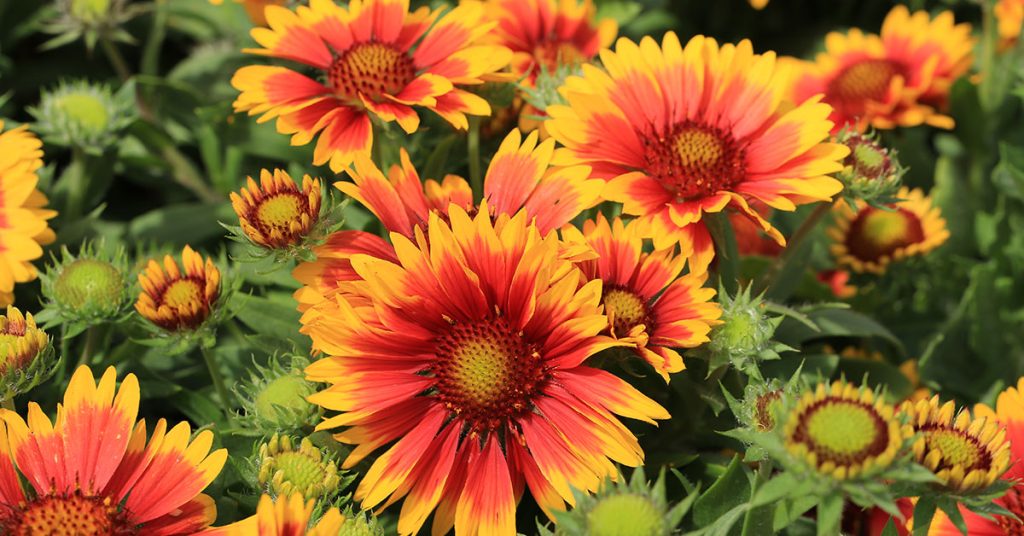
Blanket flowers trace their lineage to the prairies of North America, and ‘Lorenziana’ dazzles with deep red petals edged in gold. It’s clump-forming and non-invasive, thriving in lean soils where other plants struggle. A mid-summer shearing encourages a flush of autumn blooms, ensuring those fiery daisies light up your beds through frost’s first bite.
Bees and butterflies adore blanket flowers, but the real treat is watching tiny mining bees emerge from shallow nests in the bare soil between clumps. Their industrious buzzing as they provision brood chambers makes every glance at these blooms feel alive with activity!
Red Canna (Canna indica ‘Striata’)
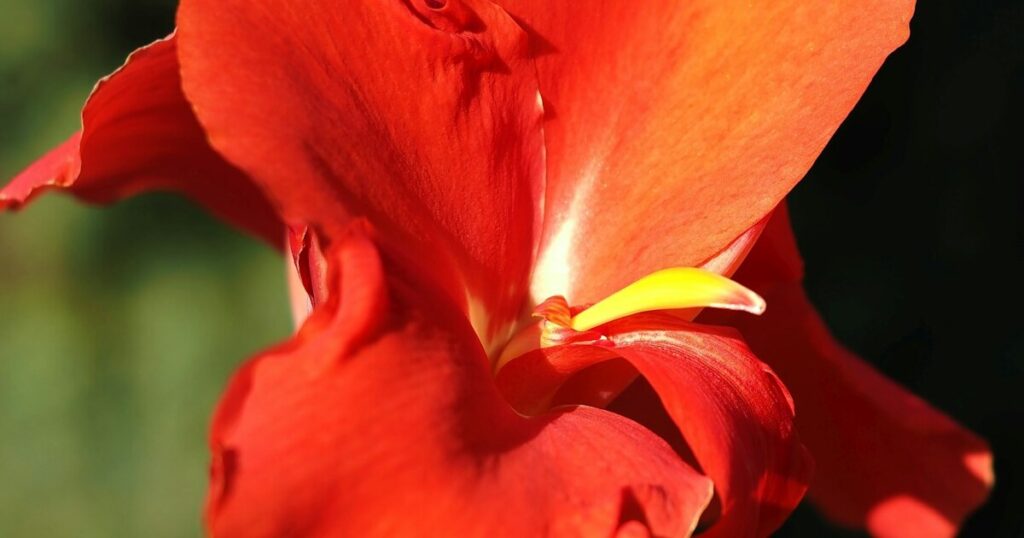
Canna indica hails from the wetlands of the Americas and isn’t invasive in most temperate gardens—its rhizomes stay nicely contained within raised beds or borders. ‘Striata’ sports striking red blooms streaked with deeper hues, and planting it in a sheltered spot gives you those torch-like flowers from late summer into fall.
Hummingbirds can’t resist Canna’s nectar-rich blooms, often darting between flowers and hovering as they feed. I’ve even seen ruby-throated hummingbirds nesting in dense shrubs nearby, capitalizing on the canna’s proximity to water and shelter!
Red Spider Lily (Lycoris radiata)
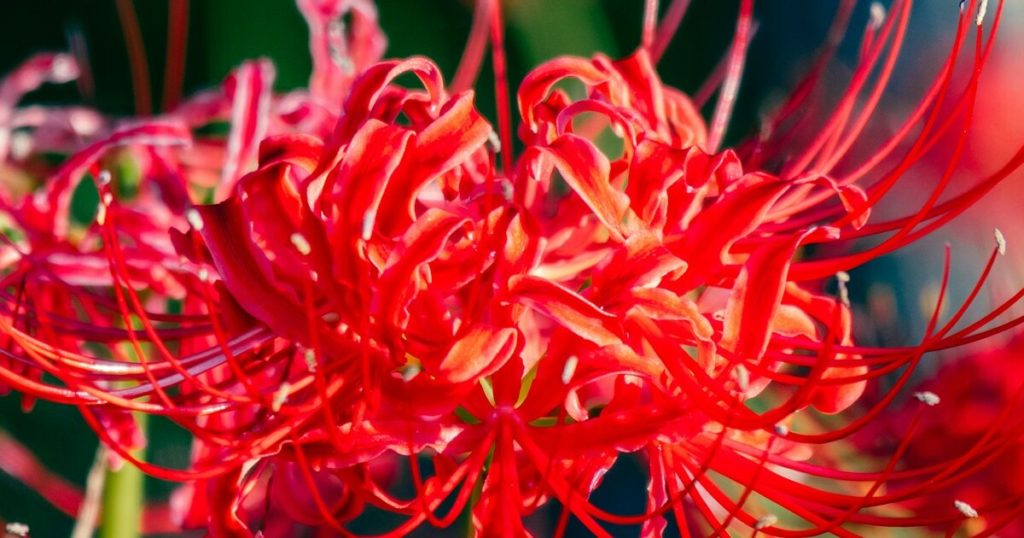
Also known as the hurricane lily, Lycoris radiata originates from East Asia and arrives unannounced in autumn, sending up leafless stems crowned with umbrella-like clusters of crimson blooms. It spreads by bulbs but is not considered invasive in well-managed beds—simply divide every few years if clumps become crowded.
These dramatic flowers offer no nectar, yet they play a surprising role: ground beetles and rove beetles often shelter in the leaf litter beneath the bulbs, emerging on warm fall afternoons to hunt slugs and other pests. It’s a subtle yet vital contribution to garden balance!
New England Aster (Symphyotrichum novae-angliae)
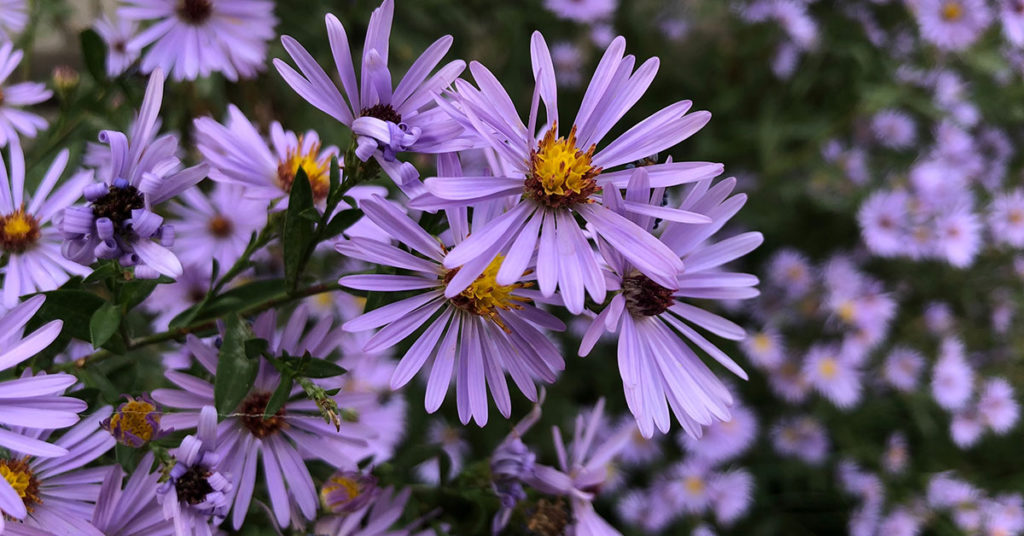
Native to eastern North America, New England asters form tall clumps of bright red-purple daisies that shine in late-season sunshine. They spread slowly by seed but aren’t invasive; in fact, dividing every three to four years keeps plants vigorous and full. Plant them in groups for a carpet of red that lights up borders from September onward.
Asters are a late-season buffet for pollinators: honeybees, bumblebees, and even small sweat bees flock to these blooms, often nesting in crevices beneath flat stones or in abandoned mud tunnels. Their constant hum among the flowers is pure autumnal music!
Red Dahlia (Dahlia pinnata and hybrids)
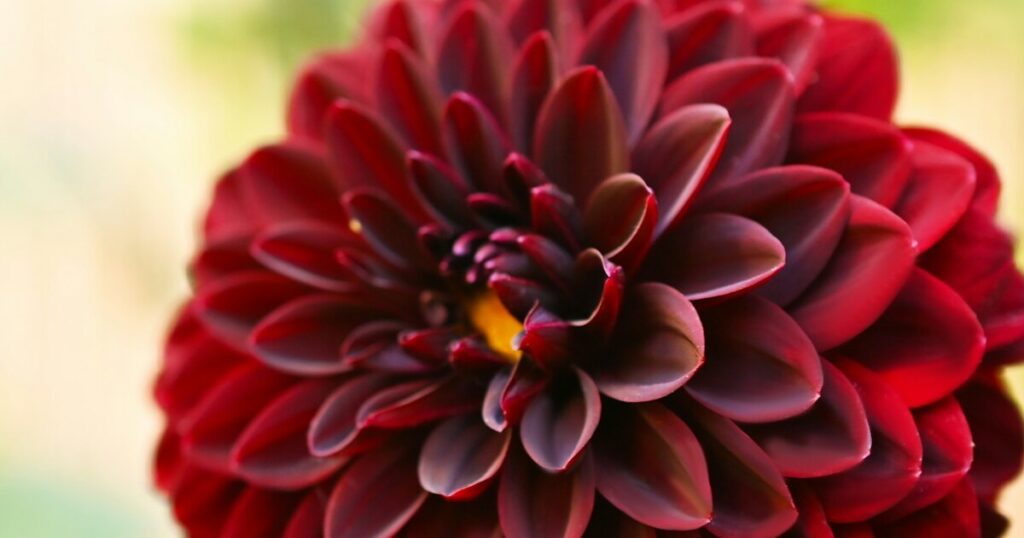
Originating in Mexico’s highlands, dahlias boast an incredible range of forms and shades—deep crimson to scarlet. They grow from tubers and don’t spread beyond their crowns, making them ideal for contained raised beds. If you dig and lift tubers before hard frost, you’ll have a stunning display of red blooms from midsummer right through fall’s first chills.
Dahlias’ open centers and nectar-rich florets draw butterflies, especially painted ladies and red admirals, which sometimes lay eggs on neighboring plants. Watching their caterpillars transform amid your blooms is like hosting a live butterfly documentary!
Scarlet Sage (Salvia coccinea)

Scarlet sage, native from the southeastern United States down through Central America, is a self-seeding annual in many climates—but it’s easy to pull volunteers if you want tidy beds. Its tubular red flowers are magnets for hummingbirds, which nest in nearby shrubs and flit back for quick sips of nectar throughout the day.
Beyond hummers, small solitary bees (like those in the genus Melissodes) often carve nest tunnels in dry, sandy soil beneath your sage, using nearby stem cavities to shelter their developing brood. The constant flurry of wings around these scarlet spires is a joy to behold!
Celosia ‘Cockscomb’ (Celosia cristata)

Celosia cristata hails from tropical Africa and offers velvety, crested blooms in rich red tones. It’s non-invasive, forming neat clumps that perform beautifully in autumn borders. Deadheading spent flowers redirects energy into new growth, ensuring those dense, brain-like heads remain prolific through fall.
Beneficial hoverflies and ladybird beetles are drawn to celosia’s dense flower clusters, laying eggs among the folds. When the larvae hatch, they feast on aphids and other tiny pests, providing natural pest control right where you need it most!
Echinacea ‘Tomato Soup’ (Echinacea paradoxa × purpurea)
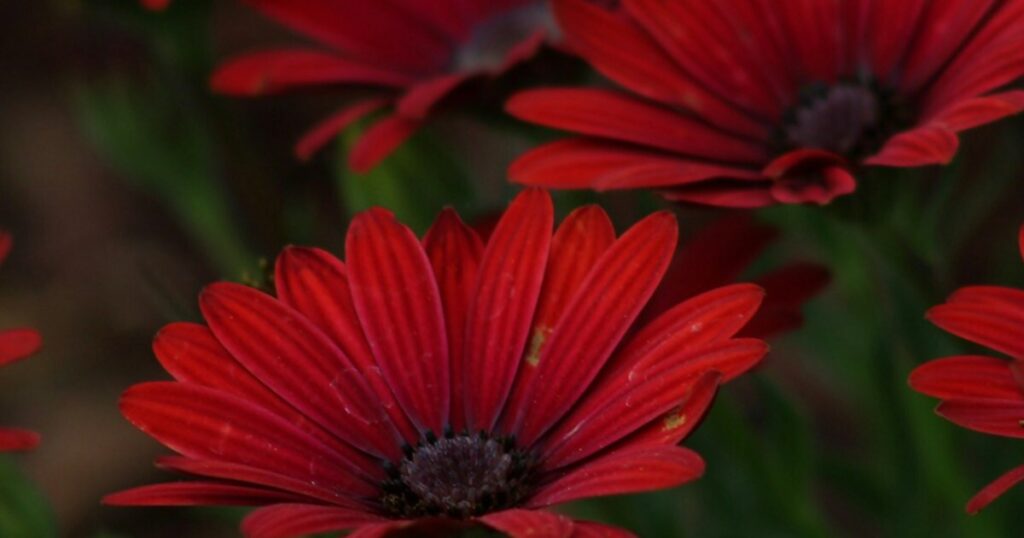
A modern red coneflower hybrid, ‘Tomato Soup’ combines the hardiness of North American natives with a vivid tomato-red hue. It’s clump-forming and drought-tolerant, spreading by seed only if you let its distinctive cones mature. This cultivar shines from late summer into fall, adding bold height and color to any border.
Bees, especially bumblebees, pack the sturdy flower heads with pollen for their fall nests, often located in grassy tussocks nearby. I delight in spotting these fuzzy pollinators covered head-to-toe in pollen as they work tirelessly to feed their young!
Crocosmia ‘Lucifer’ (Crocosmia × crocosmiiflora)

A fiery hybrid of African montbretia species, ‘Lucifer’ sends up arching spikes of scarlet-orange-red tubular flowers in autumn. It spreads by corms but can be contained easily in raised beds or bordered areas. A yearly division keeps the corms vigorous and blooming abundantly.
Hummingbirds and long-tongued butterflies love Crocosmia’s nectar, hovering in midair as they probe each flower. Underneath, small carpenter bees sometimes carve nests into old wooden stakes nearby, taking advantage of the constant food supply!
Lady’s Mantle (Alchemilla mollis ‘Robustica’) with Red Companion

While Alchemilla itself has chartreuse blooms, pairing it with red-flowering companions like Heuchera ‘Firefly’ creates a stunning contrast in fall beds. Heuchera ‘Firefly,’ native to North America, offers deep-red bell-shaped flowers on wiry stems that linger well into autumn. Both are non-invasive and thrive in part shade to full sun.
These delicate Heuchera blooms attract small native bees and hummingbird moths, which nest in leaf litter at the plant base. The sight of these tiny moths hovering amid the red bells on a crisp fall evening is simply magical!
Helenium ‘Ruby Tuesday’
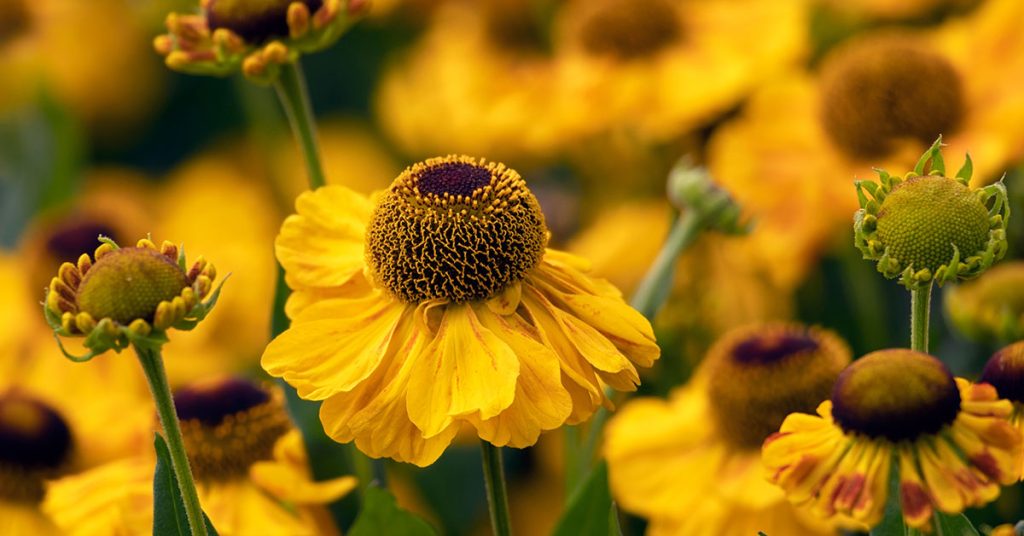
This cultivar of sneezeweed, originally from North America, produces daisy-like flowers in rich ruby-red tones. It forms clumps that spread slowly by short rhizomes—just divide every four years to maintain vigor. Helenium blooms steadfastly into fall, offering color when many perennials are already winding down.
Bees of all sizes forage on sneezeweed’s open disks, and small wasps often burrow in the bare patches around the plant base, using old insect holes in the soil for nests. That soft hum of wings among the red petals is pure autumnal delight!
Love-lies-bleeding (Amaranthus caudatus)

Native to South America, this striking annual sports drooping tassels of ruby-red blooms that sway like ribbons. It reseeds modestly if you let the tassels mature, but pulling a few seedheads indoors lets you control next year’s pop-ups. Grow it in full sun for best flowering through early fall.
These pendulous blooms attract hoverflies and butterflies, which sometimes lay eggs on neighboring nettle-family plants. I love watching the delicate dance of those pollinators brushing against the tassels as they forage—it’s like a slow, living garland!
Lobelia cardinalis (Cardinal Flower)
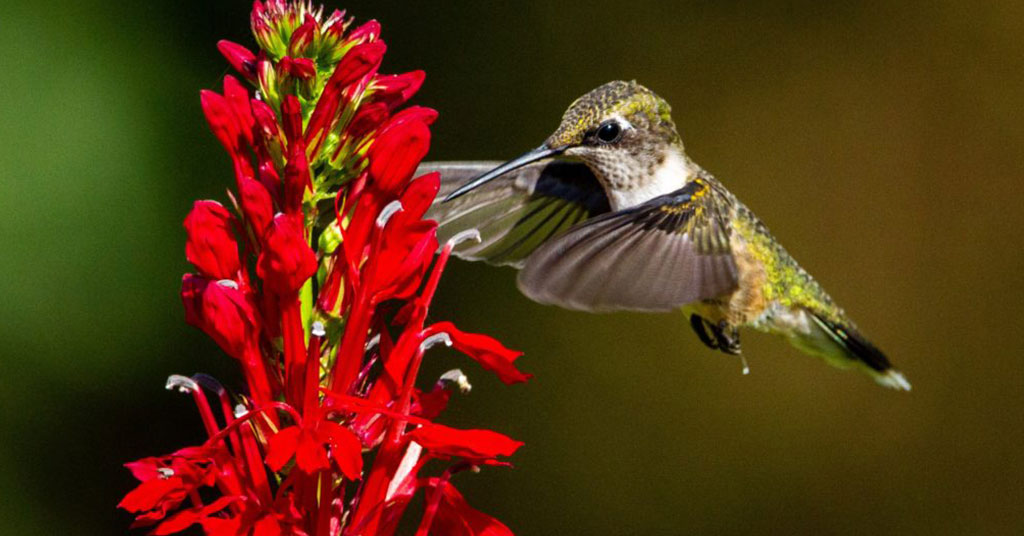
A North American native of stream banks and wetlands, Lobelia cardinalis offers spires of scarlet-red tubular flowers in late summer and autumn. It prefers moist soil but isn’t invasive—clumping steadily without overtaking the border. Plant it near a water feature or boggy spot for best performance.
Hummingbirds are utterly captivated by cardinal flower’s nectar, often returning to the same blooms multiple times. They nest close by in dense shrubs, taking advantage of the abundant food source—watching them zoom in is one of my favorite garden pleasures!
Cyclamen hederifolium ‘Red’
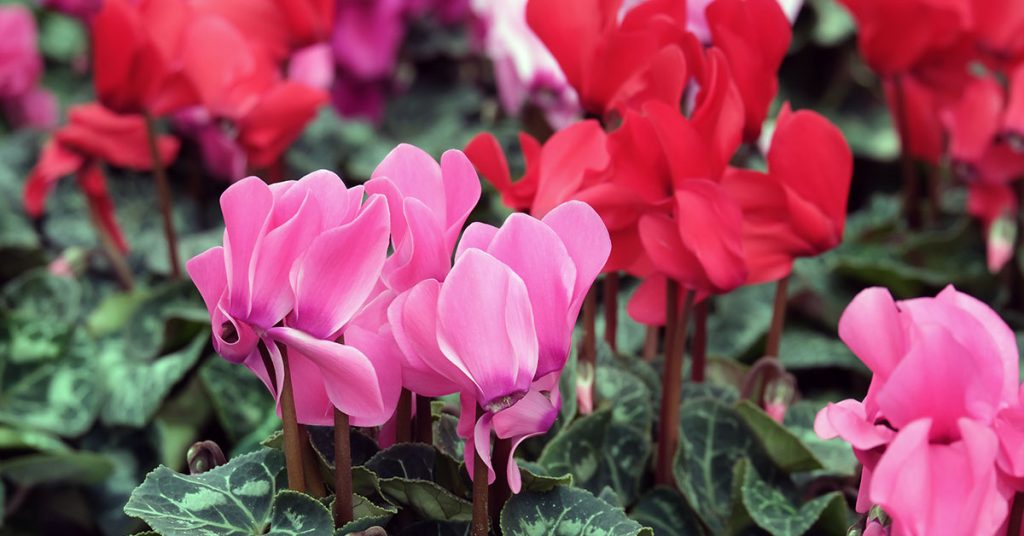
Originating in woodland areas of the Mediterranean, Cyclamen hederifolium sends up delicate red-and-white marbled blooms in autumn, even as most plants sleep. It’s a bulbous perennial that forms tidy clumps without spreading uncontrollably, perfect for underplanting beneath shrubs.
Though cyclamen flowers offer little nectar, they create shelter for small ground beetles and springtails beneath their leaves, contributing to soil health. Their arrival signals the transition into fall magic—nothing quite matches those unexpected pops of red on the woodland floor!
Sedum spurium ‘Red Carpet’
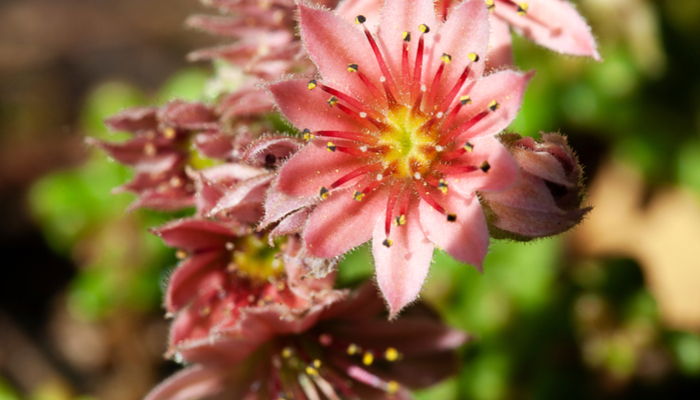
While many sedums wear pink or white blooms, ‘Red Carpet’ dazzles with deep-red clusters atop ground-hugging mats. It’s non-invasive and ideal for edging raised beds, where its succulent foliage and autumn flowers shine from late August through frost.
Late-season pollinators, including small solitary bees and hoverflies, sip nectar from those low-growing clusters, then retreat to crevices between stones or soil cracks to nest. It’s a subtle yet essential support for beneficial insect life as temperatures cool!