

If you’ve ever walked through a lush vegetable garden buzzing with bees and dotted with blossoms, you know just how magical the combination of flowers and food crops can be. Growing flowers in your vegetable garden isn’t just about looks—though, let’s be honest, the aesthetics are a big bonus. The right flowers bring in pollinators, deter pests, support beneficial insects, and even improve the health of your crops. It’s one of those joyful gardening hacks that truly works on multiple levels!
I know how frustrating it can be when pests ravage your tomatoes or your zucchini struggles to set fruit. Sometimes it feels like you’re doing everything right and still falling short. That’s where flowers can change the game. By growing them alongside your veggies, you’re not only creating a more beautiful space—you’re creating a more balanced and resilient ecosystem. Here are 14 fantastic summer flowers that thrive in the vegetable garden and pull double duty as protectors, pollinator-attractors, and visual delights.
Calendula

Calendula is one of those hard-working flowers I always make room for in my veggie beds. Its golden-orange petals are both eye-catching and functional—they attract pollinators and beneficial insects like hoverflies and parasitic wasps that prey on pests. Even better, calendula petals are edible and have anti-inflammatory properties, so they’re useful in the kitchen and the home apothecary.
Native to southern Europe and the Mediterranean, calendula (Calendula officinalis) isn’t invasive and is easy to grow from seed. It’ll bloom all summer with regular deadheading and tolerates poor soil like a champ. The flowers can also serve as a trap crop for aphids and whiteflies, drawing them away from tender veggie plants like lettuce and kale.
Borage

If you’re growing tomatoes or squash, borage is your best friend. This fuzzy-leaved plant produces clusters of star-shaped blue flowers that bees absolutely adore. I’ve seen entire mornings of bumblebee activity centered around just a few borage plants! They’re not just pollinator magnets, though—borage is also thought to improve the growth and flavor of nearby crops, especially strawberries and tomatoes.
Native to the Mediterranean region, borage (Borago officinalis) self-seeds generously but isn’t considered invasive. Its sprawling habit makes it a good ground cover between rows, and the young leaves and flowers are edible with a cucumber-like flavor. It’s one of those flowers that earns its keep with minimal effort.
Nasturtiums

Nasturtiums bring so much color and personality to the garden. Their trailing vines or compact mounds—depending on the variety—produce bright, edible blooms that range from fiery orange to soft yellow. I love how they sprawl through the garden, filling in gaps while deterring pests like aphids, squash bugs, and whiteflies.
Native to South America, nasturtiums (Tropaeolum majus) are non-invasive and easy to grow. They’re especially useful as a trap crop because they lure pests away from more sensitive vegetables like cucumbers and beans. Plus, they attract pollinators and predatory insects, making them a fantastic addition near anything that needs a little extra help.
Zinnias
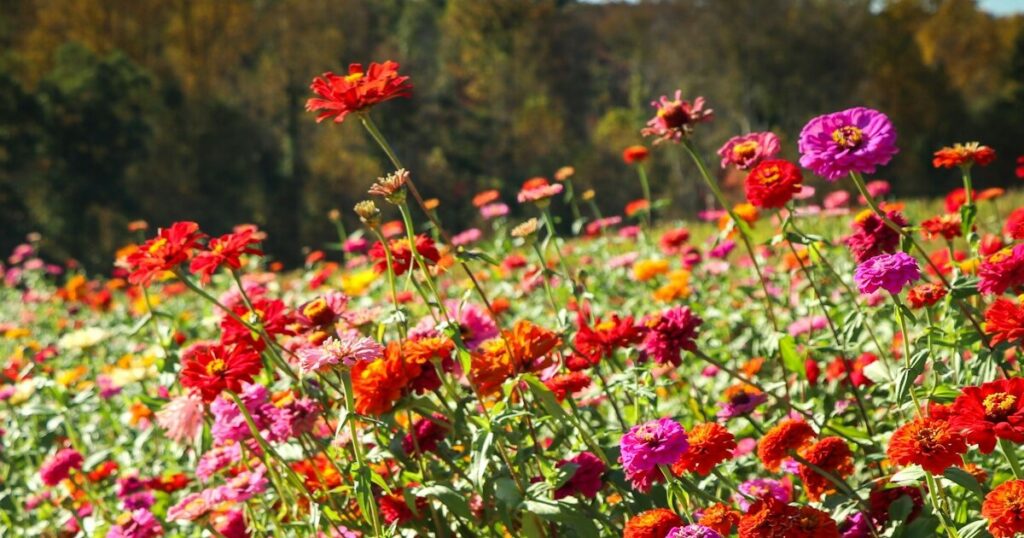
Zinnias are one of the best summer flowers for a vegetable garden, hands down. Their bright, long-lasting blooms attract a steady stream of butterflies, bees, and hummingbirds. I always plant a few rows along the sunny edge of my garden beds, where they seem to wave in pollinators like a floral welcome mat.
Native to Mexico and Central America, zinnias (Zinnia elegans) are not invasive and thrive in full sun with well-drained soil. Their strong stems and bold blooms make great cut flowers too, so you can enjoy them inside as well. Just be sure to deadhead regularly for continuous blooms through the hottest part of the season.
Cosmos
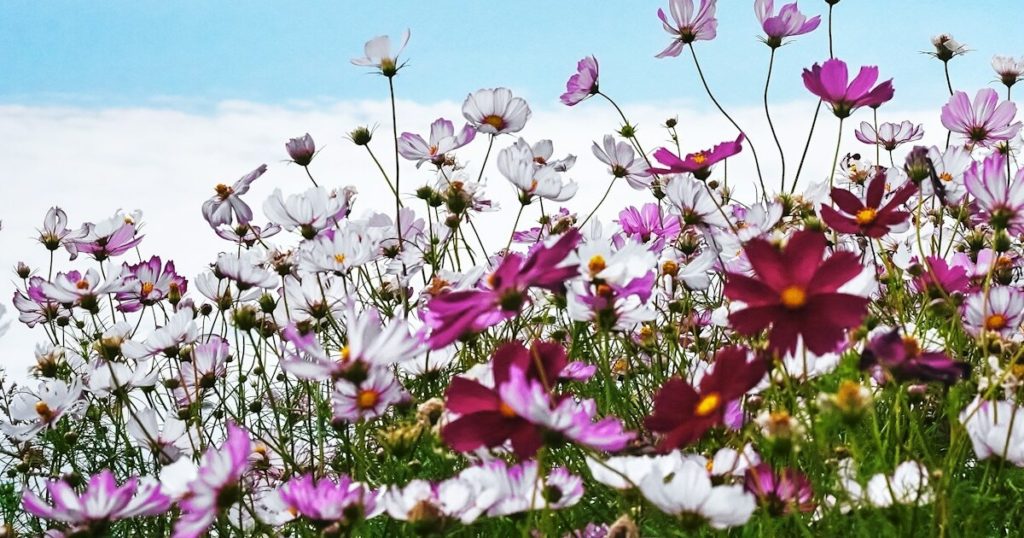
Cosmos are graceful, feathery plants that bring height and movement to the garden. Their daisy-like flowers sway in the breeze and attract pollinators throughout the summer. I’ve noticed that bees particularly favor cosmos during midday, and I’ve even seen small birds like goldfinches perch on their stems and snack on the seeds later in the season.
Native to Mexico and Central America, cosmos are non-invasive and incredibly easy to grow from seed. They thrive in poor soil and full sun, and their ferny foliage adds a nice texture contrast to leafy veggies. Let them go to seed at the end of the season, and you’ll likely get volunteers next year!
Sunflowers
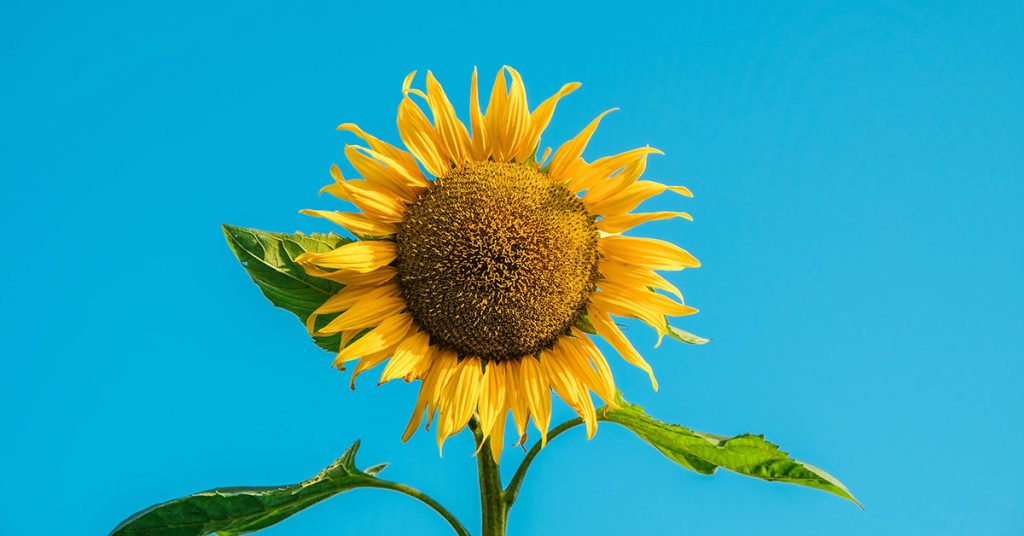
Few flowers bring the drama and cheer of sunflowers. They’re incredible for drawing in bees and birds, and their sheer height creates natural shade for cool-season crops or fragile transplants. I always tuck a few sunflower seeds at the back of my garden beds—they stand tall and attract beneficial insects like lacewings, as well as parasitic wasps.
Native to North America, sunflowers (Helianthus annuus) are not invasive but can reseed readily. They’re especially good for supporting native pollinators and songbirds, and I’ve even seen finches nesting in the foliage! Just be aware that sunflower roots release compounds that can inhibit the growth of certain plants like beans and potatoes, so give them a bit of breathing room.
Marigolds
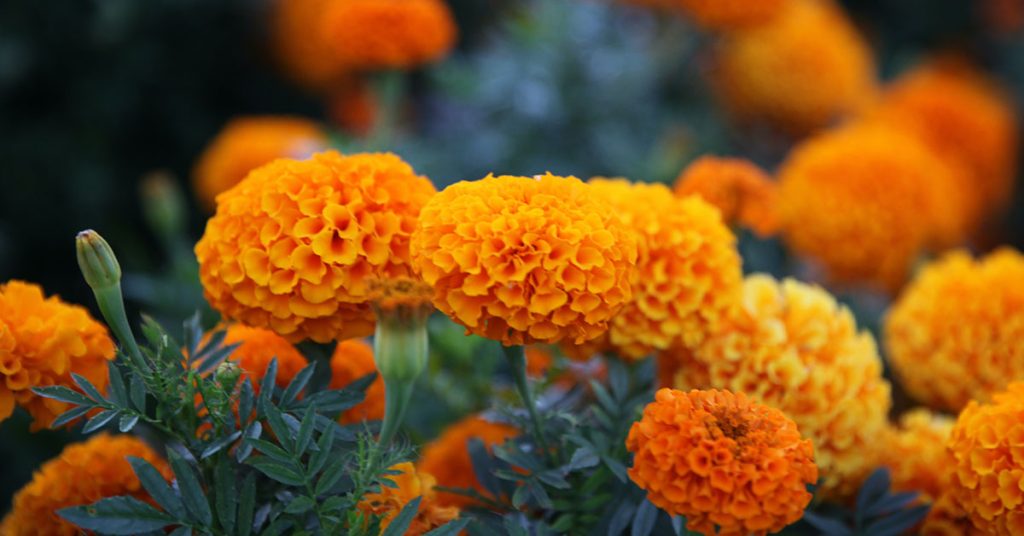
Marigolds have earned a spot in nearly every vegetable garden for a reason. Their bright orange and yellow flowers are said to repel nematodes in the soil and discourage pests like aphids, flea beetles, and whiteflies. While the science on nematode control is mixed, I’ve definitely seen fewer pest problems when I interplant marigolds around tomatoes and peppers.
Native to Mexico and Central America, most garden marigolds (Tagetes spp.) are not invasive and grow well in poor soil. They also bloom continuously all summer if deadheaded, and their scent can confuse some insects searching for their host plants. French marigolds are especially useful for companion planting because they stay compact and produce a lot of flowers.
Tithonia
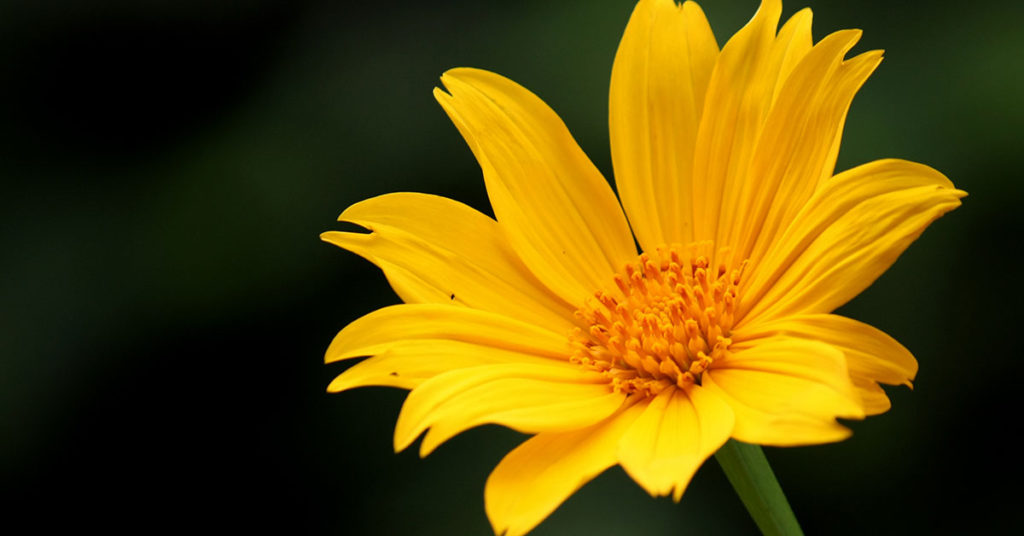
Also known as Mexican sunflower, tithonia is a pollinator powerhouse. It grows tall and produces vivid orange blooms that butterflies and hummingbirds can’t resist. I like to grow it at the edge of my veggie patch—it’s like a beacon that pulls pollinators in and keeps them working through the rest of the garden.
Native to Mexico and Central America, Tithonia rotundifolia isn’t invasive, but it’s a vigorous grower and needs a bit of space. It thrives in heat and poor soil, and once it starts blooming, it won’t stop until frost. I’ve also seen it draw in predatory insects like soldier beetles, which feed on soft-bodied pests.
Alyssum
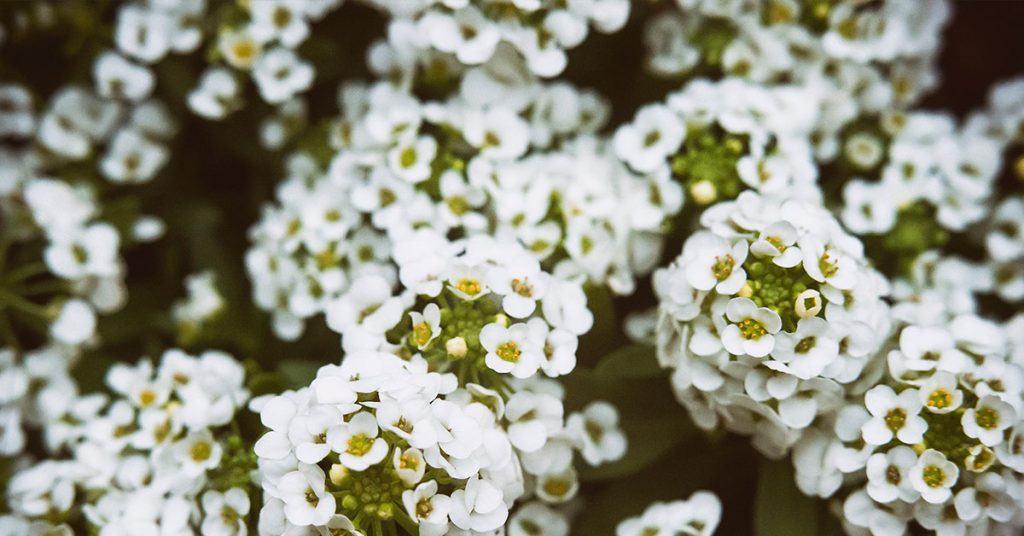
Sweet alyssum might be small, but it packs a punch when it comes to attracting beneficial insects. This low-growing plant forms soft, fragrant mats that bees and hoverflies adore. I’ve had great success tucking it between rows of lettuce or carrots, where it blooms continuously and doesn’t crowd out other plants.
Native to the Mediterranean, Lobularia maritima is not invasive and is often used as ground cover. It’s particularly good at attracting predatory insects like syrphid flies, whose larvae eat aphids by the dozens. I love how it softens the edges of a raised bed and brings in help for free!
Dill
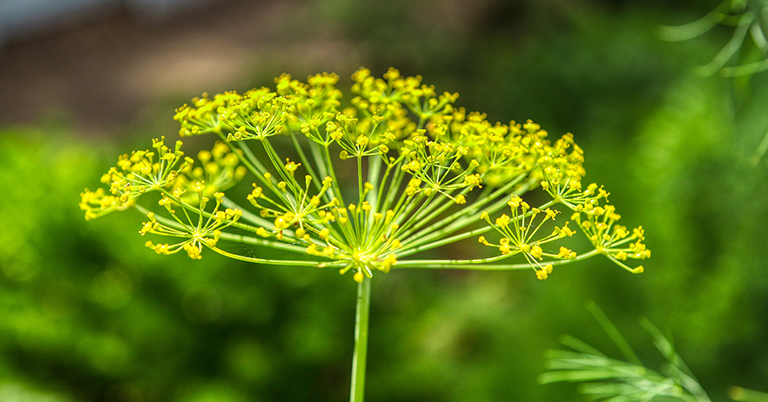
Dill isn’t just for pickles—it’s also an amazing flower to grow in your veggie garden. When it bolts and goes to flower, it sends up tall umbels of tiny yellow blooms that attract parasitic wasps, ladybugs, and lacewings. These little allies are invaluable in the fight against aphids and cabbage worms.
Native to western Asia and the Mediterranean, dill (Anethum graveolens) isn’t invasive but reseeds readily if you let it. I always let a few plants flower and go to seed while harvesting the rest. It’s particularly helpful near brassicas like kale and cabbage, and the seeds can be harvested for future planting or culinary use.
Coreopsis
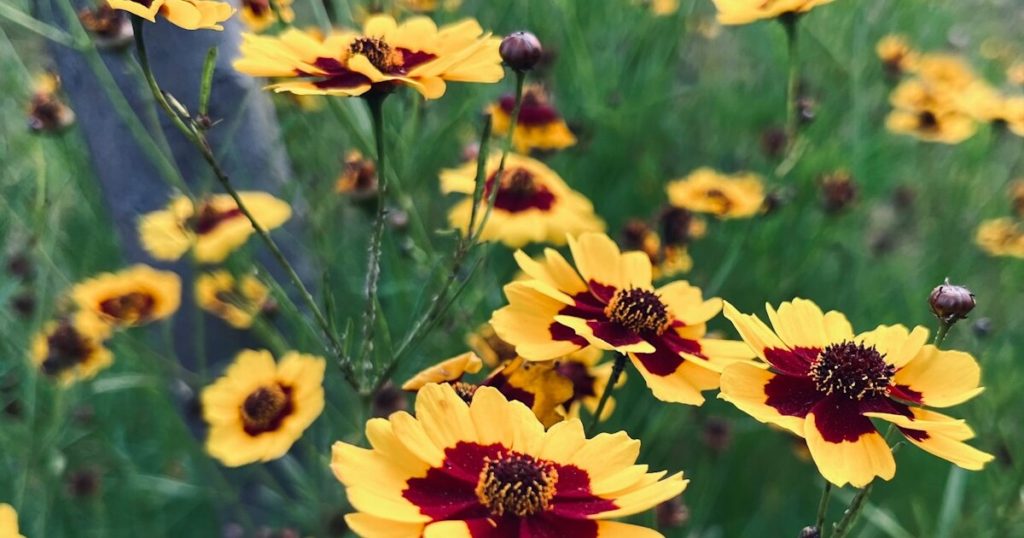
Coreopsis adds a burst of sunshine to any garden bed, with its daisy-like yellow flowers and tidy growth habit. Bees are particularly drawn to it, and I often see tiny native bees zipping from bloom to bloom. It makes a great companion near peppers and eggplants, which can sometimes struggle to attract pollinators in midsummer heat.
Native primarily to North and South America, coreopsis is not invasive, and some species are even native wildflowers. It’s drought-tolerant, thrives in poor soil, and blooms reliably throughout the hot months. I like how its compact form helps define garden edges without taking up too much space.
Bee Balm

Bee balm is a pollinator magnet like no other. Its shaggy red, pink, or purple blooms draw in hummingbirds, butterflies, and bees in huge numbers. I grow mine near squash and melons, where extra pollinator traffic makes a big difference in fruit set. You can practically hear the garden buzz when bee balm is in bloom!
Native to North America, Monarda species are not invasive, but they can spread by rhizomes. I recommend containing them with edging or giving them space to roam in a back corner of the bed. They’re also mildly aromatic, which can deter some pests, and they make an excellent tea if you harvest a few leaves.
Echinacea

Also known as coneflower, echinacea brings lasting blooms, bold structure, and excellent pollinator support to the garden. I love the way its spiky centers stand tall among sprawling veggie vines—it’s like a sentinel watching over your crops. Bees and butterflies can’t get enough of it, and later in the season, birds feast on the seeds.
Native to North America, echinacea is not invasive and actually supports local ecosystems quite well. It’s a perennial, so once established, it’ll return year after year, blooming reliably through the hottest part of summer. It pairs beautifully with sprawling crops like cucumbers or squash and helps anchor the aesthetic of the garden too.
Black-eyed Susan

Black-eyed Susans bring warm, golden color and loads of insect activity to the summer garden. I often plant them near the ends of raised beds where they can grow tall without shading shorter crops. Their cheerful blooms are beloved by butterflies, and the seed heads are a great food source for goldfinches later in the season.
Native to eastern and central North America, Rudbeckia hirta is not invasive but can reseed freely. It’s a short-lived perennial or biennial, depending on the variety, and thrives in dry, sunny conditions. I love how tough it is—it blooms even during dry spells and keeps the pollinator party going strong.