
Getting your onions off to the right start—and keeping them thriving all season—can feel like a balancing act. Onions (Allium cepa), native to the mountainous regions of Central Asia, have been cultivated for millennia and, while they’re not generally invasive, they share a lineage with wild Allium species that can pop up in unexpected corners of the garden! I remember the first time I let my soil sit without proper preparation: tiny wild onion seedlings sprang up everywhere, reminding me that a little planning goes a long way.
It’s such a bummer when you finally see those gorgeous green shoots only to discover they’re stunted, malformed, or plagued by pests. Whether you’re using onion sets, transplants, or starting from seed, dodging these common missteps will help you harvest firm, flavorful bulbs. I’m excited to share 13 mistakes I’ve learned to avoid—consider this your gardener-to-gardener guide to onions done right!
Insufficient sun exposure

Onions are sun-lovers. I once tucked a patch into a partially shaded corner—big mistake! While they can tolerate a bit of afternoon shade, onions grown with less than six hours of sun struggle to form full-sized bulbs and lack that satisfying crunch we crave.
A sunny spot not only boosts bulb size but can attract beneficial pollinators if you let onions flower. Hoverflies, bees, and parasitic wasps love those umbels, helping with pest control. Give your onions at least six to eight hours of direct light and watch them thrive!
Planting at the wrong depth

Planting sets or seedlings too deep can prevent bulbs from swelling, while planting them too shallow often leaves them vulnerable to drying out or frost heaving. I buried mine an inch too deep once—and they barely broke the surface!
Aim for soil level just at the base of the lowest leaves—about ½ inch deep for sets. This encourages healthy root establishment, proper bulb development, and mimics the well-draining soils of their Central Asian homeland.
Ignoring pest and disease management

One season, I spotted chewed leaves and slimy patches—and yes, slugs and thrips had moved in like they owned the place! Onions are surprisingly susceptible to onion maggots, iris borers, and fungal diseases if left unchecked.
Since onion flowers attract beneficial insects (hoverflies, parasitic wasps, and solitary bees), letting them bloom can be a great integrated pest management tactic! Still, remove affected foliage promptly, encourage natural predators, and consider lightweight row covers when plants are young.
Overcrowding plants

I used to cram sets two inches apart to save space—and ended up with tiny, spindly onions! Overcrowded beds hinder airflow, increase fungal risks, and make weeding a chore. Plus, cramped bulbs never reach their full size.
Space your sets or transplants at least 4–6 inches apart in rows about 12 inches apart. This gives bulbs room to swell, keeps foliage dry, and even leaves space for ground-nesting bees if you allow blooms.
Improper curing and storage
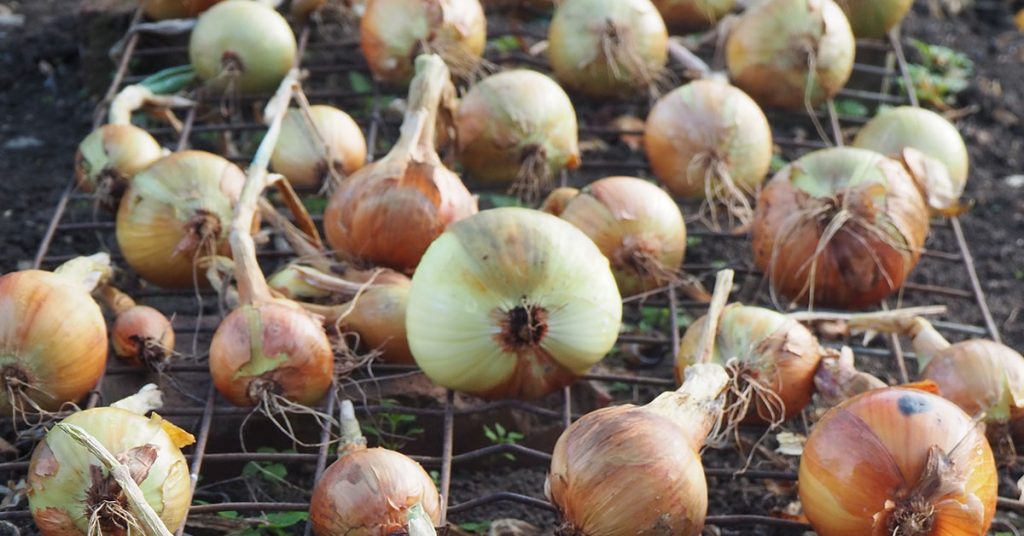
After months of careful tending, nothing’s more heartbreaking than bulbs rotting in storage. Onions need to cure for two to three weeks in a dry, well-ventilated spot so their skins harden and necks seal.
Once cured, store them in mesh bags or slatted crates in a cool, dry place. I once piled mine in a cardboard box, only to return to a soggy mess! Treat curing and storage with as much care as the growing season.
Performing no crop rotation
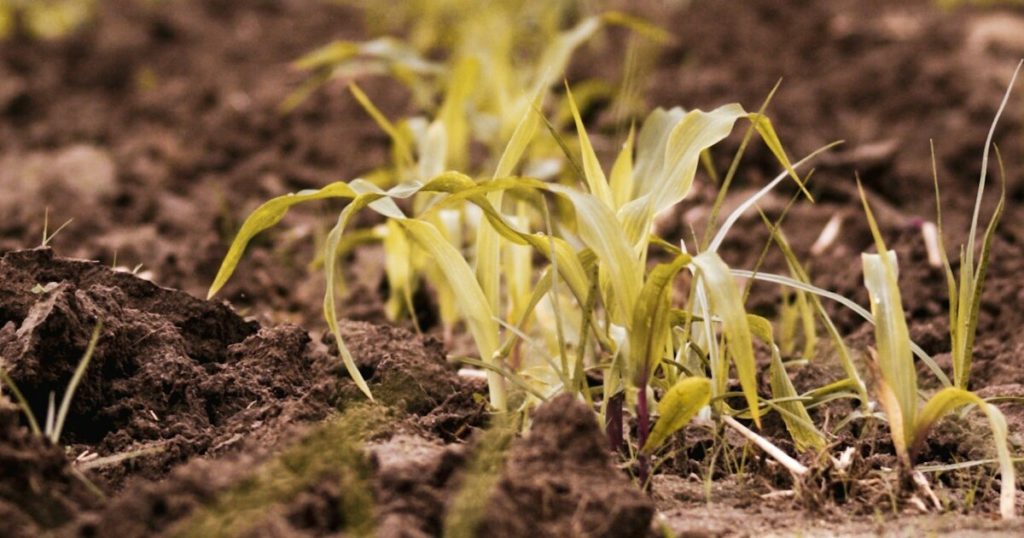
Planting onions in the same bed year after year invites soil-borne diseases like pink root and purple blotch. I learned this the hard way when my third-year onions all went yellow!
Rotate your alliums with non-related families—legumes, brassicas, or solanums—for at least three years. This breaks disease cycles, preserves soil health, and gives you a chance to experiment with new companion plants.
Over-fertilizing with nitrogen
Too much nitrogen turns onions into a leafy jungle—great for nesting beneficials, but terrible for bulb formation! Excess foliage often leads to hollow stems and bulbs that never finish bulking up.
Stick to a balanced fertilizer at planting, then switch to a low-nitrogen mix as bulbs begin to swell. Remember, onions originated in soils low in organic matter; overfeeding them nitrogen is like giving a marathon runner too many energy drinks—counterproductive!
Not thinning seedlings or sets
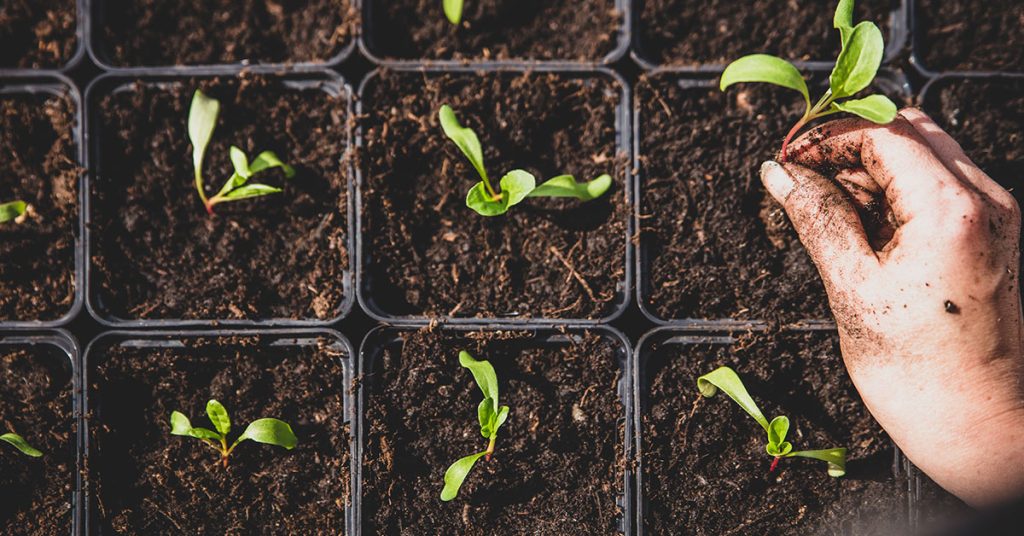
Thinning feels wasteful—I used to resent pulling out young shoots! But leaving multiple seedlings in one spot means fierce competition for nutrients and light, resulting in underdeveloped bulbs.
Aim to leave just one plant per 4–6 inches. Those extra seedlings you pull make fantastic stir-fry greens or chive-like flavoring—so don’t feel guilty about thinning!
Neglecting soil preparation

Onions thrive in loose, fertile soil. Early on, I sowed mine in heavy clay without amending it—roots struggled, and bulbs became misshapen! Proper prep—tilling in compost or well-rotted manure and ensuring a pH around 6.0–7.0—sets the stage for success.
Adding coarse sand or grit improves drainage, mimicking their rocky homeland. Well-prepared soil also discourages puddling around the neck, reducing rot risks and letting ground-nesting bees work the blooms.
Planting too late

Onions need cool weather to establish roots before bulb development—planting after the prime window leads to small, flavorless bulbs. I waited too long once and harvested onions that tasted more like scallions!
Plan to plant as soon as the soil’s workable—typically late winter to early spring, depending on your zone. Starting seeds indoors 8–10 weeks before the last frost, then hardening off seedlings, ensures you hit the sweet spot.
Failing to harden off seedlings

Transplants straight from a greenhouse are pampered and vulnerable. Planting them outdoors without a transition exposes them to wind scorch and temperature shocks. I lost half my seedlings overnight to an unexpected cold snap!
Hardening off means gradually introducing plants to outdoor conditions over a week—start in partial shade, then increase sun and wind exposure daily. This builds resilience for garden life.
Planting the wrong variety
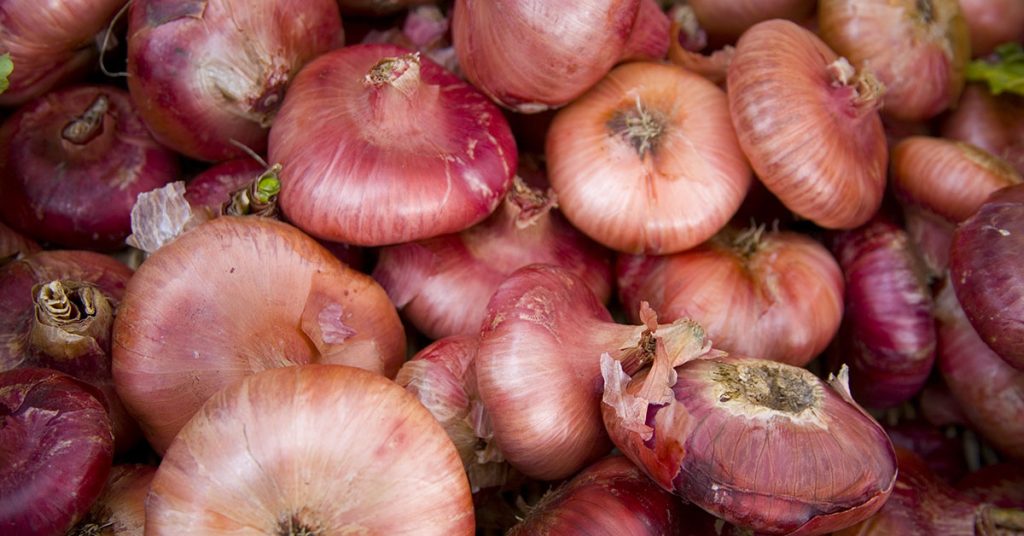
Onions come in short-day, long-day, and day-neutral types, each suited to different latitudes. I once planted long-day onions in a southern garden—resulting in scrawny bulbs!
Choose varieties tailored to your region: long-day types for northern latitudes, short-day for southern zones, and day-neutrals in between. Matching variety to daylength aligns with Mother Nature’s schedule.
Inadequate watering practices
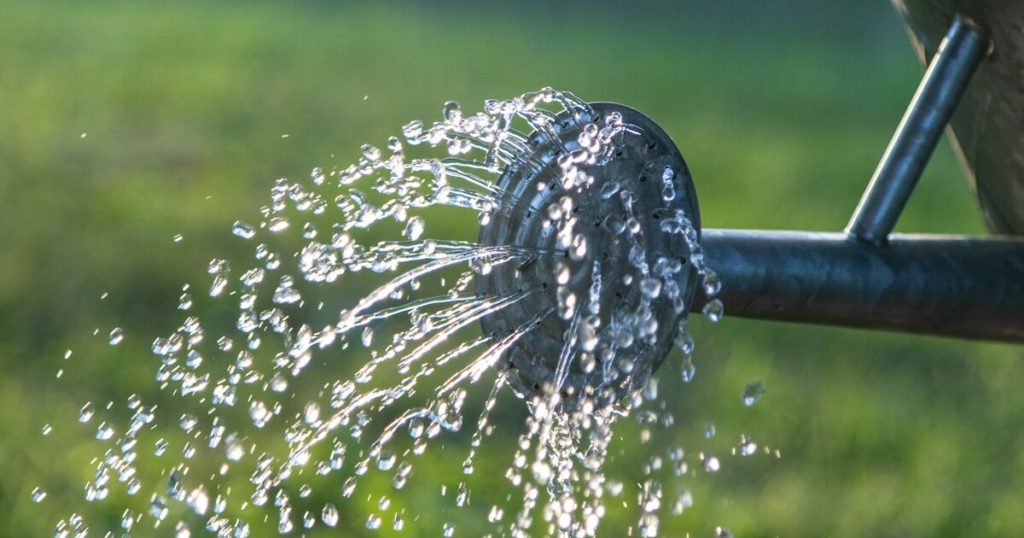
Underwatering leads to small, dry bulbs; overwatering invites neck rot. My first season, a hot stretch went unwatered and leaves wilted—then I drowned them with a deluge!
Aim for about 1 inch of water per week, adjusting for rainfall. Water at the base to keep foliage dry and disease-free. A drip irrigation or soaker hose delivers consistent moisture without the mess.