
June often feels like nature’s launch pad—garden beds bursting with early-season perennials, tender seedlings finally settling in, and the promise of long, flower-filled days ahead. There’s nothing quite like stepping into a garden in June and knowing that your next couple of months will be awash in color and humming with pollinator activity. However, it can be overwhelming deciding which flowers to plant now to ensure continuous blossoms through July, August, and into early fall. I’ve been there—planting too early with spring cool-season annuals that peter out by midsummer, or relying solely on perennials that don’t really hit their stride until late July. If you’re reading this feeling anxious about keeping blank spots from appearing by mid-June, you’re in the right place!
Below, I’ll share 13 exceptional flowers—each with robust late-spring plantability and a remarkable ability to keep blooming until the first frost. We’ll delve into their native origins, check for any invasive tendencies, explore how they attract beneficial insects (or discourage pests), and give you practical tips on planting, soil, and care in June. Whether you have a full sun border, a shady patio, or a handful of containers, you’ll find options that suit your conditions and keep your garden alive with color. From dwarf sunflowers that seem to chase the sun to low-growing portulacas that thrive in scorching heat, these selections will help you avoid the “summer slump” in your flower beds—leaving you to enjoy lazy evenings among blooming beauty rather than weeping over fading foliage!
Cosmos
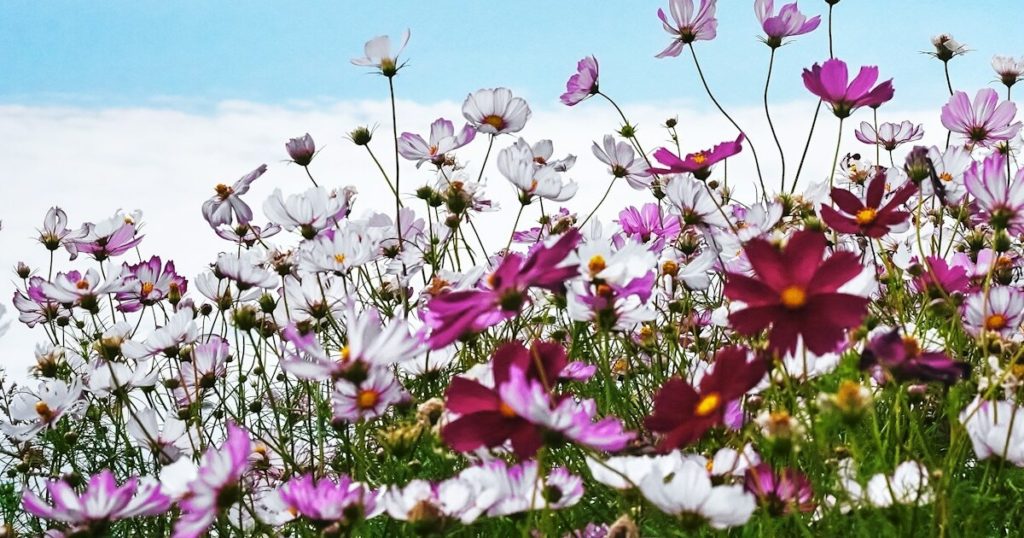
Cosmos (Cosmos bipinnatus), native to Mexico and Central America, are quintessential summer-bloomers that thrive when sown in June’s warming soils. Plant cosmos seeds directly in well-draining beds, spacing them about 12 inches apart; they germinate in just 7–10 days. These daisy-like annuals produce airy foliage topped with dainty white, pink, or deep rose blooms that sway gracefully in every breeze! I remember sowing a patch last June and being delighted by how quickly they filled in bare spots, even after earlier-season plants faded under the high heat.
One stellar feature of cosmos is their magnetism to pollinators: honeybees, bumblebees, and native solitary bees flit among the open petals, collecting copious nectar and pollen. Butterflies—particularly monarchs and swallowtails—are also frequent visitors, often resting on the petals before continuing their migration journeys. The slender stems provide perches for minute pirate bugs and hoverflies that hunt aphids in nearby beds, promoting natural pest control. Cosmos aren’t invasive in most regions, though they self-seed generously; if you want to limit volunteers, simply deadhead spent blooms before seed pods form. They’ll keep blooming from mid-June until frost, providing a relentless splash of color that brightens any garden space.