

Asparagus is one of my favorite perennial vegetables—those tender, jade-green spears emerging in spring feel like nature’s own delicacy! Native to Europe, northern Africa, and western Asia, Asparagus officinalis has been cultivated for centuries and, when cared for responsibly, won’t overrun your beds. I know how thrilling it is to anticipate that first harvest, yet it’s such a bummer when crowns struggle or pests raid your spears before you’ve had a bite. With these twelve tips, you’ll create a thriving asparagus patch that rewards you season after season.
From crown selection to soil prep, pest monitoring to inviting beneficial insects to nest among the ferny fronds, every step makes a difference. I once rushed a spring harvest too soon and nearly depleted my young bed—lesson learned! Let’s dig into these strategies so your asparagus will be plump, flavorful, and a highlight of your garden table.
Test and Adjust Your Soil pH

Asparagus thrives in a slightly alkaline to neutral soil pH of 6.5–7.5. I remember planting crowns without testing and ended up with yellowing fern tips—classic iron deficiency! A simple test kit can reveal whether you need to add lime to raise pH or sulfur to lower it.
Balanced pH ensures nutrient uptake and supports soil life. When your soil is right, earthworms and springtails nestle into the crumbly earth, aerating and enriching it for strong, deep asparagus roots that deliver more robust spears!
Prepare Deep, Well‑Drained Beds

Asparagus crowns need room to send roots down at least 12–18 inches. I dig trenches about 8 inches deep, filling the bottom with compost and grit to promote drainage—standing water is asparagus’s nemesis!
Good drainage also invites beneficial ground beetles to seek shelter under mulch, where they patrol for slug eggs. Their nightly hunting keeps slugs from nibbling tender spears before you can harvest them!
Plant Crowns at the Correct Depth and Spacing
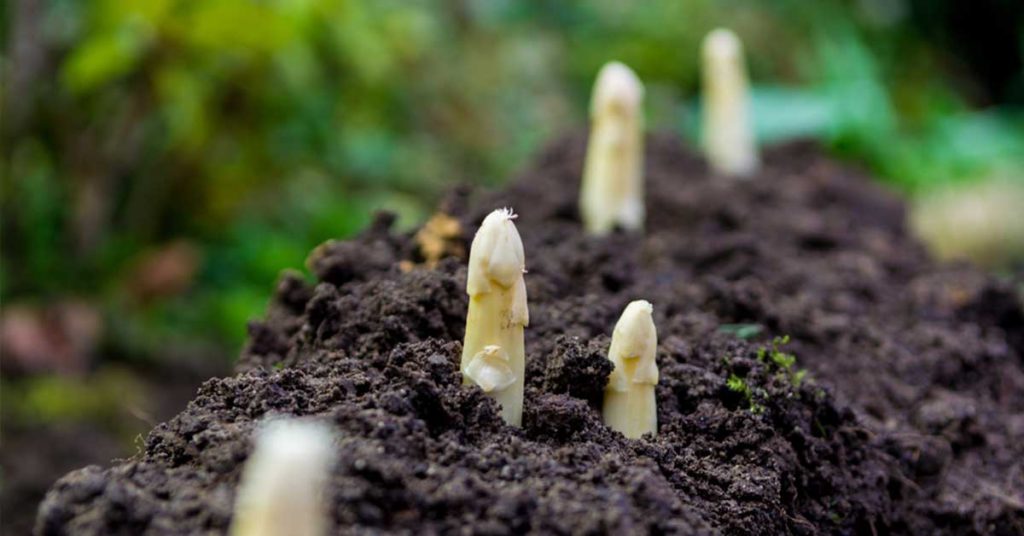
Set crowns 6–8 inches below the soil surface, with roots fanned out and crowns facing upward. Space crowns 12–18 inches apart in rows 3–4 feet wide—too shallow or cramped planting leads to weak, misshapen spears.
Proper spacing gives each plant room to develop its root network and leaf canopy. The airy fern growth that follows creates ideal nesting sites for lacewings and parasitic wasps, which help keep aphids in check on your emerging spears.
Choose a Proven Variety

There are vigorous varieties like ‘Mary Washington’ and earlier-season types like ‘Jersey Knight.’ One of my favorite plants is ‘Purple Passion’—those jewel-toned spears are a garden conversation piece! Select a variety suited to your climate’s chill hours and harvest window.
Because asparagus is slow to establish, picking a reliable cultivar means less risk of patch failure. And when you allow some ferns to flower in midsummer, bees often nest in hollowed stems—nature’s own pollination and pest‑control partnership!
Be Patient with Your First Harvest

Resist the urge to harvest in year one or two. I once took a few spears in spring and regretted it when fern growth was sparse later on. Ideally, wait until year three for a full harvest season to let crowns build energy reserves.
That patience rewards you with consistently plump spears. Meanwhile, those expanding ferns become habitat for predatory ground beetles and tiny spiders nesting at the base, keeping soil pests under control in subsequent seasons.
Mulch to Retain Moisture and Suppress Weeds
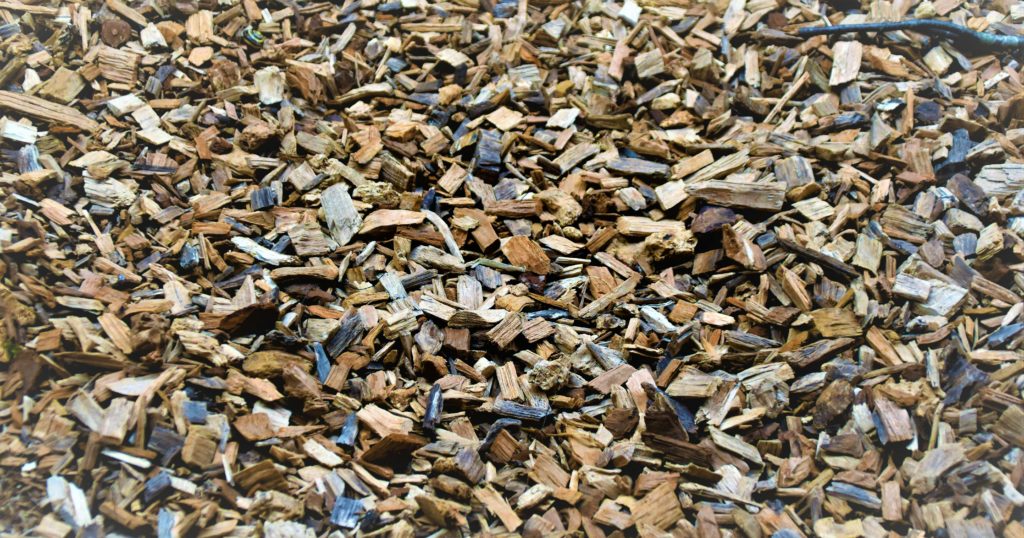
An inch‑ or two‑thick layer of straw or shredded leaves around your asparagus rows locks in moisture, moderates soil temperature, and keeps weeds at bay. Hand‑weeding in a patch of emerging spears can be nerve‑wracking, so mulch really is a game‑changer!
As the mulch breaks down, it also becomes a nesting ground for earthworms and springtails. Their tunnel‑building loosens the soil and recycles organic matter, creating a living mulch that sustains your asparagus long term.
Water Deeply, Especially During Establishment

Asparagus needs about an inch of water per week, delivered deeply to encourage roots to grow lower. I water with a soaker hose at the base, ensuring moisture reaches the crown without wetting fern foliage and risking fungal issues.
Deep watering also brings subterranean insects like ground beetles closer to the surface after rain, increasing pest‑control activity. Dry spells are the biggest stressors for young beds, so consistency is key to delicious, straight spears.
Apply Balanced Organic Fertilizer Annually

Each spring, before spears emerge, side‑dress with compost or a balanced organic fertilizer (e.g., 10-10-10). Asparagus are heavy feeders; without that boost, you’ll see thinner spears and less vigorous fern growth.
Healthy ferns grow dense foliage that shelters beneficial insects—hoverflies and ladybugs love nesting in the lush canopy. They’ll swoop down on aphids and other pests, keeping your garden in natural harmony.
Monitor for Pests and Encourage Beneficial Insects

Asparagus beetles and slugs are common munchers on young spears. I inspect daily at harvest time, flicking off beetles into soapy water and placing slug traps among mulch. Early intervention keeps damage minimal!
To bolster defenses, interplant with pollinator‑attracting flowers like cosmos or marigolds nearby. Hoverflies and parasitic wasps nest in these blooms and patrol the asparagus for pest larvae—turning your planting into a self‑defending ecosystem.
Divide and Rejuvenate Older Beds

After ten to fifteen years, crowns can become overcrowded and less productive. I rejuvenate by lifting sections of the bed, dividing the crowns into smaller clumps, and replanting the best sections with fresh compost.
This division not only restores vigor but also provides new nesting zones for earthworms and predatory mites in the freshly turned soil. Your asparagus patch essentially gets a reset toward another decade of delicious harvests!
Protect Spear Tips from Wildlife

Birds and rabbits sometimes nip tender spears before you can harvest them. I use temporary, low hoops with row cover fabric over emerging spears—just enough to keep critters out while letting light and moisture through!
These covers also create a humid microclimate that encourages faster, more uniform spear growth. Meanwhile, the edges of the covers become cozy nesting spots for beneficial predatory mites seeking shelter from weather extremes.