

I’m so excited you’re exploring vining plants to grace your indoor spaces! Vines bring a lush, dynamic feel—trailing tendrils softening shelves, spilling from hanging baskets, or climbing up a moss pole. These adaptable climbers hail from diverse corners of the world—tropical rainforests, arid scrublands, and steamy mountaintops—and many have naturalized beyond their native ranges, though most remain well-behaved in a container. Beyond their aesthetic charm, vining houseplants can provide habitat for tiny beneficial creatures—think predatory mites nesting in the leaf axils to help control spider mites, or small springtails aerating the soil.
I know how frustrating it can be to choose a plant that ends up languishing in low light or wilting when you forget a watering here and there. That’s why I’ve gathered ten vines known for their forgiving nature, low fuss factor, and stunning growth—even for busy gardeners or beginners! We’ll delve into their origins, invasiveness notes, and little natural behaviors—like how string-of-hearts pouches tiny tadpole-like tubers along its stems—that make each one uniquely delightful. Let’s uncover these green drapers that are just begging for a spot on your windowsill!
Monstera adansonii (Swiss Cheese Vine)

Monstera adansonii, native to the tropical forests of Central and South America, features perforated leaves that seem almost sculpted by nature. It thrives in bright, indirect light and high humidity, making a moss pole or trellis its happy home. The trailing vines can grow several feet indoors, with new leaves emerging larger and more hole-punched as the plant matures!
While Monstera adansonii isn’t invasive in most indoor settings, it can escape outdoors in frost-free zones if discarded. Indoors, the dense foliage creates microclimates where predatory mites and tiny springtails nest between nodes—helping keep sap-sucking pests in check. Watching those new leaves unfurl through the lattice of aerial roots is one of my favorite horticultural moments!
Ceropegia woodii (String of Hearts)

String of hearts hails from the semi-arid woodlands of southern Africa, where it grows on rocky slopes. Its delicate, heart-shaped leaves dangle from slender, cascading stems adorned with small water-storing tubers. This succulent vine is drought-tolerant and enjoys bright, indirect light—perfect for a sunny shelf or hanging planter where its hearts can flutter gently!
Ceropegia woodii doesn’t naturalize aggressively, but fallen tubers can sprout if you neglect to clean up old stems. Those little bulbs also serve as emergency reserves for the plant—nature’s ingenuity at its best! Tiny beneficial springtails often take up residence in the moist pockets of potting mix beneath the vines, contributing to healthy soil ecology without you even realizing it.
Epipremnum aureum (Golden Pothos)
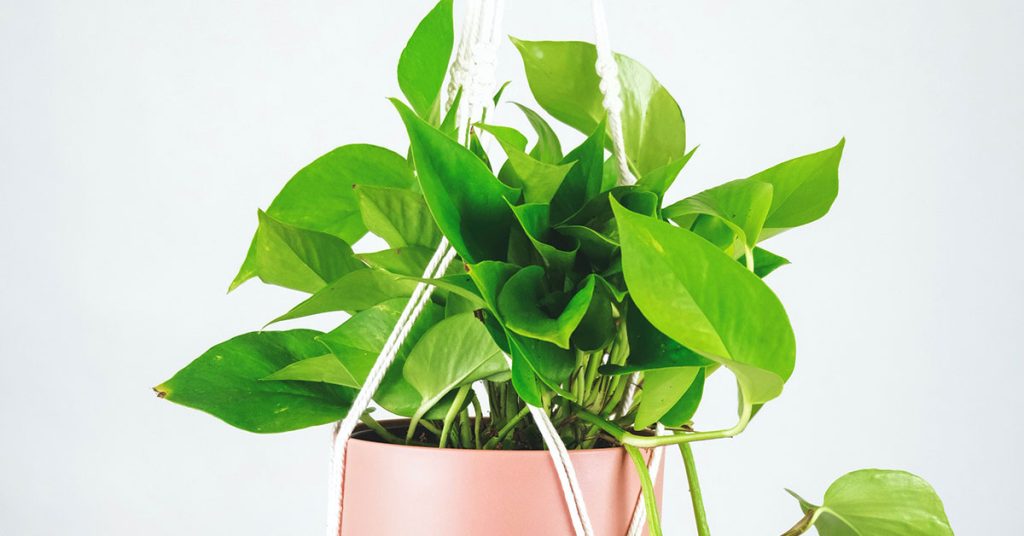
Golden pothos, originally from the rainforests of Southeast Asia and the Solomon Islands, is famed for its heart-shaped, variegated leaves and blazing reputation for toughness. It tolerates low light, erratic watering, and a range of temperatures, making it a top pick for novices. When given a support, it will climb vigorously; otherwise, it spills elegantly in draping loops.
Though it can naturalize in tropical climates if gardened outdoors, indoor specimens stay neatly contained. The vine’s thick foliage offers refuge for predatory mites that jump onto pest insects like spider mites, providing a built-in biological control! It’s such a relief to see pothos bounce back after a week of neglect—proof of its resilience.
Hoya carnosa (Wax Plant)

Hoya carnosa is native to the rainforests of India, China, and Australasia, where it climbs tree trunks in filtered light. Its thick, waxy leaves and clusters of star-shaped flowers make it a charming, low-maintenance houseplant. Hoyas prefer bright light and moderate watering, allowing the soil to dry slightly between waterings to prevent root rot.
In its native habitat, tiny bees and wasps nest in crevices near the vine, pollinating its fragrant blooms. Indoors, you might spot small beneficial insects—like minute parasitic wasps—nestling in the flower umbels. Since hoya spreads slowly and tuberously, it won’t escape your planter, giving you abundant milky-white clusters without invasive worries!
Scindapsus pictus (Silver Pothos)
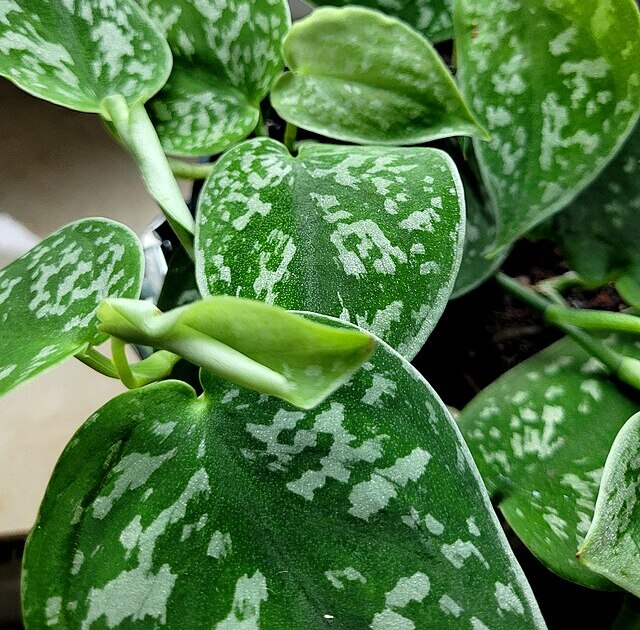
Scindapsus pictus, from the tropical forests of Southeast Asia, dazzles with silvery splash patterns on velvet-green leaves. This vine thrives in bright, indirect light and appreciates humidity, making it perfect for kitchens and bathrooms. Its trailing stems root at nodes and can be trained up a pole or allowed to cascade from a shelf.
Because it’s closely related to Golden Pothos, it shares a non-invasive habit indoors, though it can naturalize outdoors in warm climates. The dense leaf cover beneath older foliage shelters tiny predatory mites and springtails, fostering a balanced micro-ecosystem right in your home. Seeing those silver-dotted leaves drift down a macramé hanger always brings me joy!
Philodendron hederaceum (Heartleaf Philodendron)
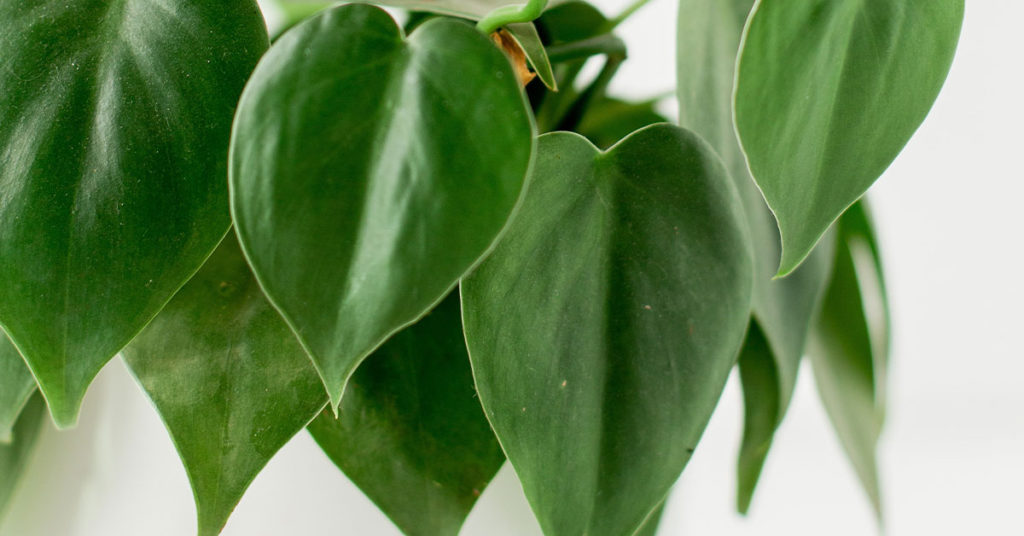
Heartleaf philodendron originates from the rainforests of Central and South America, where its flexible vines climb trees seeking light. Its glossy, heart-shaped leaves add instant greenery, and it tolerates a spectrum of indoor light conditions. Regular pruning keeps it lush, and any long stems can easily be propagated in water or soil.
Philodendrons are generally non-invasive indoors, though they can naturalize in tropical gardens. Indoors, you may spot tiny predatory mites nesting in the soil surface or within leaf axils, helping control any occasional aphid outbreaks. Walking past a well-grown heartleaf vine, I always feel like I’m strolling through a miniature jungle!
Senecio rowleyanus (String of Pearls)

String of pearls is native to the arid regions of southwest Africa, evolving bead-like leaves to store water. This succulent vine is happiest in bright light and well-draining soil, with water shortages rather than excesses. Its trailing strands, dotted with spherical foliage, make a striking statement in hanging baskets or trailing along a bookshelf.
While pearls won’t naturalize outside typical homes, dropped beads can sprout if left on the soil surface. The thick, fleshy leaves create tiny crevices where beneficial springtails nest and help decompose organic matter, enriching the substrate. I never tire of watching those little green pearls catch the light, looking like dewdrops on a fairy vine!
Tradescantia zebrina (Wandering Jew)

Tradescantia zebrina hails from the rainforests of Mexico and Central America, prized for its purple-and-silver-striped leaves. It grows rapidly in bright, indirect light and tolerates lower light—though the stripes dull without sufficient sun. Frequent pinching encourages fuller growth and prevents legginess.
Though it can escape into the wild in warm regions, indoor plants pose no invasive threat. The dense groundcover it forms in a pot offers habitat for predatory soil mites that patrol for thrips. Seeing those vibrant leaves trail over a sunny windowsill always enlivens my morning routine!
Ficus pumila (Creeping Fig)
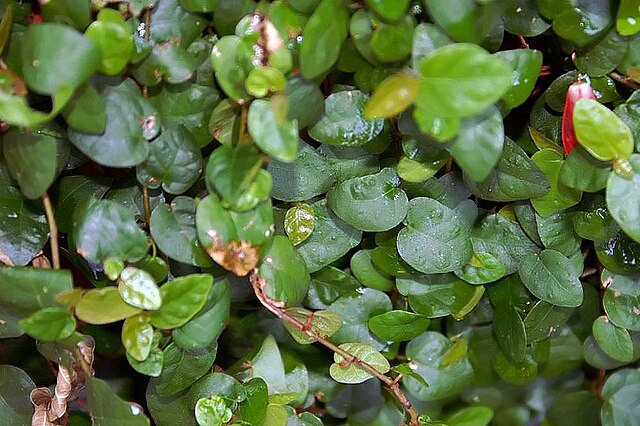
Creeping fig comes from East Asia’s humid forests, clinging to tree trunks and rocks with tiny aerial rootlets. As a container plant, it enjoys bright, indirect light and evenly moist soil. Its small, heart-shaped leaves provide a delicate texture that contrasts beautifully with larger-leafed companions.
Ficus pumila can be invasive outdoors in some regions, so keep it trimmed and contained indoors. The fine rootlets under each leaf node offer nesting spots for predatory mites and tiny springtails that help maintain soil health. Training it up a frame creates a living green tapestry—one of my favorite indoor focal points!
Senecio radicans (String of Bananas)
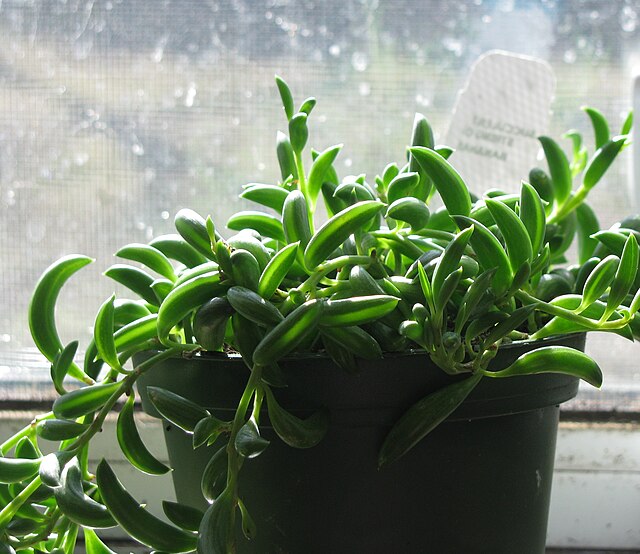
String of bananas is native to East Africa, featuring trailing stems lined with banana-shaped leaves that store water. It thrives in bright light and well-draining soil, needing infrequent watering to mimic its native semi-arid climate. Its playful foliage spills beautifully from pots or baskets.
String of bananas doesn’t naturalize under typical indoor conditions, but stray cuttings can root if overlooked. The leaf bases create snug micro-niches for beneficial springtails and predatory mites, contributing to a self-regulating potted environment. Watching those curving vines loop gracefully makes every day feel a bit more whimsical!