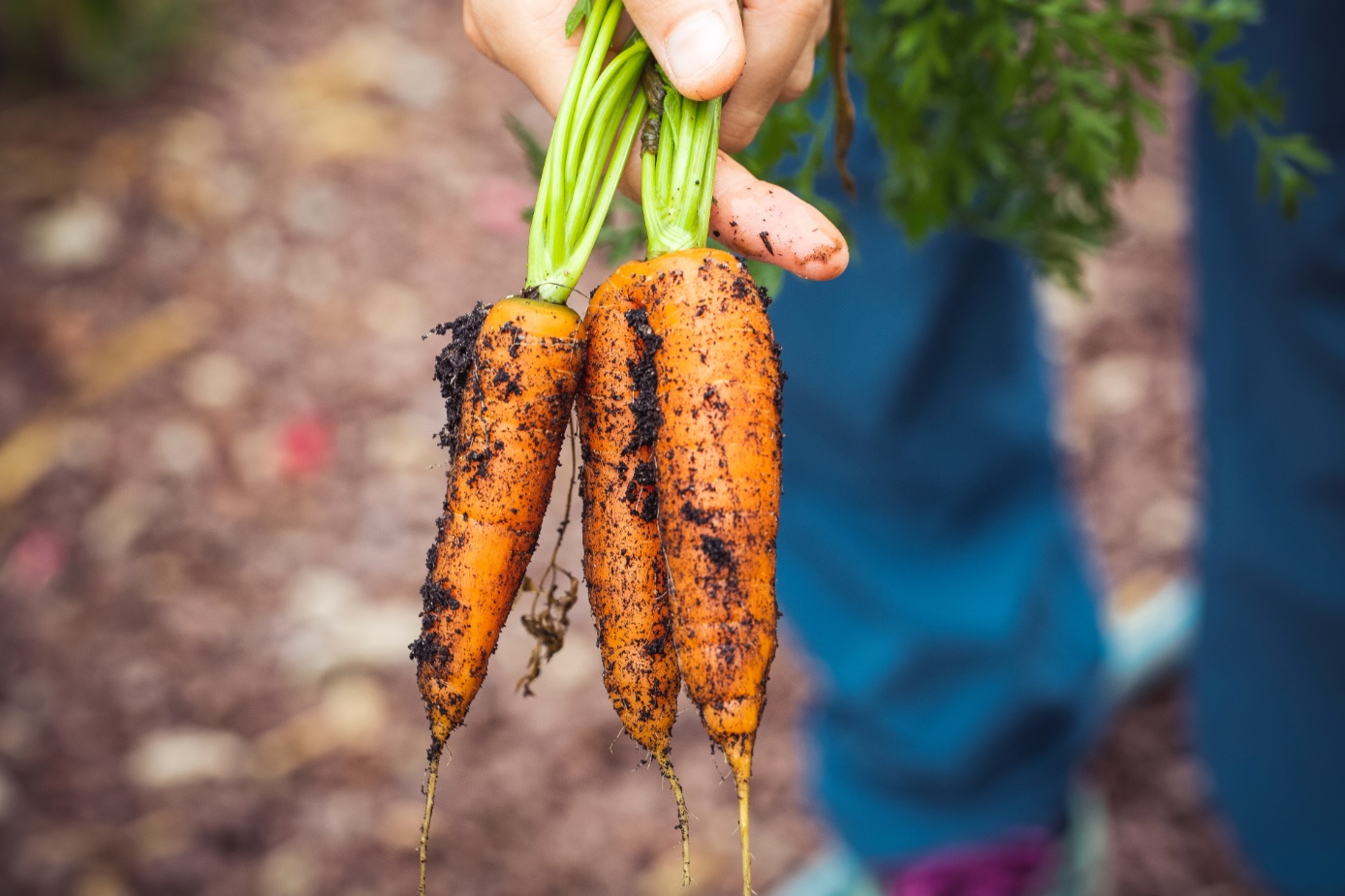

Clay soil has a frustrating way of turning what should be a satisfying vegetable crop into a twisted, stubby disappointment. Carrots need room to run deep, and dense, compacted ground simply won’t let them. The tops might look lush and green above the surface while the roots below are forking, deforming, or barely moving.
The good news is that clay soil isn’t a dead end. With the right preparation and a few deliberate adjustments, gardeners regularly pull handsome, crisp, sweet carrots from heavy ground. What follows are ten evidence-backed rules to make that happen consistently.
Rule 1: Understand Why Clay Soil Is the Enemy of Straight Carrots
Carrots are fairly finicky about their soil. It should be light, loose, and well-draining, without clods or rocks that could cause misshapen carrots. That description is basically the opposite of what heavy clay delivers. Across your carrot bed, the soil a foot or less below the surface is often much denser than the surface soil – that’s exactly where the carrot root hits a wall.
If you live anywhere with hard clay soil, you may have given up growing carrots in your garden. The tops may have grown beautifully, but the carrots themselves were split, forked, or squashed like a pancake. Understanding this basic physical conflict is the first step. Once you accept that the soil itself is the obstacle, every other decision follows logically from there.
Rule 2: Amend Generously and Consistently with Organic Matter
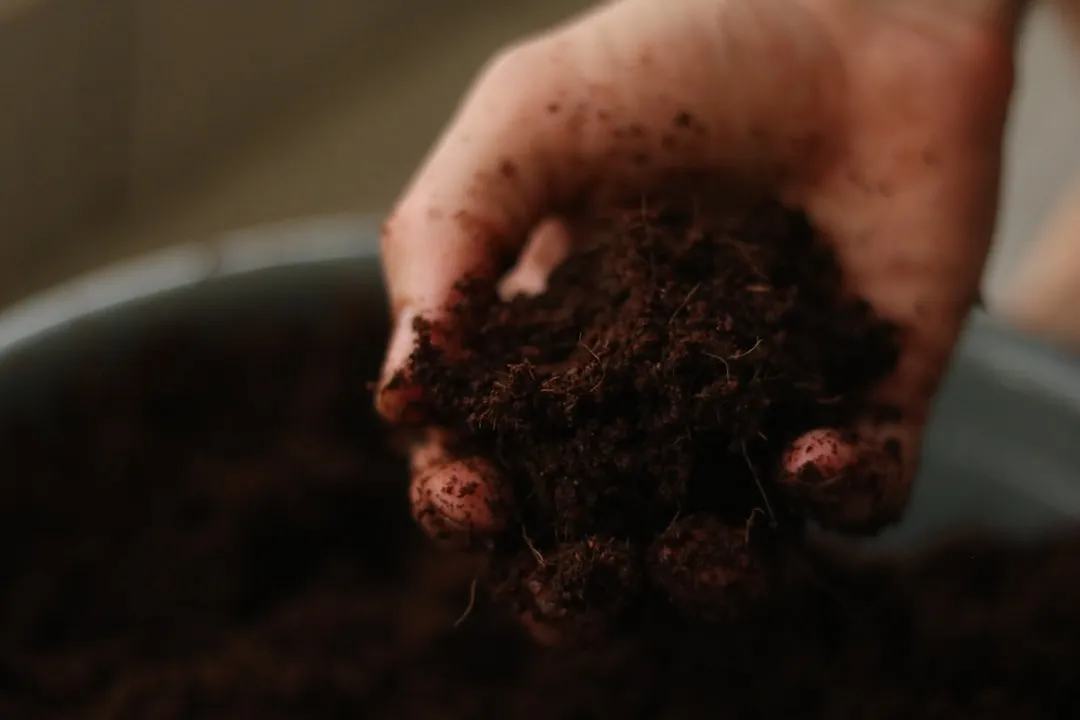
The key to growing carrots in soils that aren’t ideal sandy loam is to work an enormous amount of compost into the garden bed before planting. More specifically, at least roughly a third of the garden soil volume should be finished compost. That sounds like a lot, and it is. This isn’t a situation where a light top-dressing will do the job.
Adding organic matter such as compost, peat moss, manure, sawdust, or ground bark makes clay soils easier to work with. The UC IPM program at the University of California also notes that for gardens, a more coarse-grained amendment can improve drainage and aeration. Patience matters here too. Clay retains amendments well, so consistent annual additions of two to three inches of compost produce cumulative, durable improvement. The first season delivers measurable drainage improvement, but structural change that holds through wet winters takes three or more years of consistent organic matter additions.
Rule 3: Be Careful About Adding Sand
Many gardeners instinctively reach for sand when clay is the problem. It’s a reasonable instinct, but Oregon State University Extension offers a critical caution. According to OSU Extension, no amount of sand added to clay soil will change its texture. The large sand particles provide a surface for clay to cling to, which can actually create even more difficult conditions.
If sand is used at all, the type matters enormously. Coarse sand is preferable because sand that’s too fine, like play sand, might compact the soil further. Any sand used should be mixed thoroughly with organic matter and clay soil, creating a balanced mixture that promotes better water movement. The safer, more reliable approach for most gardeners remains prioritizing compost and organic matter over sand additions.
Rule 4: Check and Correct Your Soil pH Before Planting
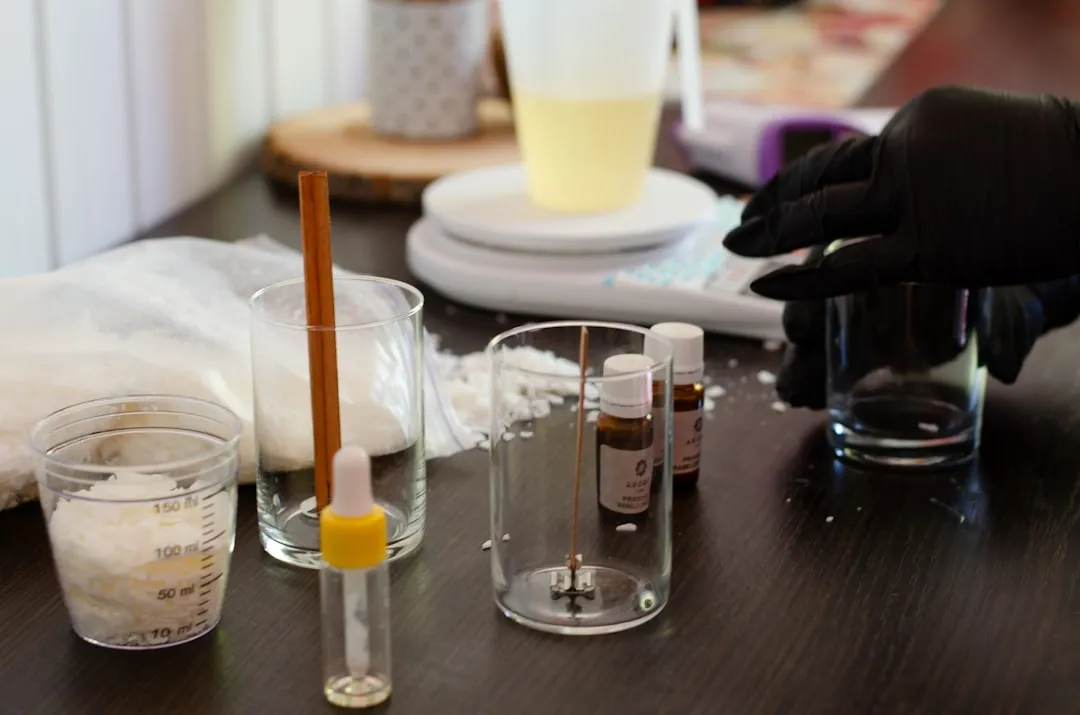
The soil should be kept at a pH level of 6.0 to 6.5 for carrots. That narrow window is where nutrient uptake works best. Soil that drifts too far in either direction will limit root development regardless of how well you’ve amended the structure. Carrots do not do well in very acidic soils or alkaline soils, and soil that is too alkaline can also lead to carrot diseases.
Lime or gypsum can be added to soils low in calcium. Gypsum can also help structurally in certain situations. Sodium keeps clay particles dispersed and compacted. Gypsum works by ion displacement: calcium has a stronger binding affinity for clay’s negative sites than sodium does, so it displaces sodium and encourages particles to cluster into larger groups, opening the soil structure. A basic soil test from a county extension office costing roughly fifteen to thirty dollars is the only reliable way to know which adjustments are actually needed before spending money on amendments.
Rule 5: Choose Short Varieties Built for Clay Conditions
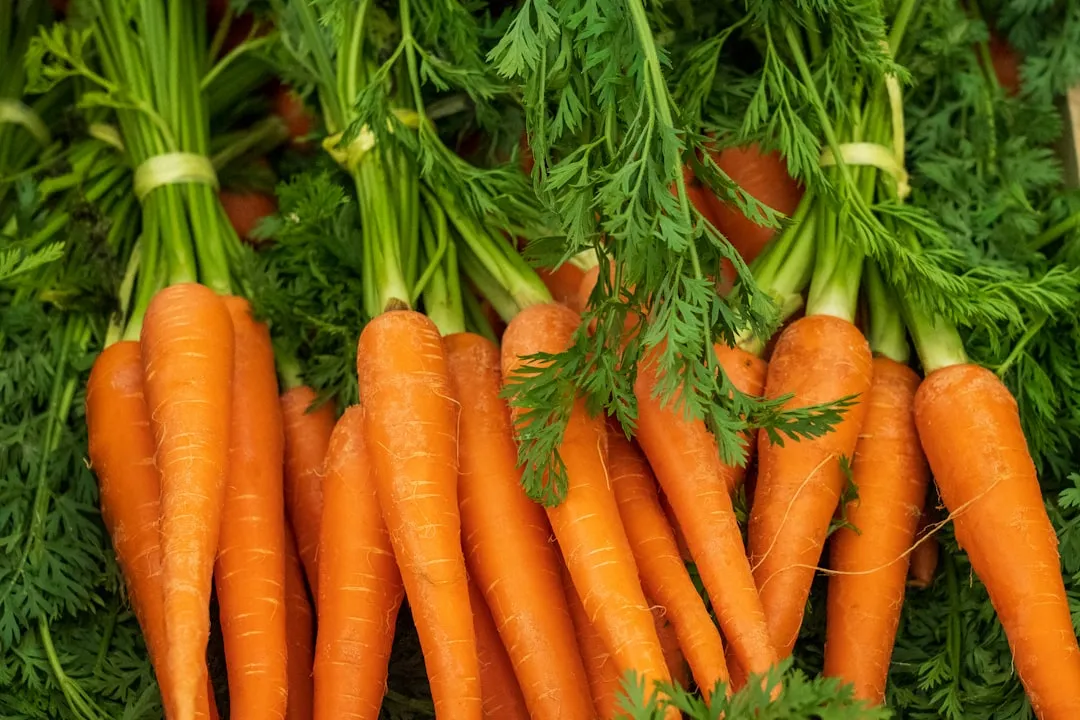
The shorter or half-long varieties of carrots produce the best quality in gardens with heavy soils. The longer varieties prefer sandy soils. This is one of the most straightforward rules, and also one of the most commonly ignored. Gardeners often plant whatever’s available rather than what’s suited to their ground.
The best carrots for clay soil include Red Cored Chantenay, Caracas, and Short N Sweet. These short-rooted varieties grow well in heavy or compacted soil. The Danvers type is another reliable performer. Danvers 126 carrots are a popular variety dating to 1947 that are widely adapted, productive, and heat-tolerant. They’re especially suited to growing in clay soil, and the strong tops aid harvesting. Matching variety to soil type takes the guesswork out of the whole process.
Rule 6: Deep Bed Preparation Is Non-Negotiable
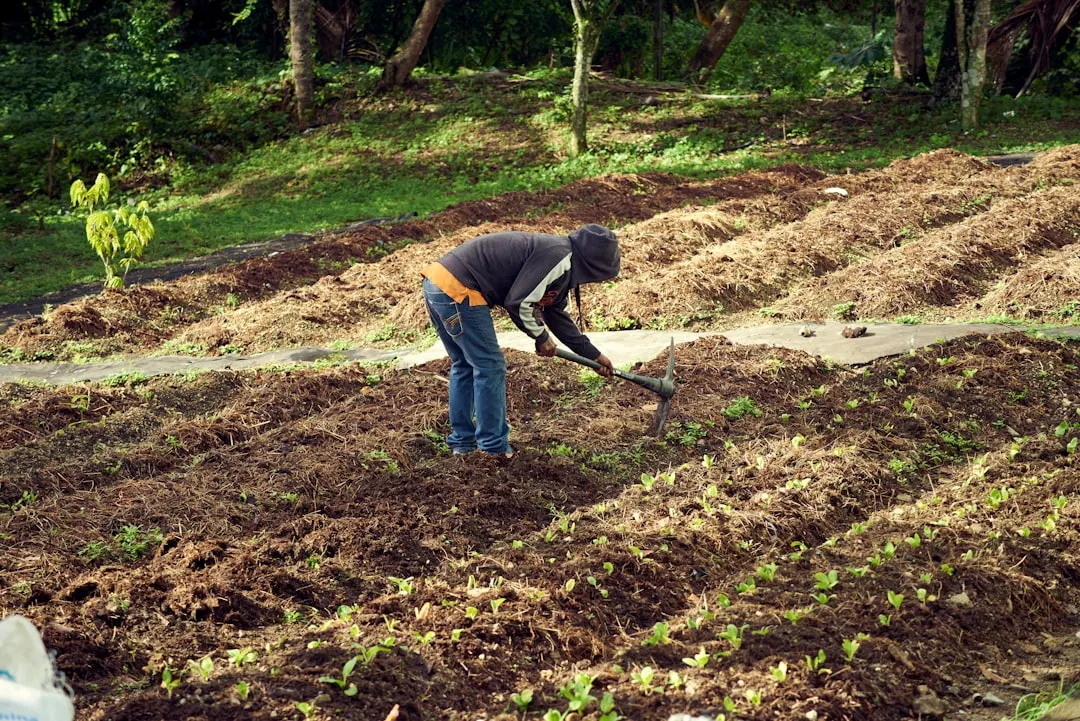
Carrots prefer well-drained, deeply-worked soil, preferably to an eighteen-inch depth for the longer varieties, though a shallower depth may suffice for shorter varieties. Most gardeners scratch the surface and call it done. That’s not nearly enough in clay ground. Deeply-worked soil minimizes the resistance encountered by the growing carrot roots as they elongate.
Choosing the right kind of seeds and proper soil amendments for roots to easily expand underground, without restriction, will help carrots achieve their full growth potential, according to Purdue University Master Gardener guidance. For those not wanting to dig, a raised bed is a practical alternative. University of Georgia Extension specialist Bob Westerfield recommends growing carrots in containers or raised beds at least eight to twelve inches high, filled with a rich mix of compost, manure, and topsoil.
Rule 7: Consider Raised Beds as a Reliable Long-Term Solution
If soil is less than ideal, building up raised beds with sifted compost and soil is recommended, and half-length or short varieties should be used in heavy or shallow soils. A raised bed essentially lets you sidestep the clay problem entirely while the in-ground soil improves over time. Raised beds allow you to control soil quality, which is especially helpful if your native soil is compacted, nutrient-poor, or drains poorly. A proper mix ensures your vegetables get the ideal balance of structure, moisture, drainage, and root support.
If you have the time and space to build a dedicated raised bed for your carrots, filling it entirely with sharp sand and using a piece of drainpipe to create deep holes before filling them with finely sieved compost allows the carrots to grow straight and long, year after year. That’s a more intensive setup, but it rewards patience. For most gardeners, a raised bed with at least twelve inches of well-amended soil remains the most practical path to consistently good harvests.
Rule 8: Time Your Sowing and Keep Germination Conditions Right
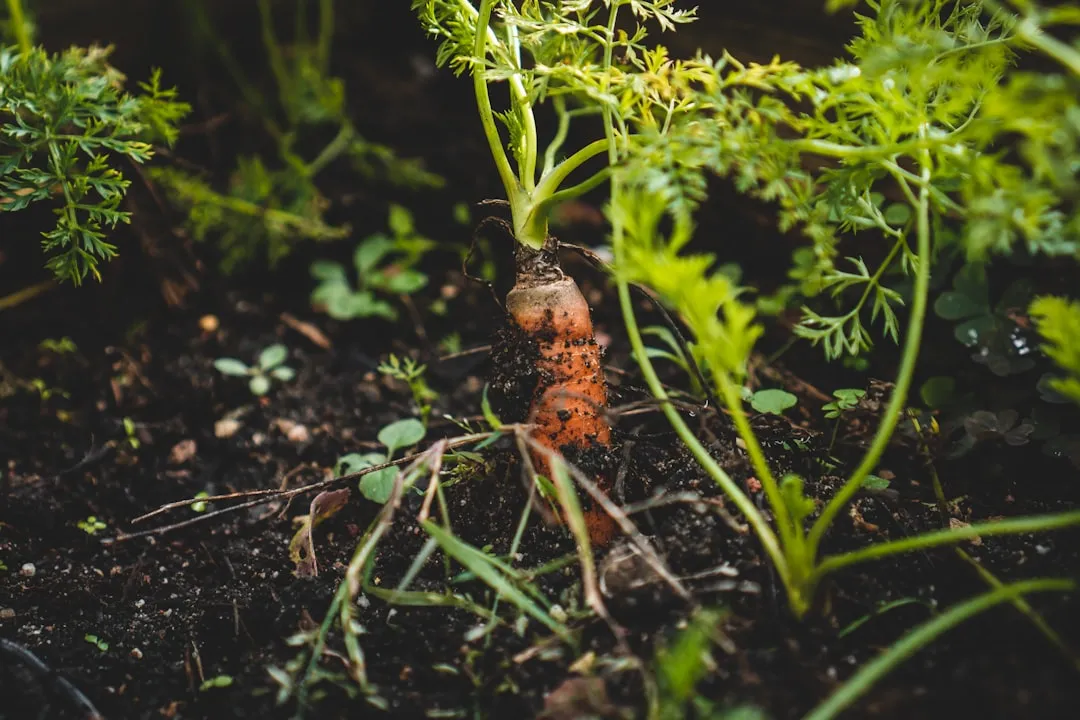
Carrot seeds need warm soil to germinate, and the problem with clay is that it takes longer to warm up. This is a detail that catches a lot of clay-soil gardeners off guard. Once started in warmer topsoil, a carrot root’s growth can be stunted when it reaches the colder clay below, and later sowings will usually be more successful, particularly if the spring is a cool one.
The ideal soil temperature for carrot germination is around 72 degrees Fahrenheit, with germination occurring in six to fourteen days under good conditions. Keeping the seed bed consistently moist through germination is equally critical. The soil surface must be kept moist during seedling emergence and should not be allowed to crust over. In clay ground, that crusting risk is very real and something worth monitoring daily during the first week or two after sowing.
Rule 9: Thin Seedlings Properly and Water with Consistency
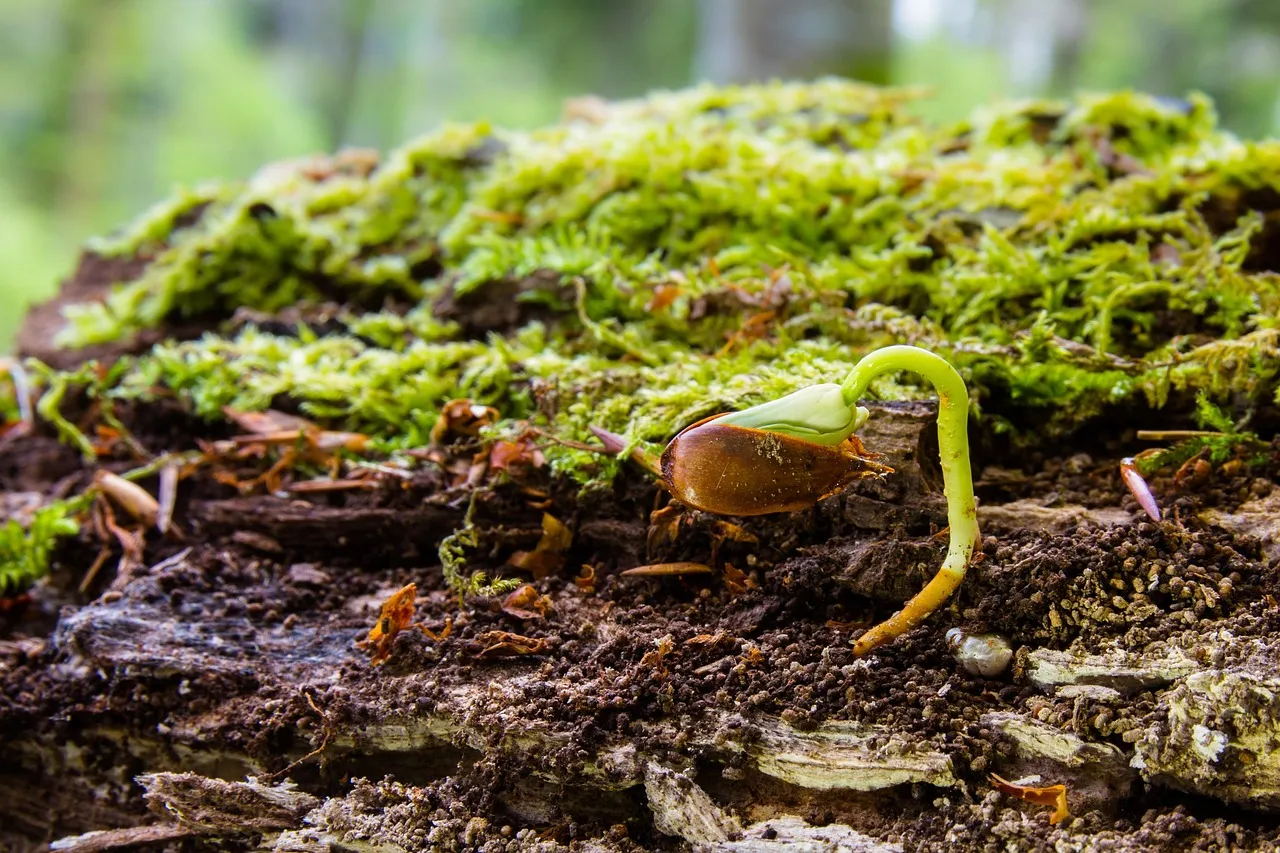
Once carrot plants come up, thinning is essential. If the carrots become too crowded underground, they can become stunted. Thinning can be time-consuming, especially if you broadcast planted, but don’t skip this step. The recommended approach from University of Georgia Extension is to use scissors rather than pulling, which minimizes disturbance to neighboring roots. The goal should be roughly two inches between each plant.
Watering discipline matters just as much. Excessive soil moisture from over-irrigating or heavy rainfall will often cause growth cracks in carrots, and wide fluctuations in moisture can cause cracking as well. Clay holds water more effectively than sandy soil, so the rules change. Water deeply once a week on heavier soils. An inch of water will wet a heavy clay soil to six inches, which is considerably less depth than in sandy ground. Consistent moisture is the goal, not frequent shallow watering.
Rule 10: Mulch, Harvest Carefully, and Improve Soil Year After Year
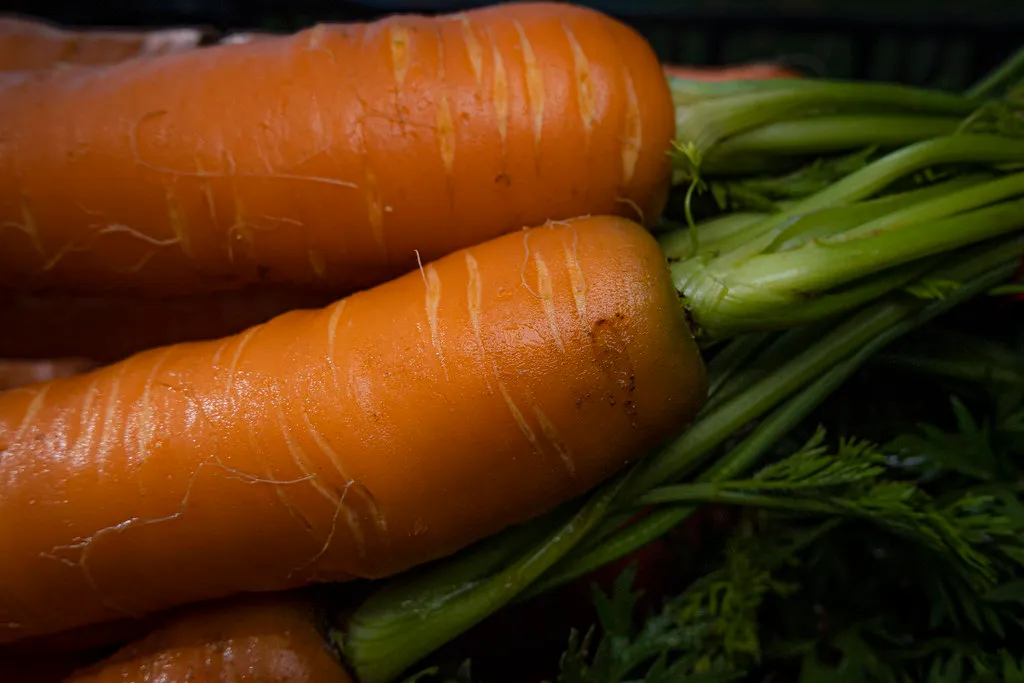
Putting mulch around carrots has many benefits, including trapping moisture in the soil, cutting down on weeds, shading the roots from sunlight, and even protecting carrots from cold temperatures later in the season. Mulch also matters for sweetness. As growth slows with cooler temperatures, carrots become sweeter as sugar collects in the root. Allowing carrots to remain in the ground into cooler autumn weather is one of the easiest ways to improve flavor without changing a single other thing.
Harvesting from clay requires its own care. Push a garden fork into the soil near the plant, pushing the root to the side to loosen it, and then pull it out. Simply pulling without freeing the carrot from the soil first can result in a broken root. Over the long term, consistent additions of organic matter are essential to change clay’s workability, and these additions must be at least annual in order to maintain the improvement. Clay soil will always be clay soil, but it can become far friendlier ground with every season of deliberate care.
Conclusion: Clay Soil Is a Challenge Worth Accepting
Heavy clay isn’t an ideal starting point for carrots, and there’s no single-season fix. What it does respond to is a consistent, methodical approach: the right variety, properly amended soil, careful watering, and the kind of patient attention that separates a frustrating harvest from a genuinely rewarding one.
The practical steps here aren’t complicated. They’re grounded in extension research, horticultural guidance, and the hard-earned experience of gardeners who’ve worked through the exact same challenges. Clay ground rewards effort over time. Start with one or two of these rules this season, and the soil will gradually become the kind of growing medium that makes good carrots possible every single year.
AI Disclaimer: This article was created with the assistance of AI tools and reviewed by a human editor.